Ingredients
Equipment
Method
- In a medium bowl, whisk together the soy sauce, grated Asian pear, mirin, sugar, minced garlic, toasted sesame oil, and black pepper until the sugar dissolves completely.
- Add the thinly sliced beef to the bowl and toss until every piece is evenly coated with the marinade.
- Cover with plastic wrap and refrigerate for at least 30 minutes. For best results, marinate for 2 hours. You can marinate up to 4 hours for deeper flavor, or overnight for very tender meat.
- Heat a large cast-iron skillet or heavy-bottomed pan over medium-high heat until very hot. Add 1 tablespoon of the canola oil and swirl to coat the pan.
- Remove the beef from the marinade, letting excess liquid drip off. Working in batches to avoid overcrowding, add the beef in a single layer to the hot pan.
- Cook for 2 to 3 minutes without moving the beef until the edges brown and the marinade caramelizes. Flip each piece and cook for another 2 to 3 minutes on the second side until cooked through with charred edges.
- Transfer the cooked beef to a serving platter. Add the remaining tablespoon of oil to the pan and repeat with remaining beef in batches.
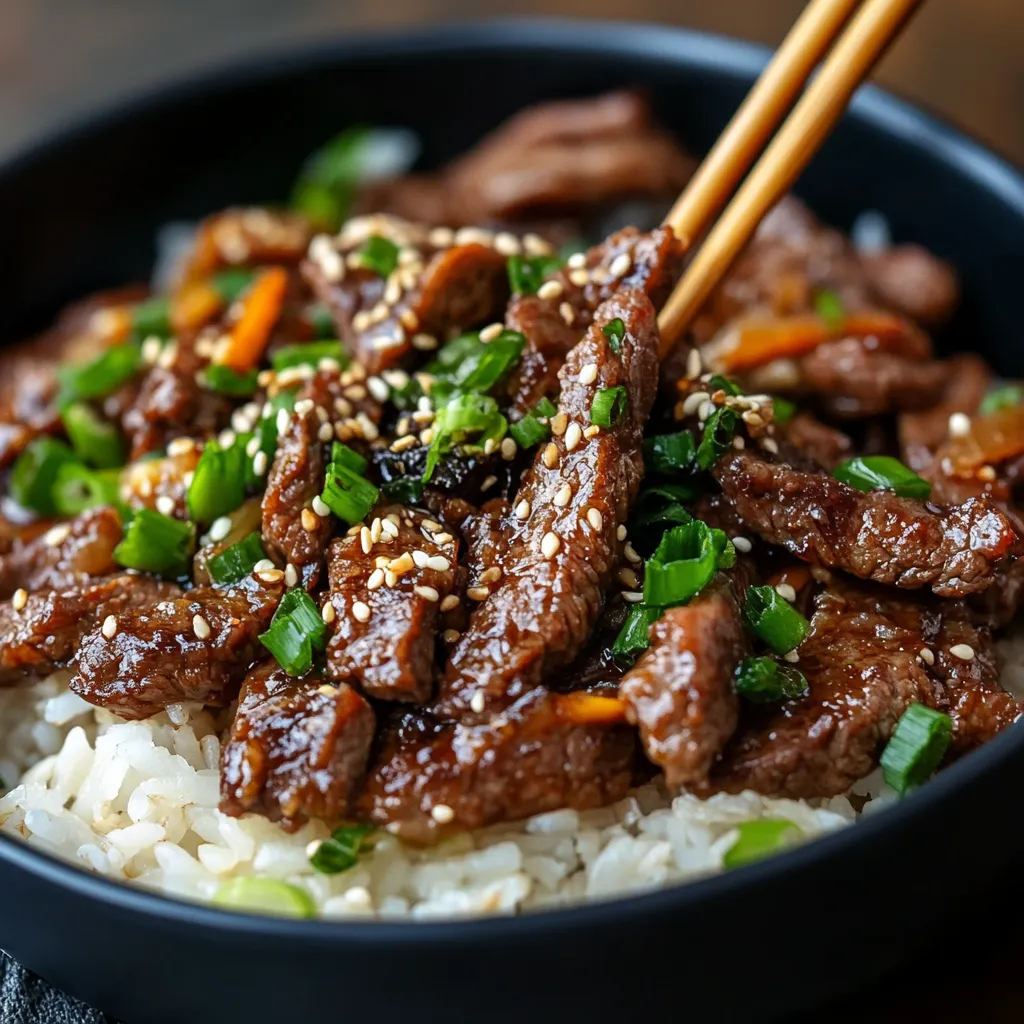
- Sprinkle the finished bulgogi with chopped green onions and toasted sesame seeds.
- Serve immediately while hot with steamed rice if desired.
Notes
Storage: Keep leftovers in an airtight container in the refrigerator for up to 4 days. Reheat in a hot skillet for 1 to 2 minutes to restore caramelization. Substitutions: Use grated Fuji apple if Asian pear is unavailable. Tamari works for gluten-free. Sirloin, flank steak, or chuck roast can replace ribeye. Make-ahead: Marinate for 2 hours for best results, or up to overnight for very tender meat. Freeze marinated raw beef for up to 3 months. Pro tip: Partially freeze beef for 90 minutes before slicing to achieve thin, even slices. Always slice against the grain for maximum tenderness. The total time of 55 minutes includes 15 minutes prep, 30 minutes minimum marinating, and 10 minutes cooking.