Ingredients
Equipment
Method
- Cook the pasta in a large pot of well-salted boiling water until al dente. Reserve 1/2 cup of pasta water before draining. Set pasta aside.
- While the pasta cooks, heat olive oil in a large skillet over medium heat. Add the shallot and cook for 3 minutes until softened. Add the garlic and cook for 1 minute until fragrant but not browned.
- Stir in the tomato paste and cook for 1 to 2 minutes, stirring constantly, until it darkens slightly and coats the aromatics.
- Pour in the crushed tomatoes, oregano, and red pepper flakes if using. Stir to combine and simmer for 5 to 7 minutes until the sauce thickens slightly.
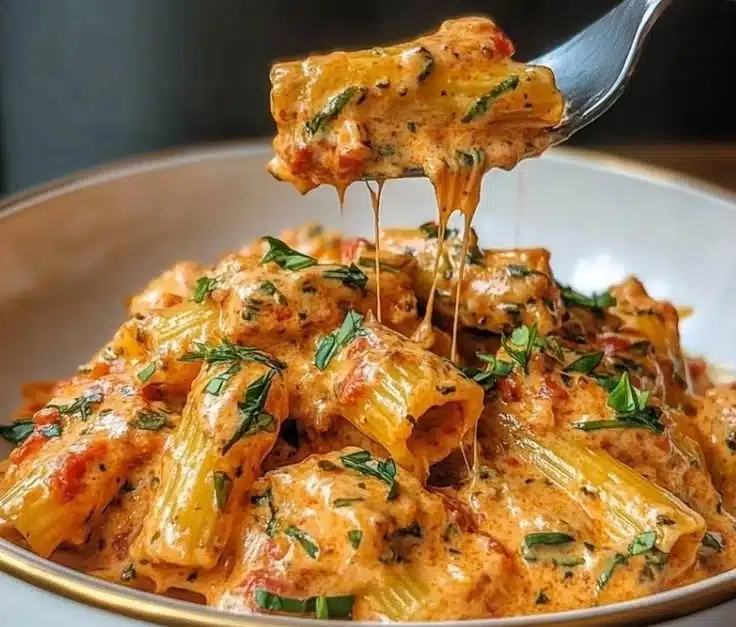
- Lower the heat to medium-low. Stir in the heavy cream and Parmesan until the sauce is smooth and pale orange-pink. If using Greek yogurt, remove the pan from heat before stirring it in.
- Add the cooked pasta to the skillet and toss to coat. Add reserved pasta water one tablespoon at a time until the sauce reaches your desired consistency.
- Season with salt and pepper. Serve immediately topped with fresh basil and extra Parmesan.
Notes
Storage: Refrigerate in an airtight container for up to 3 days. Add a splash of water or milk when reheating to loosen the sauce. Not recommended for freezing as the cream sauce separates after thawing.
Reheating: Warm in a skillet over low heat with a splash of liquid, stirring frequently. Or microwave covered in 60-second intervals.
Pasta water tip: Never skip reserving the pasta water. The starch helps the sauce emulsify and cling to the noodles for a restaurant-quality result.
Tomato paste tip: Cook the paste in the oil for 1 to 2 minutes before adding crushed tomatoes. This step adds depth and rounds out any sharpness.
Add protein: Top with grilled chicken, seared shrimp, or ground beef crumbles. Canned white beans stirred into the sauce also work well.
Gluten-free: Use chickpea or lentil pasta. Watch cook time closely as it varies by brand.