When you’re looking for a dinner that’s both nourishing and deeply satisfying without relying on meat, this high protein sweet potato and chickpea curry delivers exactly that. The combination of creamy sweet potatoes, hearty chickpeas, and aromatic spices creates layers of flavor that feel indulgent while providing substantial plant-based protein and fiber. The coconut milk ties everything together in a velvety sauce that’s just as comforting as any cream-based dish.
What makes this curry particularly appealing is how it balances nutrition with genuine flavor. Sweet potatoes contribute complex carbohydrates, beta-carotene, and natural sweetness that balances the warm spices. Chickpeas add plant-based protein and fiber that keeps you satisfied for hours. The curry powder, turmeric, and cumin create that signature warmth and depth that makes curry so crave-worthy, while the coconut milk adds richness without dairy.
The forty-minute timeline means you can have this on the table faster than ordering takeout, and the technique is straightforward enough for beginners. One pot handles everything from toasting the spices to simmering the curry, which translates to minimal cleanup. Whether you’re cooking for vegetarians, looking to add more plant-based meals to your rotation, or simply want something warm and comforting on a weeknight, this protein-packed curry delivers consistent, crowd-pleasing results.
Why You’ll Love This High Protein Sweet Potato and Chickpea Curry
The plant-based protein content is impressive without relying on processed meat substitutes. Chickpeas provide complete protein when paired with rice, while the sweet potatoes add complex carbohydrates and fiber. Each serving delivers a substantial amount that supports energy levels and keeps hunger at bay, making this ideal for active individuals or anyone following a plant-based eating plan.
Flavor-wise, the combination of aromatic spices creates genuine depth and complexity. Toasting the curry powder, turmeric, and cumin releases their essential oils and amplifies their flavor. The fresh ginger and garlic add brightness and pungency, while the coconut milk rounds out any sharp edges with creamy richness. The result is a curry that tastes like it simmered for hours despite the quick cooking time.
The texture variety keeps every bite interesting. Tender sweet potato cubes that almost melt in your mouth contrast with the firmer chickpeas. The thick, creamy sauce coats everything beautifully, and adding leafy greens at the end introduces soft pops of color and nutrition throughout the dish.
The one-pot method is genuinely convenient for weeknight cooking. Everything happens in a single pot, from sautéing the aromatics to simmering the curry. This means less cleanup and fewer dishes to wash, which is always appreciated on busy evenings.
Leftovers are outstanding with this curry. The flavors actually improve after a day in the refrigerator as the spices meld together and the sweet potatoes continue absorbing the sauce. This makes it perfect for meal prep, and it reheats beautifully throughout the week.
Ingredients for High Protein Sweet Potato and Chickpea Curry
I always peel and cube the sweet potatoes into uniform half-inch pieces so they cook evenly and finish at the same time. Larger pieces would still be firm when the chickpeas are ready, while smaller pieces would fall apart and become mushy.
- 2 large sweet potatoes, peeled and cubed (1/2-inch pieces)
- 1 can (15 oz) chickpeas, drained and rinsed
- 1 large yellow onion, finely chopped
- 3 cloves garlic, minced
- 1 tablespoon fresh ginger, grated
- 1 can (14 oz) full-fat coconut milk
- 2 tablespoons curry powder
- 1 teaspoon ground turmeric
- 1 teaspoon ground cumin
- 2 tablespoons vegetable oil
- Salt and black pepper, to taste
- 1 cup fresh spinach or kale (optional)
- Fresh cilantro and lime wedges, for garnish
The sweet potatoes are the star vegetable here. Choose firm sweet potatoes with smooth skin and no soft spots. The orange-fleshed variety works best for curry because they become creamy when cooked and have a natural sweetness that balances the spices. Purple or white sweet potatoes would work but have different flavor profiles.
For the chickpeas, canned versions are convenient and work perfectly. Rinse them thoroughly to remove excess sodium and the slightly metallic taste from the canning liquid. If using dried chickpeas, cook them until tender before starting the curry, which adds time but allows you to control the texture.
Full-fat coconut milk is essential for creating that rich, creamy sauce. Light coconut milk won’t provide the same velvety texture or satisfying mouthfeel. Shake the can well before opening to incorporate the cream that separates and rises to the top. Don’t use coconut cream, which is too thick, or coconut beverage, which is too thin.
Fresh ginger and garlic make a noticeable difference in flavor compared to dried versions. The fresh aromatics add brightness and complexity that ground spices can’t replicate. I use a microplane grater for the ginger, which creates a fine paste that distributes evenly throughout the curry.
The curry powder is your main flavor driver. Choose a quality blend with good color and aroma. Different brands vary significantly in heat level and complexity, so adjust the amount based on your preference and the strength of your particular blend.
How to Make High Protein Sweet Potato and Chickpea Curry
The key to building deep flavor is properly toasting the spices and allowing the sweet potatoes to simmer until tender. In my experience, taking time to sauté the aromatics and bloom the spices makes a noticeable difference in the final dish’s complexity.
Sauté the Aromatics: Heat the vegetable oil in a large pot or deep skillet over medium heat until shimmering. Add the finely chopped onion and cook for about 5 minutes, stirring occasionally, until it becomes soft and translucent. The onion should be sweet and fragrant but not browned. If it starts to brown, reduce the heat slightly.
Bloom the Spices: Add the minced garlic and grated fresh ginger to the pot. Cook for about 1 minute, stirring constantly, until very fragrant but not browned. The garlic and ginger should release their aromas and slightly soften. Add the curry powder, ground turmeric, and ground cumin. Stir constantly for about 30 seconds to toast the spices. This blooming step releases the essential oils in the spices and deepens their flavor significantly. You’ll notice the spices becoming very aromatic.
Add Vegetables: Add the cubed sweet potatoes and drained chickpeas to the pot. Stir everything together thoroughly, ensuring the vegetables are completely coated in the spice mixture. Let them cook for 1 to 2 minutes, stirring occasionally, to allow the spices to start clinging to the vegetables.
Simmer the Curry: Pour in the full-fat coconut milk, stirring to combine. Add about 1/2 cup of water to the pot, just enough so the vegetables are barely covered by liquid. The exact amount of water needed can vary based on the size of your sweet potato cubes and how thick you want the sauce. Bring the mixture to a boil over medium-high heat, then reduce the heat to low to maintain a gentle simmer.
Cook Until Tender: Cover the pot with a lid and let the curry simmer for 15 to 20 minutes, stirring occasionally to prevent sticking. The sweet potatoes are ready when they’re fork-tender and easily pierced but still hold their shape. The sauce should thicken as the sweet potatoes release their starches and the liquid reduces. If the sauce is too thin, remove the lid for the last 5 minutes to allow more evaporation.
Add Greens and Season: If using spinach or kale, stir it into the curry during the last 2 minutes of cooking. The greens will wilt down significantly, adding color and nutrition without changing the texture much. Taste the curry and season with salt and black pepper as needed. The amount of salt needed depends on your curry powder blend and how salty your chickpeas were.
Finish and Serve: Remove from heat and let the curry rest for 5 minutes before serving. This allows the flavors to settle and the sauce to thicken slightly. Serve hot over basmati rice, quinoa, or with warm naan bread. Garnish each bowl with fresh cilantro leaves and a squeeze of fresh lime juice, which brightens all the flavors.
The most common mistake is not cooking the sweet potatoes long enough. They should be very tender and almost creamy, not firm or crunchy. If they’re still firm after 20 minutes, add a splash more water and continue simmering.
What to Serve with High Protein Sweet Potato and Chickpea Curry
This curry pairs beautifully with grains and breads that soak up the flavorful sauce.
Basmati Rice: Fluffy basmati rice is the classic pairing for curry. Its neutral flavor and light texture let the curry shine, while the grains soak up the creamy coconut sauce perfectly. Cook it with a bit of turmeric for golden color that matches the curry.
Quinoa: For extra protein, serve the curry over quinoa instead of rice. The nutty flavor complements the warm spices, and quinoa adds complete protein and fiber. Red or white quinoa both work beautifully.
Naan Bread: Warm, pillowy naan is perfect for scooping up the curry and mopping up every bit of sauce. Brush it with garlic butter for extra flavor, or keep it plain to let the curry flavors dominate.
Coconut Yogurt: A dollop of cool coconut yogurt on top adds tangy contrast to the warm spices and creates a temperature contrast that’s very appealing. It also adds creaminess and helps balance any heat from the curry powder.
Cucumber Raita: Cool cucumber raita made with yogurt, cucumber, and mint provides refreshing contrast. The cool, creamy condiment balances the warmth of the curry and adds a different textural element.
Cauliflower Rice: For a low-carb option, serve over cauliflower rice. It soaks up the sauce well while adding vegetables and keeping the carbohydrate content lower than traditional rice.
Flatbread or Roti: Whole wheat flatbread or roti adds fiber and works just like naan for scooping. The slightly nutty flavor from whole wheat complements the curry spices nicely.
Pro Tips & Variations
For deeper flavor, add a tablespoon of tomato paste along with the spices. It contributes umami depth and helps thicken the sauce slightly. Cook it for 1 minute with the spices before adding the vegetables.
To make the sauce extra creamy and thick without adding calories, use a potato masher to lightly crush a few of the cooked sweet potato cubes directly in the pot. This releases their starches and naturally thickens the gravy without needing cornstarch or additional coconut milk.
Red lentils make an excellent addition or substitution for chickpeas. Add 1/2 cup of dried red lentils along with the sweet potatoes and increase the water to 1 cup. They’ll cook down and become creamy, adding protein and thickening the sauce.
For more vegetables, add cauliflower florets with the sweet potatoes, stir in frozen peas during the last 5 minutes, or include diced bell peppers with the onions. These additions boost nutrition and volume without changing the fundamental character of the curry.
Make this spicier by adding diced jalapeño with the garlic and ginger, stirring in red pepper flakes with the spices, or drizzling with sriracha before serving. The coconut milk helps balance heat, so you can add quite a bit without it becoming unbearable.
For meal prep, this curry freezes beautifully. Cool completely, portion into freezer-safe containers, and freeze for up to 3 months. Thaw overnight in the refrigerator and reheat gently on the stovetop, adding a splash of coconut milk if needed.
To make this soy-free, ensure your curry powder blend doesn’t contain soy-based ingredients. For nut-free, this recipe is already safe. For oil-free, sauté the aromatics in vegetable broth instead of oil.
Storage & Reheating Tips
Store leftover sweet potato and chickpea curry in an airtight container in the refrigerator for up to 4 days. The curry actually tastes better after a day as the flavors meld together and the sweet potatoes continue absorbing the sauce. The texture will thicken as it sits, which is completely normal.
For reheating on the stovetop, transfer the curry to a pot over medium-low heat. Add a few tablespoons of water or coconut milk to loosen the sauce, which will have thickened during storage. Stir gently as it warms for 5 to 7 minutes until heated through. Avoid high heat, which can cause the coconut milk to separate.
Microwave reheating works well for individual portions. Place the curry in a microwave-safe bowl, add a tablespoon of water, cover loosely, and heat at 70% power in 1-minute intervals, stirring between each. This prevents hot spots and maintains the creamy texture.
Freezing is excellent with this curry. Cool completely after cooking, then transfer to freezer-safe containers, leaving an inch of headspace for expansion. Freeze for up to 3 months. The texture remains excellent after freezing, unlike many vegetable dishes. Thaw overnight in the refrigerator before reheating.
For meal prep, portion the curry into individual containers with rice or quinoa on the side. Store the grain separately to prevent it from absorbing too much sauce. This makes grabbing lunch or dinner throughout the week effortless.
Common Questions
Can I use canned sweet potatoes? Fresh sweet potatoes are strongly recommended for best texture and flavor. Canned sweet potatoes are usually very soft and would turn to mush in the curry. If you must use canned, add them during the last 5 minutes just to heat through.
What if I don’t have coconut milk? You can substitute with cashew cream (blend soaked cashews with water), oat milk, or a combination of vegetable broth and a tablespoon of tahini for richness. The flavor will be different, but the curry will still be delicious.
How do I make this less sweet? Reduce the amount of sweet potato and increase the chickpeas, add more curry powder for a more savory flavor profile, or stir in a tablespoon of tomato paste for acidity. A squeeze of lime juice at the end also balances sweetness.
Can I use dried chickpeas instead of canned? Yes, but you’ll need to cook them separately first. Soak 3/4 cup of dried chickpeas overnight, then simmer until tender before adding to the curry. This takes extra time but allows you to control the texture and sodium content.
How can I make this higher in protein? Add more chickpeas, stir in cooked lentils, serve over quinoa instead of rice, top with a dollop of Greek yogurt instead of coconut yogurt, or add cubed tofu in the last 10 minutes of cooking.
This high protein sweet potato and chickpea curry proves that plant-based dinners can be just as satisfying and protein-rich as meat-centered meals. The combination of creamy sweet potatoes, hearty chickpeas, and aromatic spices creates comfort food that supports your nutritional goals. Whether you’re following a vegetarian diet, incorporating more plant-based meals, or simply craving something warm and nourishing, this one-pot curry delivers exceptional flavor with minimal effort and cleanup.
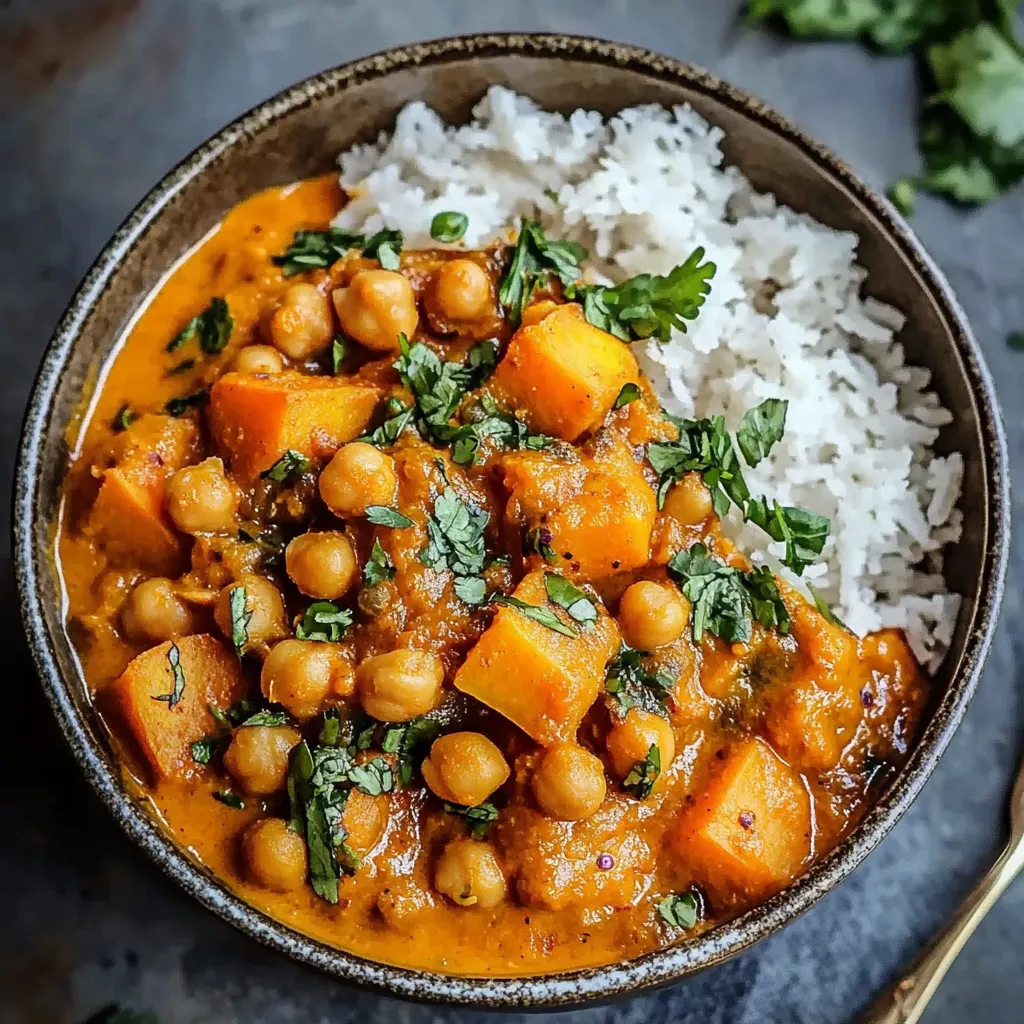
High Protein Sweet Potato and Chickpea Curry
Ingredients
Equipment
Method
- Heat vegetable oil in a large pot or deep skillet over medium heat. Add the finely chopped onion and sauté for about 5 minutes, stirring occasionally, until soft and translucent.
- Add minced garlic and grated fresh ginger. Cook for about 1 minute, stirring constantly, until very fragrant. Add curry powder, ground turmeric, and ground cumin. Stir constantly for about 30 seconds to toast the spices and release their essential oils.
- Add cubed sweet potatoes and drained chickpeas to the pot. Stir everything together thoroughly, ensuring the vegetables are completely coated in the spice mixture. Cook for 1 to 2 minutes, stirring occasionally.
- Pour in the full-fat coconut milk and add about 1/2 cup of water, just enough so the vegetables are barely covered. Bring to a boil over medium-high heat, then reduce heat to low to maintain a gentle simmer.
- Cover the pot and simmer for 15 to 20 minutes, stirring occasionally, until the sweet potatoes are fork-tender and the sauce has thickened. The sweet potatoes should easily pierce with a fork but still hold their shape.
- If using spinach or kale, stir it into the curry during the last 2 minutes of cooking until wilted. Taste and season with salt and black pepper as needed.
- Remove from heat and let rest for 5 minutes. Serve hot over basmati rice, quinoa, or with warm naan bread. Garnish with fresh cilantro leaves and a squeeze of fresh lime juice.