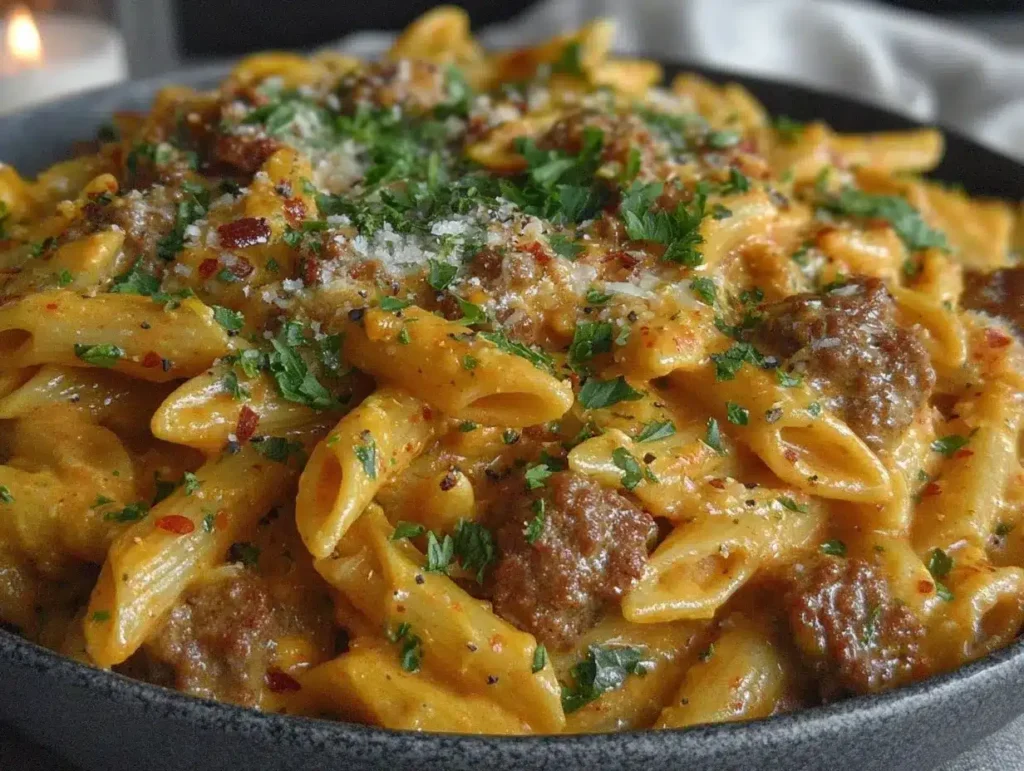
Creamy pasta sauces that don’t rely on heavy cream are always worth paying attention to, and this one earns its place by using a technique that’s both practical and genuinely clever. Roasted bell pepper and burst cherry tomatoes get blended with light cream cheese and a splash of starchy pasta water into a sauce that’s silky, thick, and coats the pasta the way a proper cream sauce should. The result is a high-protein, lower-calorie bowl that doesn’t taste like it made any compromises.
The blending technique is what separates this from a standard beef and tomato pasta. Running the sautéed vegetables through a blender with the cream cheese produces a completely smooth, velvety sauce with no detectable chunks, which means the vegetables contribute flavor, body, and color to every bite of pasta without anyone needing to know they’re there. The reserved pasta water emulsifies the sauce and helps it cling to the pasta rather than pooling at the bottom of the bowl.
The ground beef cooks in the same pan while the sauce is blending, which keeps the one-pan promise intact and means cleanup is genuinely minimal. This creamy beef pasta recipe serves four in 30 minutes and holds up well for meal prep through the week.
Why You’ll Love This Creamy Beef Pasta Recipe
The blended vegetable sauce is the technique that makes this recipe worth making over a standard jarred-sauce pasta. Sautéed bell pepper and burst cherry tomatoes blended with light cream cheese produce a sauce with genuine body and richness without the fat load of a heavy cream base. The color alone, a warm, deep orange-red, makes the finished bowl look considerably more impressive than the effort involved.
The starchy pasta water is the emulsification tool that holds the whole sauce together. The dissolved starch binds the blended vegetables and cream cheese into a cohesive, glossy sauce that coats each piece of pasta evenly rather than separating as it cools. It’s the same technique Italian restaurants use for silky pasta sauces, and it costs nothing beyond remembering to reserve the water before you drain.
Using cottage cheese instead of light cream cheese in the blender is the variation that pushes the protein content of this dish significantly higher. Blended cottage cheese becomes completely smooth and contributes a very similar creaminess to the sauce with nearly double the protein per serving.
This is also one of the most practical meal prep pastas you can make since the sauce rehydrates cleanly with a splash of water and the beef stays moist for up to four days in the refrigerator.
Ingredients for Creamy Beef Pasta Recipe
The ingredient list covers three stages: the pasta and beef, the blended sauce base, and the finish.
For the beef and pasta:
- 1 lb lean ground beef, 90/10 or 95/5
- 10 oz dry pasta, fusilli, penne, or shells
- 1 tablespoon olive oil
- 1 teaspoon salt and 1/2 teaspoon black pepper
- 1 teaspoon smoked paprika
- 1 teaspoon Italian herbs
For the creamy sauce base:
- 1 red bell pepper, chopped
- 2 cups cherry tomatoes
- 4 to 6 cloves garlic, minced
- 1/2 cup light cream cheese or cottage cheese
- 1/4 cup reserved pasta water, plus more as needed
For the finish:
- 1/4 cup grated Parmesan cheese
- Fresh parsley, chopped for garnish
For the beef, lean ground beef at 90/10 or 95/5 is the right choice here specifically because the sauce provides all the fat and richness the dish needs. The higher fat content of an 80/20 grind adds more grease to the pan during browning, which doesn’t contribute to the finished sauce and needs to be drained off. Leaner beef browns cleanly and produces a pan that’s easy to work with when the sauce goes in.
For the pasta shape, fusilli, penne, and shells all work for the same reason: they have ridges, tubes, or pockets that trap and hold the blended sauce rather than letting it slide off a smooth surface. Wide, ridged shapes like rigatoni also work well. Long pasta like spaghetti or fettuccine will technically work but produces a less evenly coated result since the sauce pools between the strands rather than distributing through them.
For the cream cheese, the light variety produces a slightly thinner sauce than full-fat, which is actually preferable here since the sauce needs to coat the pasta rather than clump around it. Cottage cheese is the high-protein substitute that blends completely smooth in a high-powered blender and produces a sauce that’s nearly indistinguishable from the cream cheese version in texture but contributes significantly more protein per serving.
How to Make High-Protein Creamy Garlic Beef Pasta
The vegetable sauté and the beef cook happen in the same pan in sequence, which keeps the cleanup minimal and the total time to 30 minutes.
- Bring a large pot of heavily salted water to a boil. Cook the pasta according to package directions until al dente, which typically means 1 to 2 minutes less than the package’s recommended time since the pasta finishes cooking briefly in the sauce. Before draining, scoop out at least 1/2 cup of the pasta water and set it aside in a heatproof measuring cup. The starch dissolved in this water is what emulsifies the blended sauce and helps it adhere to the pasta. Drain and set the pasta aside.
- While the pasta cooks, heat the olive oil in a large skillet over medium-high heat. Add the chopped bell pepper, cherry tomatoes, and minced garlic. Season with half of the Italian herbs and half of the smoked paprika. Sauté for 5 to 8 minutes, stirring occasionally, until the tomatoes have burst and released their liquid and the bell pepper has softened completely. The tomatoes should look deflated and jammy and the garlic should be fragrant and slightly golden.
- Transfer the entire vegetable mixture to a blender. Add the cream cheese or cottage cheese and 1/4 cup of the reserved pasta water. Blend on high until completely smooth, about 45 to 60 seconds. The sauce should be a uniform, silky consistency with no vegetable chunks remaining. If the blender struggles to pull the mixture down, add another tablespoon of pasta water. Set the blended sauce aside. In my experience, letting the sauce sit in the blender for a minute while the beef cooks keeps it warm enough to flow easily when it goes back into the pan.
- Without washing the pan, return it to medium-high heat. Add the ground beef directly to the pan with the remaining Italian herbs, remaining smoked paprika, salt, and pepper. Break the meat apart with a spatula or wooden spoon as it cooks. Cook for 6 to 8 minutes until fully browned with no pink remaining and the beef has developed some color on the pan surface. Drain any excess fat if necessary, though a 90/10 or 95/5 grind should produce minimal excess.
- Reduce the heat to medium-low. Pour the blended vegetable sauce over the cooked beef. Add the drained pasta and toss everything together until the pasta is evenly coated with the sauce. If the sauce looks too thick or tight around the pasta, add pasta water a tablespoon at a time, tossing between additions, until the sauce loosens to a glossy, flowing consistency that coats every piece.
- Simmer together on low heat for 2 minutes, tossing occasionally, to allow the sauce to tighten slightly and integrate fully with the pasta and beef. The sauce should look glossy and clingy rather than wet or pooled.
- Remove from heat. Stir in the grated Parmesan, which will melt into the sauce and add a final layer of savory depth. Garnish with fresh parsley and serve immediately in warm bowls.
What to Serve with Creamy Beef Pasta
This is a complete, satisfying dinner on its own, but a few simple sides add freshness and contrast.
Simple Arugula Salad: A handful of arugula dressed with lemon juice, olive oil, and a pinch of salt is the most natural accompaniment to a rich, creamy pasta. The peppery bitterness of the arugula and the acidity of the lemon cut through the creaminess of the sauce and refresh the palate between bites.
Roasted Zucchini: Zucchini spears roasted at 425°F with olive oil, garlic, and Italian herbs while the pasta cooks adds a tender, slightly caramelized vegetable side that stays within the Italian-inspired flavor direction of the dish.
Garlic Bread: Thick slices of toasted bread rubbed with a garlic clove and a drizzle of olive oil are the most obvious side for a creamy pasta and the most practical since they require almost no additional effort. They’re also useful for mopping up any sauce that pools on the plate.
Roasted Broccoli: Broccoli florets roasted at high heat until the edges are crispy and slightly charred add both textural contrast and a slightly bitter vegetable note that balances the richness of the cream cheese sauce.
Chickpea Salad: A cold salad of chickpeas, cucumber, red onion, and lemon vinaigrette alongside the pasta keeps the meal high-protein and adds a fresh, acidic element that works well against the warm, savory sauce.
Pro Tips & Variations
Reserve more pasta water than you think you need. The recipe calls for 1/2 cup but having an extra 1/4 cup on standby is worthwhile since the sauce can tighten unexpectedly as it cools or as the pasta continues absorbing it in the pan. Cold pasta water added after the fact doesn’t emulsify as well as the warm starchy water added during cooking.
Don’t skip the pasta water in the blender. The starch in the pasta water is the emulsifier that binds the cream cheese and vegetable puree into a cohesive, glossy sauce. Water from the tap produces a thinner, less clingy result that doesn’t adhere to the pasta the same way.
Use cottage cheese for a significant protein boost. Blended full-fat or 2% cottage cheese produces a sauce that’s virtually identical in texture to the cream cheese version and pushes the protein content per serving noticeably higher. Use a high-powered blender and blend for a full 60 seconds to eliminate all the curd texture.
Brown the beef in batches for better flavor. If you’re using a smaller pan, browning the beef in two batches rather than one ensures each batch has direct contact with the hot pan surface, which produces more Maillard reaction browning and more flavor in the finished dish.
Swap to ground turkey or chicken. Either ground turkey or chicken breast works with the same method and timing. The sauce provides enough richness and flavor that the leaner protein doesn’t make the dish taste flat. Season the turkey or chicken with the same spice combination as the beef.
Storage & Reheating Tips
Store leftovers in airtight containers in the refrigerator for up to 4 days. The pasta will continue absorbing the sauce during storage and the dish will look significantly thicker and drier when you open the container the next day. This is normal and fully correctable.
To reheat, add a tablespoon of water to the container before warming and stir it through the pasta before it goes in the microwave or back in a pan. The water rehydrates the sauce and restores the original glossy, creamy consistency as it heats. Microwave at medium power in 60-second intervals, stirring between each, until heated through. Stovetop reheating over low heat with a splash of water and occasional stirring produces the best texture result.
This dish is excellent for meal prep since the sauce rehydrates so cleanly. Portioning into individual containers after cooling makes for a reliable weekday lunch or dinner that reheats in under 3 minutes.
Common Questions
My sauce looks grainy after blending. What went wrong? Grainy sauce in this recipe usually means the cream cheese was too cold when it went into the blender. Cold cream cheese doesn’t blend as smoothly as room temperature and can leave small visible curds in the sauce. Pull the cream cheese from the refrigerator before you start cooking so it softens slightly. If the sauce is already grainy, blend for a longer time at higher speed and add a tablespoon of warm pasta water, which usually smooths the texture out.
The sauce is sliding off the pasta rather than coating it. What should I do? This is a pasta water issue. The sauce needs the dissolved starch in the pasta cooking water to emulsify and cling to the pasta surface. If you used plain water or tap water in the blender rather than reserved pasta water, the sauce won’t adhere the same way. Add a few tablespoons of starchy pasta water directly to the pan while tossing over low heat and the sauce should tighten and coat more effectively.
Can I make this gluten-free? Yes, and it’s one of the more straightforward gluten-free adaptations since the sauce contains no flour or gluten-based thickener. Swap the pasta for your preferred gluten-free variety, chickpea pasta being the best option for maintaining the high-protein direction of the dish, and check that your Italian herb blend and smoked paprika are certified gluten-free. The method is identical.
High-protein creamy garlic beef pasta delivers the kind of satisfying, properly sauced pasta dinner that makes 30-minute weeknight cooking feel genuinely worthwhile. The blending technique produces a sauce with real body and creaminess without heavy cream, the starchy pasta water keeps everything cohesive, and the lean beef provides the protein that makes this a complete, filling meal. Once you’ve made this once, the technique becomes second nature and the variables, cheese type, pasta shape, protein choice, are easy to adjust to whatever the week calls for.
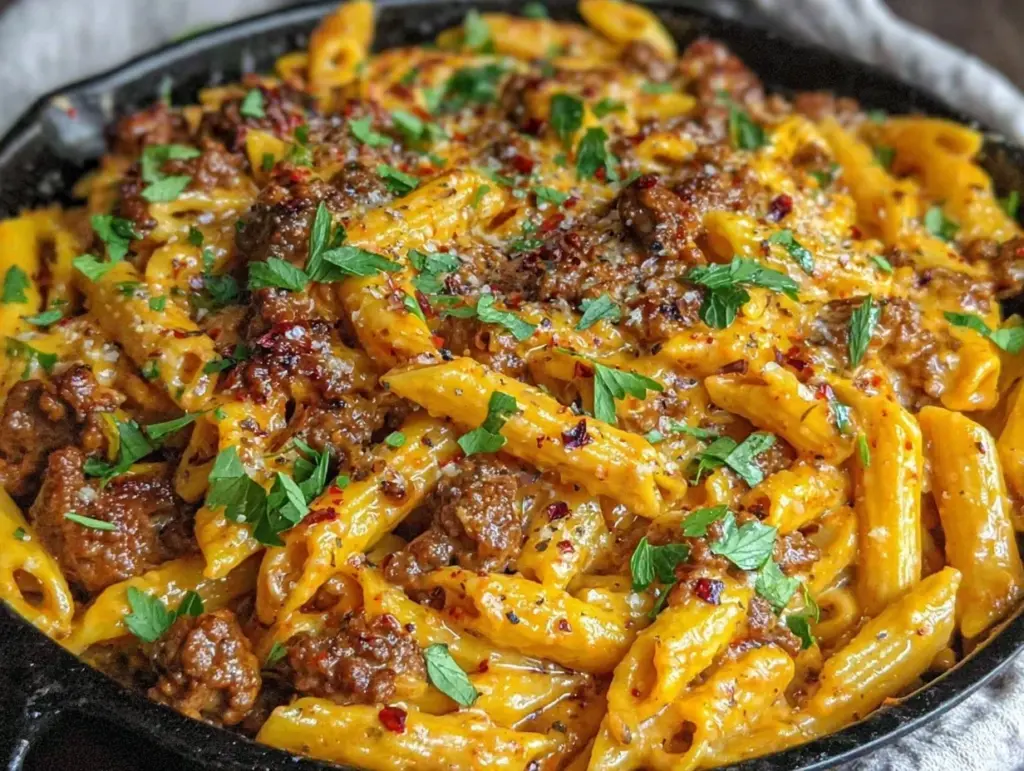
High-Protein Creamy Garlic Beef Pasta
Ingredients
Equipment
Method
- Bring a large pot of salted water to a boil. Cook pasta until al dente, 1 to 2 minutes under package time. Reserve at least 1/2 cup pasta water before draining. Drain and set aside.
- Heat olive oil in a large skillet over medium-high heat. Add the chopped bell pepper, cherry tomatoes, and minced garlic. Season with half the Italian herbs and half the smoked paprika. Sauté for 5 to 8 minutes until the tomatoes have burst and the bell pepper is fully softened.
- Transfer the vegetable mixture to a blender. Add the cream cheese or cottage cheese and 1/4 cup of the reserved pasta water. Blend on high for 45 to 60 seconds until completely smooth. Set aside.
- Return the same pan to medium-high heat. Add the ground beef with the remaining Italian herbs, remaining smoked paprika, salt, and pepper. Cook for 6 to 8 minutes, breaking the meat apart, until fully browned. Drain excess fat if needed.
- Reduce heat to medium-low. Pour the blended sauce over the cooked beef. Add the drained pasta. Toss to combine, adding additional pasta water a tablespoon at a time if the sauce is too thick.
- Simmer together over low heat for 2 minutes, tossing occasionally, until the sauce is glossy and coats the pasta evenly.
- Remove from heat. Stir in the grated Parmesan. Garnish with fresh parsley and serve immediately.