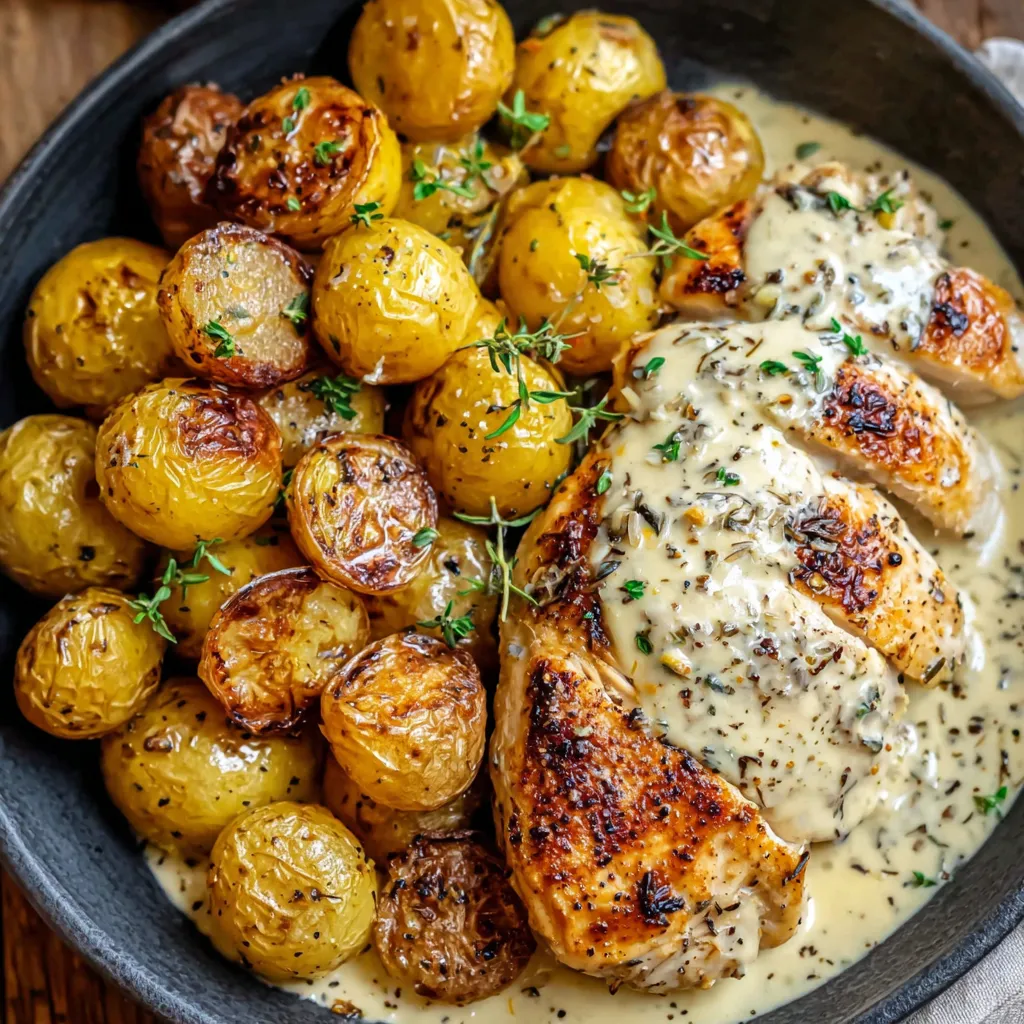
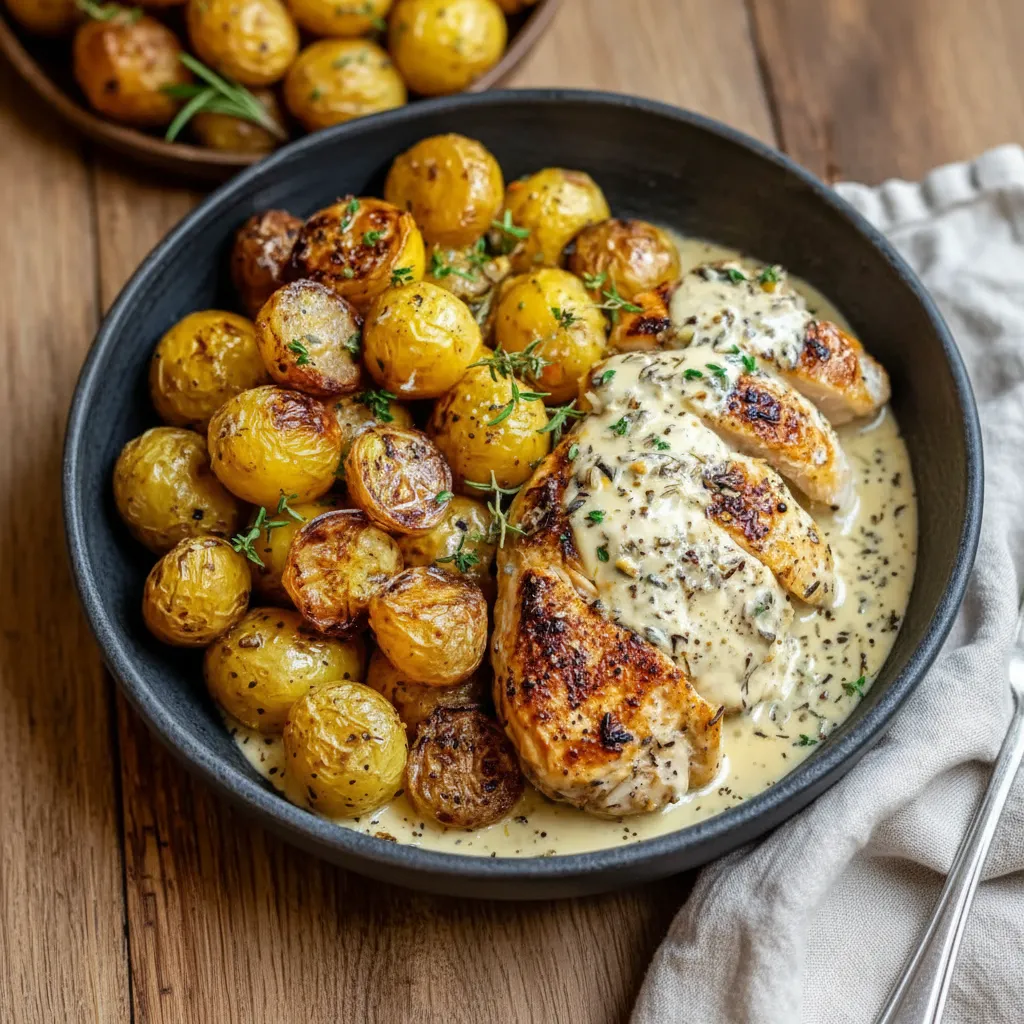
When you need a dinner that feels like a special occasion but doesn’t require complicated techniques or endless prep, this creamy garlic chicken with roasted baby potatoes delivers exactly that. Tender chicken breasts are seared until golden, then smothered in a velvety Parmesan garlic sauce that’s rich without being heavy. Meanwhile, baby potatoes roast in the oven until crispy on the outside and fluffy inside, creating the perfect contrast to the creamy chicken.
This is the kind of meal that makes weeknight cooking feel effortless. Everything comes together in under an hour, with the potatoes roasting hands-off while you cook the chicken and sauce on the stovetop. The result is a complete, satisfying dinner that covers your protein and carbs in one go, with flavors that feel restaurant-quality.
Why You’ll Love This Creamy Garlic Chicken and Potatoes
This recipe streamlines dinner without cutting corners on taste. The chicken cooks quickly on the stovetop while the potatoes roast in the oven, so both components finish around the same time. You’re not juggling multiple complex steps or waiting around for things to happen sequentially. The timing works in your favor, making this doable on a busy evening.
The garlic cream sauce is where this dish really shines. Fresh garlic sautéed in the pan drippings from the chicken creates a fragrant base, and the combination of heavy cream, chicken broth, and Parmesan gives you a sauce that’s silky and flavorful. I find that deglazing the pan with broth picks up all those browned bits from searing the chicken, adding depth you don’t get from a sauce made in a separate pan.
The roasted baby potatoes are simple but satisfying. Tossed with olive oil, garlic powder, and herbs, they develop crispy, caramelized edges while staying tender in the middle. They soak up the garlic cream sauce beautifully when served alongside the chicken. At around 40 grams of protein per serving from the chicken alone, this meal keeps you full and provides balanced energy from the potatoes.
Ingredients for Creamy Garlic Chicken with Roasted Baby Potatoes
I always choose baby potatoes for roasting because they cook evenly and don’t need peeling. The chicken breasts should be similar in size so they cook at the same rate, and fresh garlic makes a noticeable difference over jarred or powdered in the sauce.
The Roasted Potatoes:
- 1.5 lbs baby potatoes, halved
- 2 tablespoons olive oil
- 1 teaspoon garlic powder
- 1 teaspoon dried rosemary or thyme
- Salt and black pepper, to taste
The Chicken:
- 4 boneless, skinless chicken breasts, approximately 1.5 lbs
- 1 tablespoon olive oil
- 1 tablespoon butter
- 1 teaspoon paprika
- Salt and black pepper, to taste
The Garlic Cream Sauce:
- 4-6 cloves garlic, minced
- 1 cup heavy cream
- 1/2 cup chicken broth
- 1/2 cup freshly grated Parmesan cheese
- 1 teaspoon Italian seasoning
- Fresh chopped parsley for garnish
For the potatoes, I prefer using a mix of red and yellow baby potatoes when available. They hold their shape well during roasting and have a naturally creamy texture. If you only find larger potatoes, quarter them so they’re bite-sized and roast evenly. The dried herbs can be rosemary, thyme, or a combination. Rosemary gives a more robust, piney flavor, while thyme is milder and slightly earthy.
Heavy cream is important for the sauce because it won’t curdle or break when simmered. Half-and-half can work in a pinch, but the sauce will be thinner and less luxurious. I use low-sodium chicken broth so I can control the saltiness, especially since Parmesan adds its own salt. Freshly grated Parmesan melts smoother than pre-shredded cheese, which often contains anti-caking agents that can make the sauce grainy.
The paprika on the chicken adds color and a hint of sweetness without heat. If you want a smoky note, use smoked paprika instead. For the garlic, fresh cloves that you mince yourself give the best flavor. Four cloves provide a noticeable garlic presence, while six makes it more pronounced—adjust based on your preference.
How to Make Creamy Garlic Chicken with Roasted Baby Potatoes
This recipe works best when you start the potatoes first, then move to the chicken while they roast. The timing aligns so everything finishes hot and ready to serve together.
1. Roast the potatoes: Preheat your oven to 400°F. In a large bowl, toss the halved baby potatoes with olive oil, garlic powder, dried rosemary or thyme, salt, and pepper until evenly coated. Spread them in a single layer on a parchment-lined baking sheet, cut side down for maximum browning. Roast for 30-35 minutes, flipping once halfway through, until golden brown and crispy on the edges. The potatoes should be tender when pierced with a fork.
2. Season the chicken: While the potatoes are roasting, pat the chicken breasts dry with paper towels. Season both sides generously with salt, black pepper, and paprika. Drying the chicken helps it sear properly instead of steaming in the pan.
3. Sear the chicken: Heat the olive oil and butter in a large skillet over medium-high heat. Once the butter stops foaming and the pan is hot, add the chicken breasts. Cook for 5-6 minutes per side without moving them, until the internal temperature reaches 165°F and the exterior is golden brown. The exact time depends on thickness, so use a meat thermometer to check. Remove the chicken from the skillet and set it on a plate, tenting loosely with foil to keep warm.
4. Sauté the garlic: Reduce the heat to medium. Add the minced garlic to the same skillet and sauté for about 1 minute, stirring constantly. The garlic should become fragrant and just start to soften, but don’t let it brown or burn, as it will turn bitter.
5. Deglaze and build the sauce: Pour in the chicken broth and use a wooden spoon to scrape up any browned bits stuck to the bottom of the pan. These bits add flavor to the sauce. Let the broth simmer for about 1 minute to reduce slightly, then stir in the heavy cream, Parmesan cheese, and Italian seasoning. Whisk until the cheese melts and the sauce is smooth.
6. Simmer the sauce: Let the sauce simmer gently for 3-5 minutes, stirring occasionally, until it thickens to a creamy, velvety consistency. If it gets too thick, add a splash of chicken broth or cream to loosen it. Taste and adjust seasoning with salt and pepper as needed.
7. Combine and finish: Return the chicken breasts to the skillet, spooning the sauce over the top. Let everything simmer together for 2 minutes so the chicken heats through and absorbs some of the sauce flavors. The chicken should be well-coated and the sauce should cling nicely.
8. Serve: Plate the creamy garlic chicken alongside the roasted baby potatoes. Spoon extra sauce over the chicken and garnish generously with fresh chopped parsley for color and a hint of brightness.
What to Serve with Creamy Garlic Chicken and Roasted Baby Potatoes
This meal is already quite complete with protein and carbs, so pairing it with lighter, fresh sides creates balance and keeps the plate from feeling too heavy.
Steamed Asparagus: Tender asparagus spears steamed until just crisp-tender add a fresh, slightly grassy flavor. A squeeze of lemon juice and a sprinkle of salt are all you need. The bright acidity cuts through the richness of the cream sauce.
Arugula Salad: Peppery arugula tossed with lemon vinaigrette, shaved Parmesan, and toasted pine nuts provides a crisp, tangy contrast. The bitterness of the greens balances the creamy, savory main dish.
Roasted Green Beans: Green beans roasted with olive oil, salt, and a touch of garlic develop crispy edges and a slightly charred flavor. They echo the roasted quality of the potatoes while adding a green vegetable to the plate.
Sautéed Spinach: Quickly wilted spinach with garlic and a pinch of red pepper flakes brings color and nutrients. The mild greens soak up a bit of the cream sauce if you spoon some over them.
Garlic Bread: Crusty bread brushed with garlic butter and toasted makes an excellent vehicle for soaking up the extra garlic cream sauce. The crunchy texture adds variety to the meal.
Caesar Salad: Classic Caesar with crisp romaine, crunchy croutons, and a tangy dressing provides freshness and acidity. The creamy dressing complements rather than competes with the garlic sauce.
Pro Tips & Variations
To get the crispiest potatoes, make sure they’re spread in a single layer with space between each piece. Overcrowding causes them to steam instead of roast. Flip them halfway through cooking so both cut sides get time against the hot pan for maximum caramelization.
For the chicken, pounding the breasts to an even thickness ensures they cook uniformly. If one end is significantly thicker, it can be overcooked on the outside by the time the center reaches 165°F. I use a meat mallet and plastic wrap to gently flatten them to about 3/4 inch thick.
When making the sauce, let the heavy cream come to room temperature before adding it to the hot pan. Cold cream hitting a hot surface can cause the sauce to break or curdle. If you’re in a hurry, warming the cream in the microwave for 15-20 seconds helps.
Protein swaps: Boneless, skinless chicken thighs are a great alternative if you prefer dark meat. They have more fat, so they’re even more forgiving if slightly overcooked. Use the same cooking method and adjust the time as needed based on thickness.
Dietary modifications: For a lighter sauce, replace half the heavy cream with whole milk or half-and-half. The sauce won’t be as thick or rich, but it still tastes good. You can also thicken it with a slurry of cornstarch and water if needed.
Flavor variations: Add sun-dried tomatoes or spinach to the sauce for extra flavor and nutrition. Stir them in during the last minute of simmering. For a brighter finish, add a squeeze of fresh lemon juice to the sauce just before serving.
Make-ahead options: You can roast the potatoes ahead of time and reheat them in a 375°F oven for 10 minutes to crisp them back up. The chicken and sauce are best made fresh, but leftovers reheat well.
Storage & Reheating Tips
Store the chicken and potatoes separately in airtight containers in the refrigerator for up to 3 days. The sauce may thicken as it cools, which is normal. When reheating the chicken, add a splash of chicken broth or cream to the sauce to loosen it, then warm gently on the stovetop over medium-low heat. Stir occasionally to prevent scorching.
For the potatoes, I recommend reheating them in an air fryer at 375°F for 5-7 minutes or in a 400°F oven for 10 minutes to restore their crispiness. Microwaving works in a pinch, but the texture won’t be as good.
You can freeze the cooked chicken with the sauce in a freezer-safe container for up to 2 months. Thaw overnight in the refrigerator and reheat gently on the stovetop. The potatoes don’t freeze as well, so I suggest making them fresh or storing them separately in the fridge for a few days.
Leftover creamy garlic chicken is excellent sliced and served over rice, pasta, or salad greens. The sauce adds moisture and flavor to any grain or vegetable base.
Common Questions
Can I use chicken thighs instead of breasts? Yes, boneless, skinless chicken thighs work perfectly. They have more fat, so they stay juicy and flavorful. Cook them for about the same time, checking that the internal temperature reaches 165°F.
What if I don’t have baby potatoes? Use regular russet or Yukon gold potatoes cut into 1-inch chunks. The cooking time will be similar, but check for doneness by piercing with a fork. They should be tender inside and crispy outside.
Can I make this with a dairy-free cream alternative? Coconut cream or cashew cream can replace heavy cream for a dairy-free version. The flavor will change slightly, but the texture will still be creamy. Use nutritional yeast instead of Parmesan for a cheesy flavor.
How do I prevent the sauce from curdling? Use full-fat heavy cream and let it come to room temperature before adding it to the hot pan. Simmer the sauce gently rather than boiling it, and avoid adding cold ingredients directly to the hot skillet.
Can I add vegetables to the sauce? Absolutely. Spinach, mushrooms, sun-dried tomatoes, or kale all work well. Add heartier vegetables like mushrooms when you sauté the garlic, and stir in tender greens like spinach during the last minute of simmering.
This creamy garlic chicken with roasted baby potatoes is the kind of dinner that feels indulgent but comes together without a lot of fuss. The combination of tender, juicy chicken, silky garlic sauce, and crispy potatoes hits all the right notes for a satisfying meal. Whether you’re cooking for your family or meal prepping for the week, this one’s worth adding to your rotation.
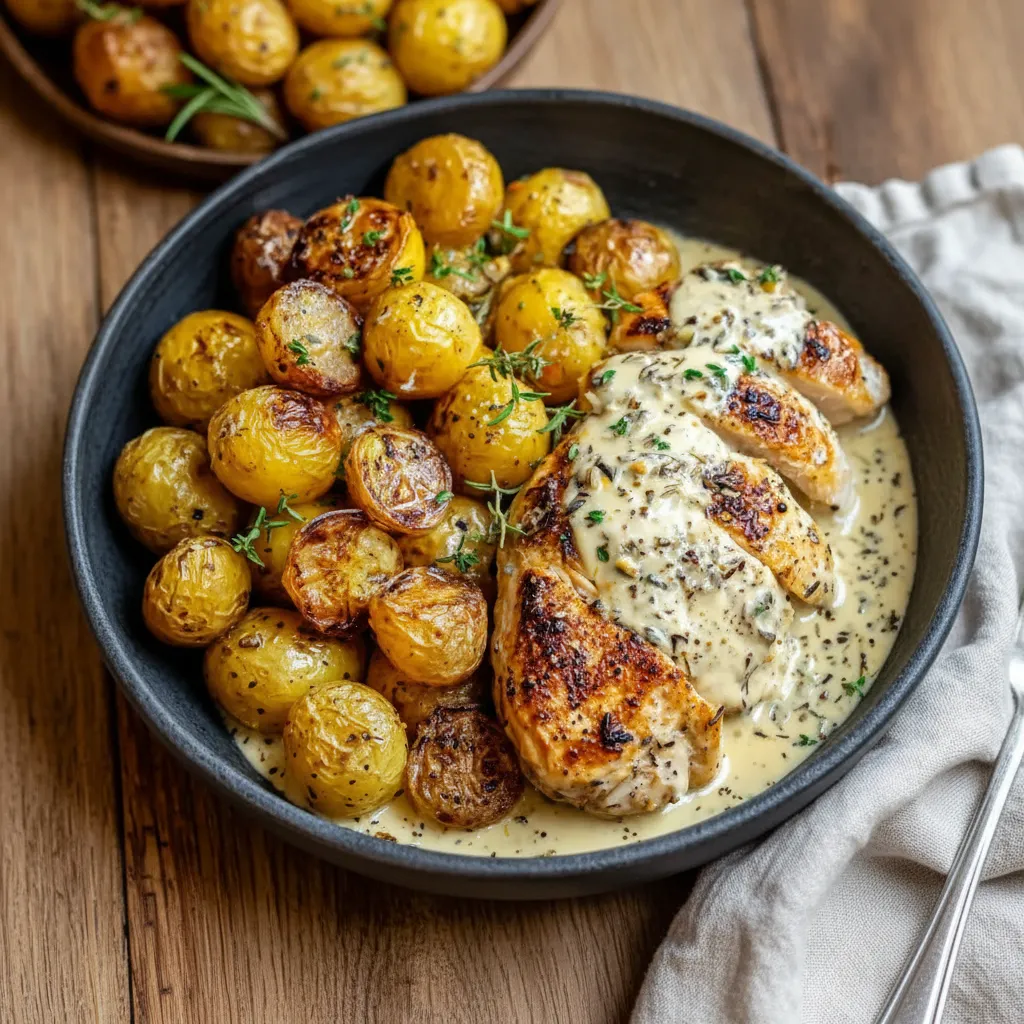
High Protein Creamy Garlic Chicken with Roasted Baby Potatoes
Ingredients
Equipment
Method
- Preheat oven to 400°F. In a large bowl, toss halved baby potatoes with 2 tablespoons olive oil, garlic powder, dried rosemary or thyme, salt, and pepper. Spread in a single layer on a parchment-lined baking sheet, cut side down. Roast for 30-35 minutes, flipping once halfway through, until golden and crispy.
- While potatoes roast, pat chicken breasts dry with paper towels. Season both sides generously with salt, black pepper, and paprika.
- Heat 1 tablespoon olive oil and butter in a large skillet over medium-high heat. Once butter stops foaming, add chicken and sear for 5-6 minutes per side until golden brown and internal temperature reaches 165°F. Remove chicken and set aside on a plate, tenting with foil.
- Reduce heat to medium. Add minced garlic to the same skillet and sauté for 1 minute, stirring constantly, until fragrant. Do not let it brown.
- Pour in chicken broth and scrape up browned bits from the bottom of the pan. Let simmer for 1 minute, then stir in heavy cream, Parmesan cheese, and Italian seasoning. Whisk until cheese melts and sauce is smooth.
- Let sauce simmer gently for 3-5 minutes, stirring occasionally, until it thickens to a creamy consistency. Taste and adjust seasoning with salt and pepper.
- Return chicken to skillet, spooning sauce over the top. Simmer for 2 minutes to heat through and let chicken absorb sauce flavors.
- Serve creamy garlic chicken alongside roasted baby potatoes. Spoon extra sauce over chicken and garnish with fresh chopped parsley.