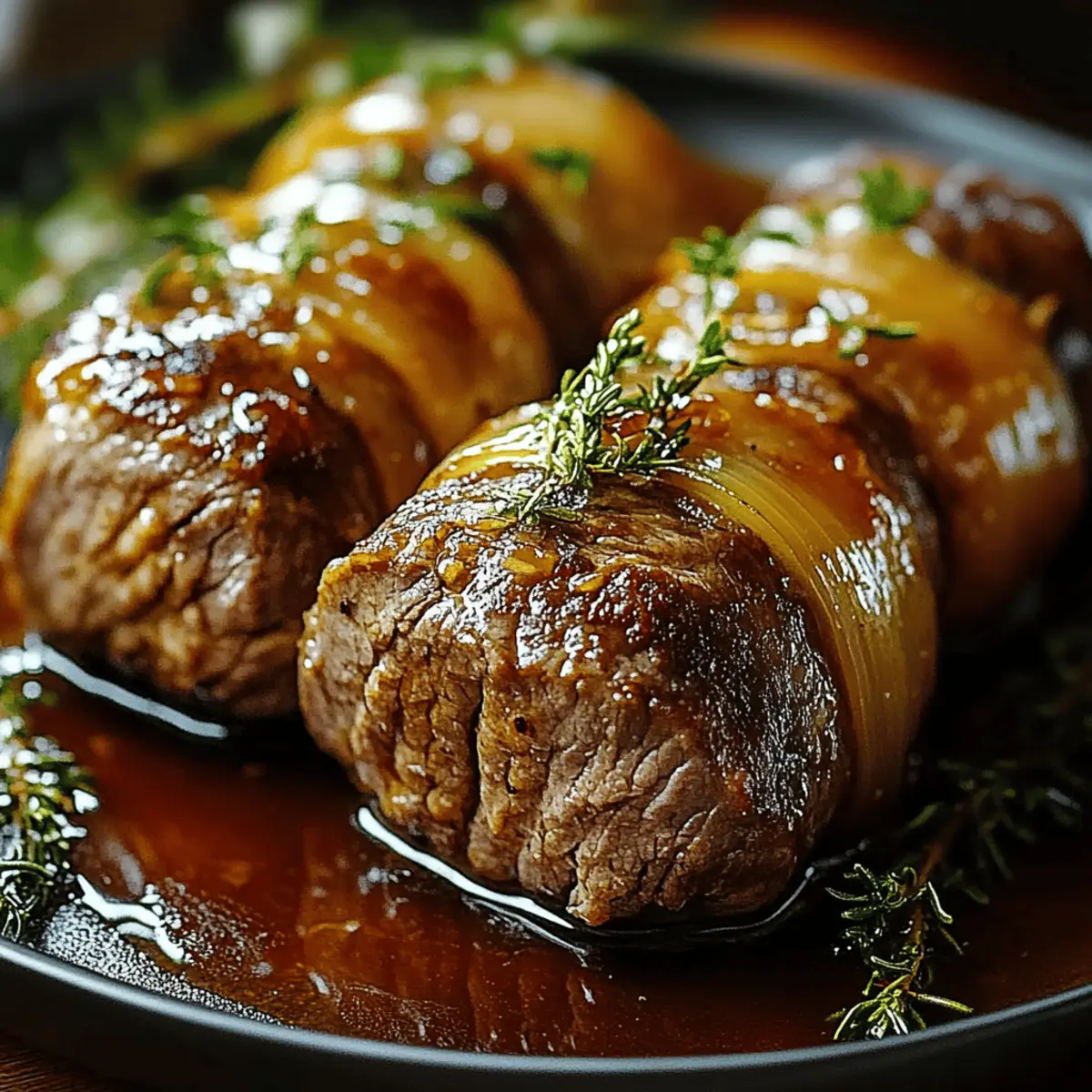
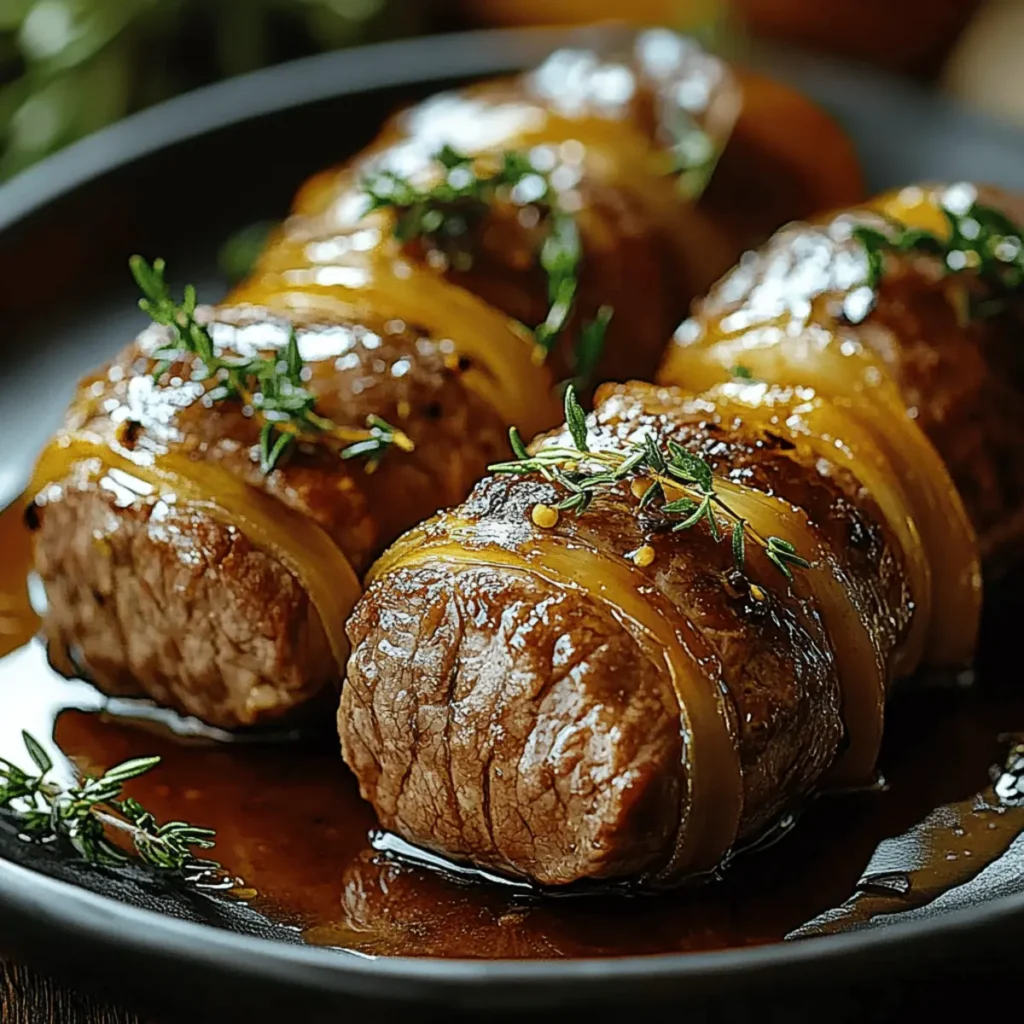
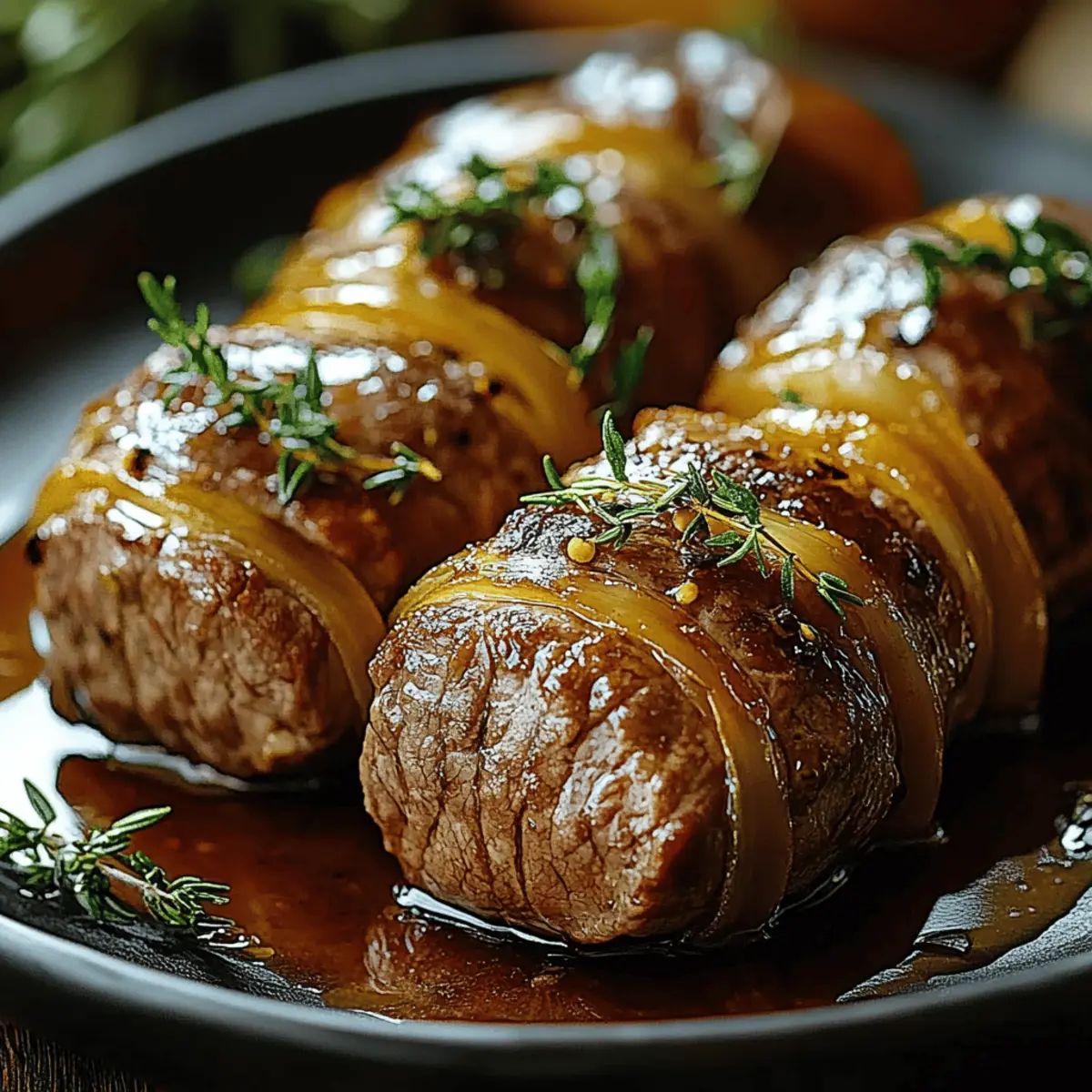
Few dinners are as deeply satisfying as a plate of German beef rouladen. Thin slices of beef wrapped around a sharp, savory filling of mustard, bacon, and dill pickle, then braised low and slow until the meat is completely tender and surrounded by a rich brown gravy — this is the kind of dinner that makes people quiet at the table in the best possible way. If you’ve never made traditional German beef rouladen at home, the process is more approachable than it looks, and the result is absolutely worth the time.
This is a weekend cooking project that rewards patience. The 90-minute braise is mostly hands-off, and because rouladen genuinely taste better the next day after sitting in their gravy overnight, this doubles as one of the better meal-prep dinners you can have in your rotation. Make it Sunday, eat it better on Monday.
Why You’ll Love This German Beef Rouladen
The flavor combination inside the roll is what sets this dish apart. Spicy brown mustard, smoky bacon, and briny dill pickle create a filling that’s sharp, rich, and savory all at once — and those flavors slowly infuse into the beef and the braising liquid during the long cook, building a gravy that tastes like it took far more effort than it did.
The braise itself is forgiving. Once the rouladen are seared and submerged in the liquid, the low heat does the work. There’s no hovering, no constant attention — just time. The red wine (optional but worth it) deepens the gravy considerably and adds a subtle complexity that lifts the whole dish.
From a practical standpoint, this is a strong make-ahead dinner. The rouladen hold their shape well, reheat gently on the stovetop, and the gravy only improves with time. It’s also a genuinely impressive dish for a dinner guest who’s never seen it made before.
Ingredients for German Beef Rouladen
I always ask my butcher to slice the top round thin and pound it to about 1/4 inch — it saves significant prep time and ensures even thickness across all four pieces, which matters for even cooking. If you’re working with a standard grocery store package, a meat mallet and some patience gets you there.
The Beef & Filling:
- 4 thin slices top round or flank steak, approximately 1/4 inch thick, pounded thin
- 4 teaspoons German mustard (Düsseldorf or spicy brown)
- 4 slices bacon
- 1 large dill pickle, sliced into long spears
- 1 small yellow onion, thinly sliced
- Salt and black pepper, to taste
The Braising Liquid & Gravy:
- 2 tablespoons butter or oil
- 2 cups beef broth
- 1/2 cup red wine (optional)
- 1 carrot and 1 celery stalk, chopped
- 1 tablespoon cornstarch mixed with 2 tablespoons water
For the mustard, Düsseldorf is the traditional choice and the flavor is noticeably different from American yellow mustard — sharper, slightly more pungent, with less sweetness. Spicy brown mustard is a reliable substitute if you can’t find it. I’d avoid Dijon here; it’s too mild and the flavor gets lost during the braise.
On the beef, top round is the classic cut for rouladen because it holds its shape during the long cook without falling apart. Flank steak works well too but is slightly less forgiving. Either way, the pounding step is essential — it makes rolling significantly easier and helps the beef become tender during the braise.
The red wine is optional but I find it adds a depth to the gravy that beef broth alone doesn’t quite reach. A basic dry red like a Merlot or Côtes du Rhône works well. Nothing expensive.
How to Make German Beef Rouladen
This comes together in three distinct phases: assembly, searing, and braising. Each one matters, and the sear in particular is worth doing properly — that dark crust on the outside of each roll is what gives the gravy its color and depth.
Assemble the Rolls:
- Lay the beef slices flat on a clean work surface and season both sides with salt and pepper. Spread 1 teaspoon of mustard evenly across each slice, going nearly edge to edge.
- Lay one slice of bacon flat on top of the mustard. Scatter a few thin onion slices across the bacon, then place a pickle spear at one short end of the beef.
- Starting from the pickle end, roll the beef up as tightly as possible. This is the most important step — a loose roll lets the filling escape into the braising liquid and the center loses its character. Secure each roll firmly with kitchen twine or two toothpicks. In my experience, twine holds more reliably through a 90-minute braise.
Sear and Braise:
- Heat the butter or oil in a Dutch oven or heavy-bottomed pot over medium-high heat until it shimmers. Add the rouladen and sear on all sides — this takes about 6 to 8 minutes total. You’re looking for a deep mahogany crust, not just a light brown. That color is flavor. Remove the rolls and set aside.
- Add the chopped carrot, celery, and any remaining onion to the same pot. Cook for 3 to 4 minutes, stirring occasionally, until slightly softened. Pour in the red wine first if using, scraping the bottom of the pot to lift all the browned bits. Add the beef broth and stir to combine.
- Return the rouladen to the pot, nestling them into the liquid. They don’t need to be fully submerged — halfway is fine. Bring to a gentle simmer, cover, and reduce heat to low. Braise for 90 minutes. At the 45-minute mark, flip the rolls once.
Finish the Gravy:
- Remove the rouladen carefully and set aside. Strain the braising liquid through a fine mesh strainer into a clean saucepan and discard the solids. Bring the liquid to a simmer over medium heat, whisk in the cornstarch slurry, and cook for 2 to 3 minutes until the gravy reaches a glossy, coating consistency. Taste and adjust seasoning. Remove twine or toothpicks from the rouladen and return them to the gravy before serving.
What to Serve with German Beef Rouladen
This is a rich, hearty dish with a deeply savory gravy, so the sides work best when they either absorb that sauce or provide a fresh contrast to it.
Spätzle: The traditional German egg noodle is genuinely the ideal pairing here. The soft, slightly chewy noodles soak up the gravy beautifully and keep the meal feeling cohesive and authentic. If you can find dried Spätzle at a specialty store, it’s worth picking up.
Boiled or Mashed Potatoes: The simplest and most practical option. Creamy mashed potatoes catch the gravy and balance the boldness of the beef filling with something mild and comforting.
Rotkohl (German Red Cabbage): Braised sweet-and-sour red cabbage is the classic vegetable pairing for rouladen. The slight acidity and sweetness cut through the richness of the gravy in a way that steamed vegetables simply don’t.
Egg Noodles: Wide egg noodles with a little butter are a fast weeknight-friendly alternative to Spätzle when you don’t have access to a specialty ingredient. Nearly as satisfying.
Simple Green Salad: A lightly dressed salad of bitter greens — arugula or endive — with a sharp vinaigrette provides a clean, refreshing contrast to the heaviness of the braised beef.
Pro Tips & Variations
Get the roll tight: Every extra second you spend rolling firmly saves you from a hollow, collapsed rouladen at the table. Start from the pickle end and use consistent pressure throughout.
Make it ahead: Rouladen are at their best reheated. Cook the full recipe the day before, let it cool completely in the gravy, and refrigerate overnight. Reheat gently on the stovetop over low heat. The gravy thickens further and the beef becomes even more tender.
No pickles: If dill pickle isn’t to your taste, finely sautéed mushrooms make a good filling swap. They bring earthiness and moisture without the brine.
Leaner option: Turkey bacon works in place of pork bacon and still provides enough fat to keep the filling from drying out during the braise.
Deeper gravy: Stir a tablespoon of tomato paste in with the vegetables before adding the wine. It adds color and a subtle richness that makes the gravy taste like it simmered for much longer.
Storage & Reheating Tips
Store rouladen submerged in the gravy in an airtight container in the refrigerator for up to 3 days. I always keep them in the gravy rather than separate — the meat stays moist and the flavors continue to develop.
Reheat on the stovetop over low heat, covered, for about 15 minutes. Avoid the microwave if you can; the rapid heat can tighten the beef and make it chewy. If the gravy has thickened too much in the fridge, add a splash of beef broth while reheating and stir to loosen.
For freezing, rouladen freeze well for up to 2 months. Freeze them in the gravy in a sealed container and thaw overnight in the refrigerator before reheating.
Common Questions
Can I make this without red wine? Absolutely. Replace the wine with an equal amount of additional beef broth plus a tablespoon of Worcestershire sauce. The gravy will be slightly lighter in color but the flavor is still excellent.
How do I keep the rolls from unraveling during cooking? Twine is more reliable than toothpicks for a long braise. Wrap it around the roll in two or three places and tie firmly. If you only have toothpicks, use two per roll inserted at angles and check them at the halfway flip.
Can I use a slow cooker instead? Yes. Complete the searing and sautéing steps on the stovetop first — don’t skip those. Transfer everything to the slow cooker and cook on low for 6 to 7 hours. Make the gravy separately at the end using the strained braising liquid.
German beef rouladen reward the time you put into them. The prep is straightforward, the braise runs itself, and the result is a dinner that’s genuinely special whether you’re serving family on a Sunday evening or sitting down to leftovers reheated on a Tuesday. Give it a go on a slow weekend afternoon and see what the fuss is about.
Traditional German Beef Rouladen
Ingredients
Equipment
Method
- Lay the beef slices flat and season both sides with salt and pepper. Spread 1 teaspoon of mustard evenly across each slice.
- Lay one slice of bacon on top of the mustard on each beef slice. Add a few onion slices, then place a pickle spear at one short end.
- Roll each slice up tightly from the pickle end. Secure firmly with kitchen twine or two toothpicks inserted at angles.
- Heat butter or oil in a Dutch oven over medium-high heat until shimmering. Sear the rouladen on all sides for 6 to 8 minutes total until a deep mahogany crust forms. Remove and set aside.
- Add the chopped carrot, celery, and remaining onion to the pot. Cook for 3 to 4 minutes. Pour in the red wine if using, scraping the bottom to lift the browned bits. Add the beef broth and stir.
- Return the rouladen to the pot, nestling them into the liquid. Bring to a gentle simmer, cover, and reduce heat to low. Braise for 90 minutes, flipping the rolls once at the 45-minute mark.
- Remove the rouladen carefully. Strain the braising liquid through a fine mesh strainer into a clean saucepan. Bring to a simmer, whisk in the cornstarch slurry, and cook for 2 to 3 minutes until the gravy is glossy and coats a spoon. Remove twine or toothpicks from the rouladen, return to the gravy, and serve.