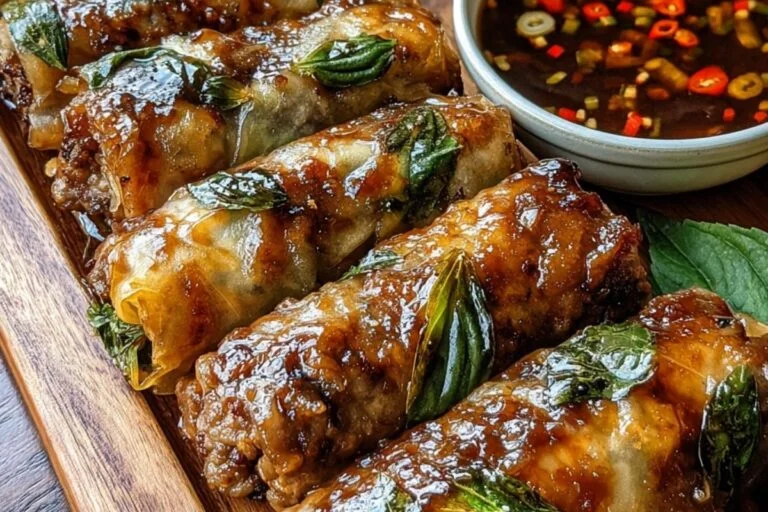
Thai basil beef rolls bring the bold, aromatic flavors of Thai cuisine into a handheld dinner that’s both fun to make and impressive to serve. These fresh rice paper wraps are filled with savory ground beef, crisp bell peppers, and fragrant Thai basil, creating a combination that’s lighter than spring rolls but just as satisfying. The best part is watching the Thai basil wilt into the hot beef, releasing those distinctive anise-like aromatics that make this dish so memorable.
The beauty of these rolls is how quickly they come together. The beef filling cooks in under ten minutes, and once you get the hang of rolling rice paper, assembly moves fast. Unlike fried spring rolls, these can be served fresh and light, or you can pan-sear them for crispy edges that contrast beautifully with the tender filling. Either way, they’re endlessly dippable and perfect for a weeknight dinner that feels special.
I make these when I want something different from the usual rotation—they’re interactive enough to keep dinner interesting but easy enough that I’m not stuck in the kitchen all evening. The filling can be prepped ahead and the actual rolling becomes a fun activity you can do at the table. Serve them with a few different dipping sauces and you’ve got a dinner that feels like a restaurant experience at home.
Why You’ll Love These Thai Basil Beef Rolls
These rolls showcase fresh ingredients in a way that lets each component shine. The Thai basil is the star here—its unique flavor is completely different from Italian basil, with notes of anise and mint that pair perfectly with beef and garlic. When you fold it into the hot beef mixture, those essential oils release and perfume the entire filling.
Rice paper wrappers keep things light and let you see the colorful ingredients inside. They’re naturally gluten-free and have a slightly chewy texture when fresh, or you can crisp them up for contrast. The neutral wrapper doesn’t compete with the bold filling, making these rolls all about what’s inside.
The cooking method is straightforward and forgiving. Ground beef browns quickly and absorbs the soy sauce and garlic beautifully. The bell peppers add sweetness and crunch without requiring any special knife skills—just slice them thin and they cook in minutes. Everything happens in one skillet, keeping cleanup minimal.
Rolling technique gets easier with practice, and imperfect rolls still taste amazing. The first couple might be a little loose or oddly shaped, but by your third or fourth, you’ll have the motion down. Even messy rolls are delicious when dipped in sauce, so there’s no pressure to make them perfect.
Ingredients for Thai Basil Beef Rolls
I use 85% lean ground beef for the right balance of flavor and moisture. Leaner beef can dry out, while fattier options make the filling greasy. The beef should have good color—bright red indicates freshness—and break apart easily when you start cooking it.
The Beef Filling:
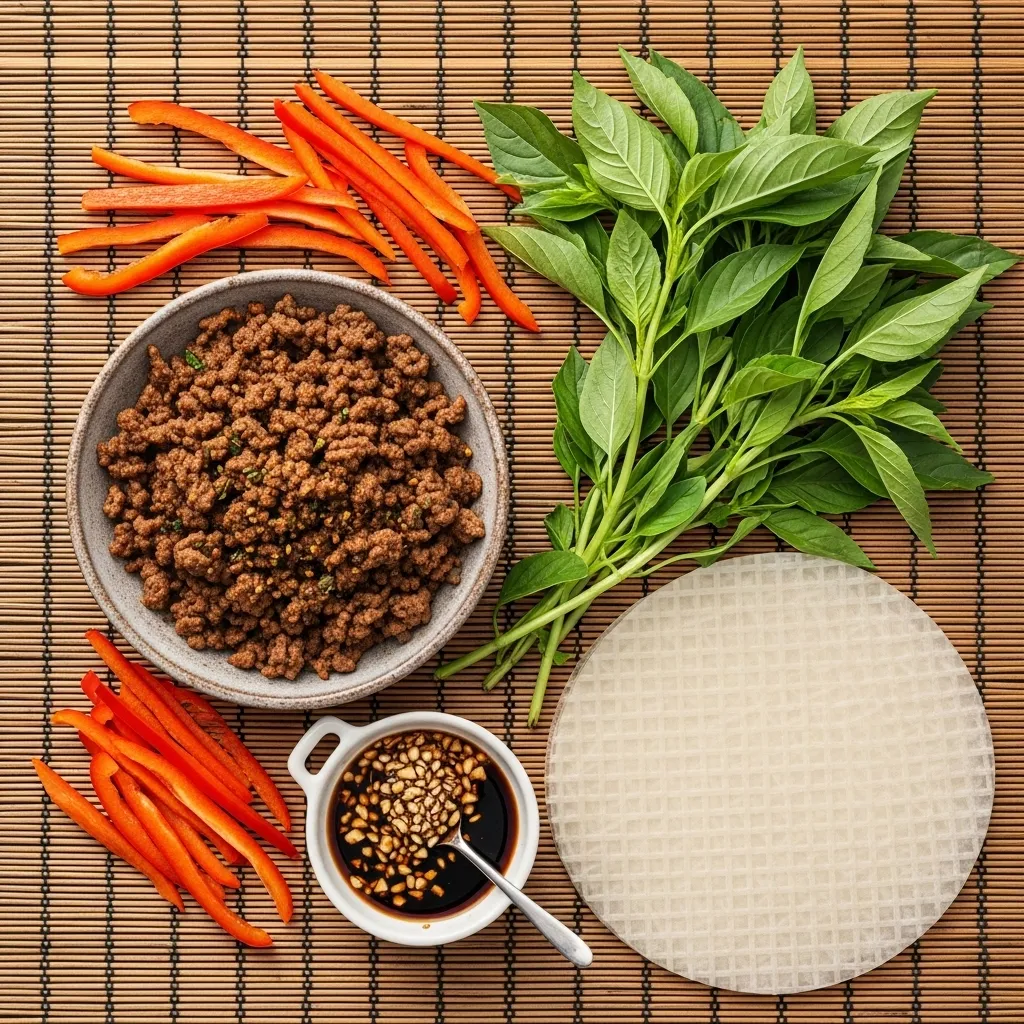
- 1 lb (450g) ground beef (85% lean recommended)
- 1 tablespoon soy sauce (low-sodium preferred)
- 1 medium bell pepper (red or yellow), thinly sliced
- 2 cups fresh Thai basil leaves
- 2 cloves garlic, minced
The Wraps:
- 1 package rice paper wrappers (round)
- Warm water (for soaking)
Optional Aromatics & Garnish:
- 1 teaspoon ginger paste or freshly grated ginger
- Sliced green onions
- Fresh cilantro
Ingredient Notes:
Thai basil is essential and not interchangeable with Italian basil. Look for it at Asian markets or well-stocked grocery stores—it has smaller, pointier leaves with purple stems and that distinctive licorice-like aroma. If you absolutely can’t find it, regular basil plus a small amount of fresh mint gets you closer to the right flavor profile, though it’s not quite the same.
Rice paper wrappers are sold in the Asian section of most supermarkets. They come in various sizes—I prefer the 8 to 9-inch round ones for these rolls. Look for packages that say “spring roll wrappers” or “rice paper.” The wrappers are brittle and translucent when dry, becoming soft and pliable when soaked.
Low-sodium soy sauce gives you better control over the salt level in the filling. Regular soy sauce works too, but you might want to taste the beef mixture before adding any additional salt. For gluten-free cooking, tamari is a perfect substitute with nearly identical flavor.
Red or yellow bell peppers are sweeter than green and add beautiful color to the filling. Slice them as thin as possible—they’ll cook faster and be easier to roll without creating bulky spots that might tear the rice paper.
How to Make Thai Basil Beef Rolls
The key to great filling is getting good browning on the beef, which develops flavor through caramelization. I always break the beef into small crumbles so it cooks evenly and mixes well with the other ingredients.
- Heat a large skillet over medium-high heat. Add the ground beef and break it up with a spatula or wooden spoon as it cooks. Let it sit undisturbed for a minute or two between stirring to allow some pieces to brown deeply. Cook for about five minutes total until the beef is completely browned with no pink remaining. The beef should have some darker, caramelized bits for maximum flavor.
- Drain off any excess fat if there’s more than a tablespoon or so in the pan. Add the soy sauce and minced garlic, stirring to combine. The soy sauce will sizzle and coat the beef immediately. Add the thinly sliced bell peppers and sauté for two to three minutes, stirring frequently. The peppers should soften slightly but still have some crunch.
- Remove the skillet from the heat completely. This is important—you want the pan off the burner before adding the basil. Immediately fold in the fresh Thai basil leaves, stirring them through the hot beef mixture. The residual heat will wilt the basil perfectly without cooking it so much that it loses its bright flavor and turns dark. The basil should wilt within thirty seconds, releasing its aromatic oils. Set the mixture aside to cool slightly while you prep your workspace.
- Fill a wide, shallow dish or pie plate with warm water—not hot, just comfortably warm to the touch. Set up your rolling station with the water dish, a clean cutting board or large plate for assembling, and a platter for the finished rolls. Have all your filling ready nearby.
- Dip one rice paper wrapper into the warm water and turn it once to ensure both sides get wet. Leave it in the water for only ten to fifteen seconds. The wrapper should feel slightly softened but still have some firmness—it will continue to soften as you work with it. Don’t over-soak or it becomes too fragile and tears easily.
- Lay the dampened wrapper on your clean, flat surface. Place about two to three tablespoons of the beef mixture in a horizontal line across the bottom third of the wrapper, leaving about an inch of space on the bottom edge and both sides. Don’t overfill—too much filling makes rolling difficult and can tear the wrapper.
- Fold the bottom edge of the rice paper up and over the filling, tucking it snugly around the beef mixture. Then fold in both the left and right sides toward the center, like you’re wrapping a burrito. Finally, roll upward from the bottom, keeping everything tight and compact. The moisture in the rice paper will seal the roll closed naturally. Place the finished roll seam-side down on your platter.
- Repeat with the remaining wrappers and filling. You should get about eight to ten rolls depending on how generously you fill them. If you want crispy rolls, heat about a tablespoon of neutral oil in a clean skillet over medium-high heat. Place the rolls seam-side down and cook for about two minutes per side until golden brown and crispy. The rice paper will puff slightly and develop a delicate crunch.
Common mistakes include over-soaking the rice paper, which makes it tear during rolling, and overfilling the rolls, which prevents them from sealing properly. Another issue is working with rice paper that’s too cold—if your first few rolls are difficult, warm your water a bit more.
What to Serve with Thai Basil Beef Rolls
These rolls are best enjoyed with dipping sauces and light sides that complement the fresh, aromatic filling.
Sweet Chili Sauce: The classic pairing for fresh rice paper rolls. The sweet-spicy sauce balances the savory beef and enhances the basil’s aromatic qualities. You can buy it bottled or make your own by combining rice vinegar, sugar, garlic, and red chili flakes.
Peanut Dipping Sauce: Creamy peanut sauce with lime juice, soy sauce, and a touch of sriracha creates a rich, nutty contrast to the light rice paper wrapper. The sauce clings to each bite and adds protein and healthy fats to the meal.
Cucumber Salad: A simple salad of sliced cucumbers, rice vinegar, sugar, and red onion provides cooling crunch and acidity. The bright, refreshing flavors cleanse your palate between rolls and add another layer of texture.
Pickled Vegetables: Quick-pickled carrots, daikon, or red cabbage add tangy crunch that cuts through the richness of the beef. The acidity wakes up your taste buds and keeps each bite interesting.
Jasmine Rice: A small portion of steamed jasmine rice on the side makes the meal more substantial. The fragrant rice complements the Thai basil and soaks up any extra sauce from your plate.
Fresh Mango Slices: Ripe mango cut into strips offers a sweet, tropical contrast to the savory rolls. The fruit provides a refreshing palate cleanser and adds natural sweetness that doesn’t need any sauce.
Pro Tips & Variations
Work with one rice paper wrapper at a time. Don’t soak multiple wrappers in advance—they’ll stick together and become unworkable. The rolling process goes faster than you think once you develop a rhythm, so the slight pause between rolls doesn’t slow you down much.
Keep a damp kitchen towel nearby to wipe your hands between rolls. The rice paper can get sticky, and clean hands make rolling easier. You can also lightly dampen your rolling surface if the wrappers are sticking to the board.
Room temperature filling is easier to work with than hot filling. If you’re in a hurry, spread the cooked beef mixture on a large plate to cool it faster. Warm filling won’t hurt the rice paper, but it makes the wrappers softer and more difficult to handle.
Protein Swaps: Ground turkey creates a leaner filling with a milder flavor that lets the basil shine even more. Ground pork is traditional in many Thai dishes and brings a slightly sweeter, richer taste. For a vegetarian version, crumbled extra-firm tofu seasoned with the same aromatics works surprisingly well.
Add Heat: Stir in sliced Thai bird’s eye chilies with the bell peppers for authentic spice. A dash of sriracha or chili-garlic sauce mixed into the beef adds heat that’s easier to control. Red pepper flakes work in a pinch, though they lack the fresh chili flavor.
Extra Vegetables: Thin matchsticks of carrot, shredded cabbage, or bean sprouts can be added to the filling or rolled in fresh alongside the beef. These additions increase the vegetable content and add different textures.
Make-Ahead Strategy: Cook the beef filling up to two days ahead and store it in the refrigerator. Bring it to room temperature before rolling. You can also prep all your vegetables and have everything ready to assemble quickly when you’re ready to eat.
Storage & Reheating Tips
Fresh rolls are best eaten within a few hours of making them. Rice paper dries out and becomes tough when exposed to air for too long. If you need to store them, wrap each roll individually in plastic wrap and place them in an airtight container for up to two days in the refrigerator.
The rice paper will firm up considerably when cold. Let the rolls sit at room temperature for about fifteen minutes before eating to soften them slightly. They won’t be quite as tender as when fresh, but the flavor remains excellent.
If you made crispy pan-seared rolls, reheat them in a 350°F oven for about eight to ten minutes until warmed through and the wrapper crisps up again. The microwave will make them soggy, so oven reheating is worth the extra time.
The beef filling freezes well for up to three months, though the assembled rolls don’t freeze successfully. Freeze the cooked beef mixture in a freezer-safe container, thaw overnight in the refrigerator, and use it to make fresh rolls whenever you want them.
Common Questions
Can I make these ahead for a party? You can assemble the rolls up to two hours before serving. Arrange them on a platter, cover tightly with damp paper towels, then wrap the entire platter with plastic wrap. This keeps the rice paper from drying out. Remove the covering just before serving.
What if I can’t find Thai basil? Regular Italian basil plus a small handful of fresh mint approximates the flavor, though it’s not identical. Some people add a tiny amount of fennel seeds or star anise to the beef to mimic Thai basil’s anise notes, but this requires a light touch.
Why do my wrappers keep tearing? Over-soaking is the most common culprit. The wrappers should still feel slightly firm when you remove them from water. They continue softening on your work surface. Also make sure your filling isn’t too hot or too sharp—jagged vegetables can poke through the delicate wrapper.
Can I bake these instead of pan-frying? You can brush the assembled rolls lightly with oil and bake at 400°F for about twelve to fifteen minutes, flipping once. They won’t get quite as evenly crispy as pan-frying produces, but they’ll develop some golden spots and a firmer texture than fresh rolls.
How do I keep the rolls from sticking to the plate? Place them seam-side down and make sure they’re not touching each other. If they do stick together, you can lightly oil the platter or place small pieces of lettuce between each roll to create a barrier.
These Thai basil beef rolls prove that impressive dinners don’t need to be complicated. The combination of savory beef, aromatic basil, and fresh vegetables wrapped in delicate rice paper creates something that’s both satisfying and light. Whether you serve them fresh or crispy, they’re always a hit.
Thai Basil Beef Rolls
Ingredients
Equipment
Method
- In a large skillet over medium-high heat, add ground beef and cook, breaking it into small crumbles with a spatula, until browned and no longer pink, about 5 minutes.
- Stir in soy sauce and minced garlic. Add thinly sliced bell peppers and sauté for 2 to 3 minutes until tender-crisp.
- Remove skillet from heat. Immediately fold in fresh Thai basil leaves, allowing the residual heat to wilt them and release their aromatic oils. Set mixture aside to cool slightly.
- Fill a wide, shallow dish with warm water. Submerge one rice paper wrapper for 10 to 15 seconds until pliable but not mushy.
- Lay the softened wrapper on a clean, flat surface. Place 2 to 3 tablespoons of beef mixture in a horizontal line across the bottom third of the wrapper, leaving about 1 inch of space on the bottom and sides.
- Fold the bottom edge over the filling, then fold in the left and right sides toward the center. Roll upward from the bottom to create a tight, sealed package. Place seam-side down on a platter.
- Repeat with remaining wrappers and filling to make 8 to 10 rolls.
- Optional: For crispy rolls, heat oil in a skillet over medium-high heat. Place rolls seam-side down and cook for 2 minutes per side until golden brown and crunchy.
- Serve warm with your favorite dipping sauce such as sweet chili sauce or peanut sauce.