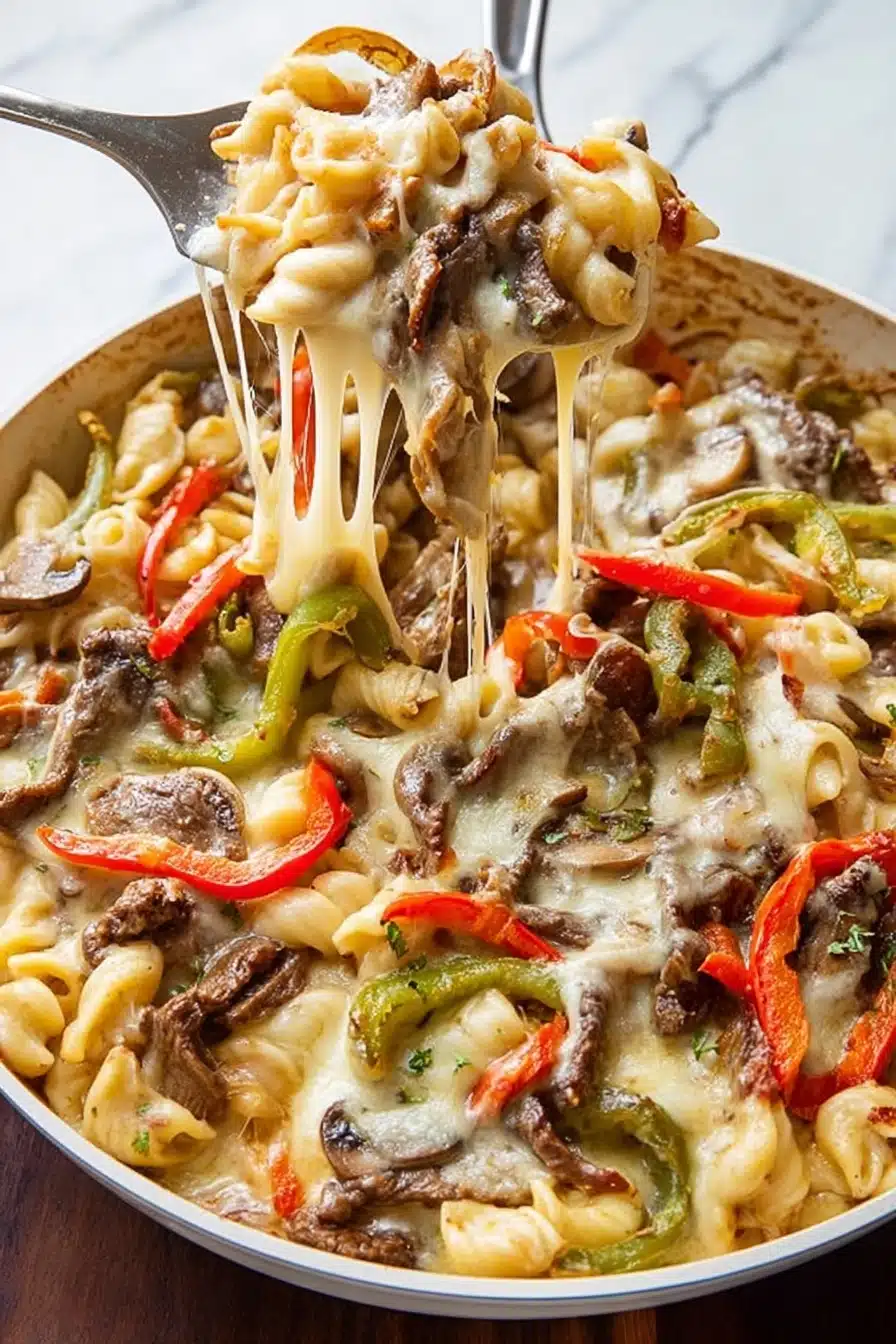
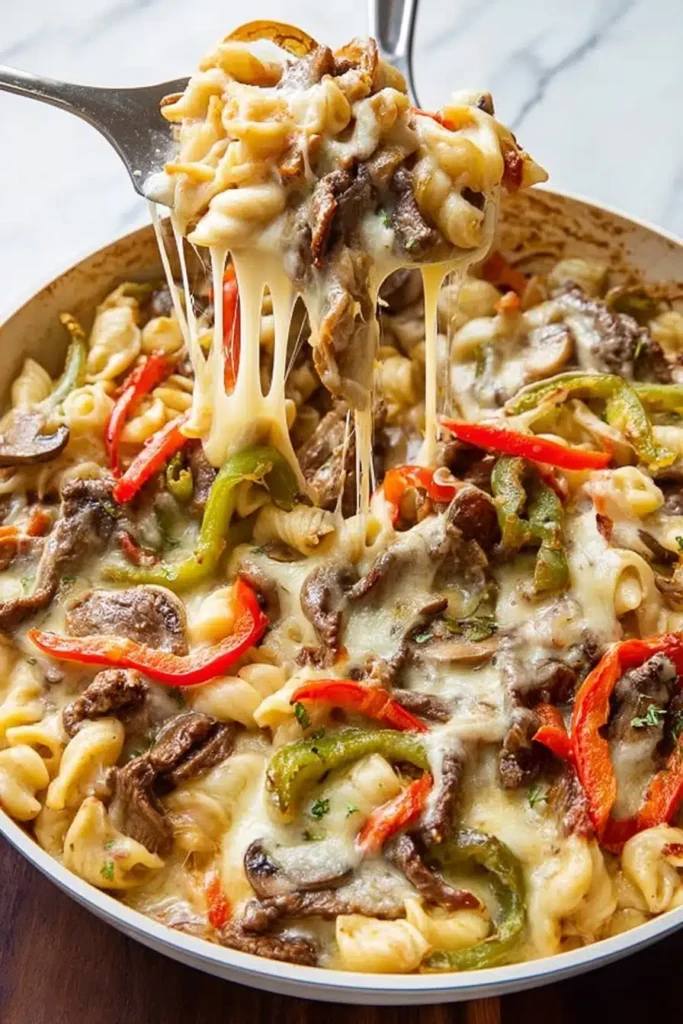
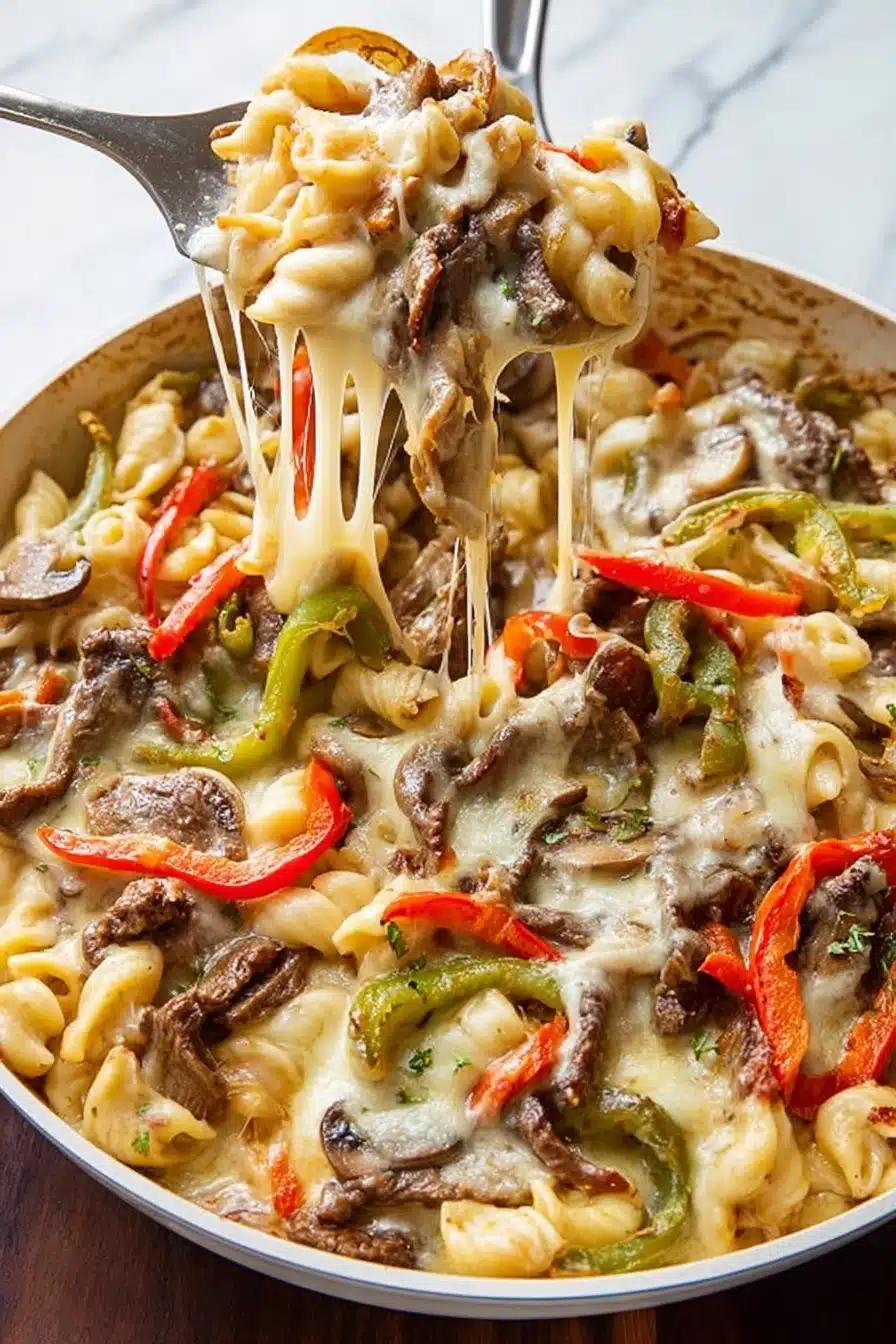
The aroma of seasoned beef and sautéed peppers filling your kitchen is what makes this Philly cheesesteak pasta such a satisfying weeknight dinner. It takes everything you love about the classic sandwich, the tender beef, the sweet peppers and onions, the melty provolone, and brings it all together in a single pan with pasta that soaks up every bit of that rich, savory sauce.
This is a true one-pan dinner, which means less cleanup and more time at the table. The Montreal steak seasoning and beef bone broth do the heavy lifting on flavor, creating a sauce that tastes like it simmered for hours even though it comes together in under an hour. It feeds four to six people comfortably and holds up well as leftovers, making it a reliable recipe to add to your regular weeknight lineup.
Why You’ll Love This Philly Cheesesteak Pasta
What sets this apart from a standard pasta skillet is the intentional use of steakhouse flavors in a format that’s genuinely easy to pull off on a busy evening. The Montreal steak seasoning seasons the meat and the entire dish from the very first step, so the flavor runs all the way through rather than sitting only on the surface.
Cooking the dry pasta directly in the beef bone broth means the pasta absorbs all of that savory depth as it cooks. Adding milk in a second stage creates a velvety, creamy sauce without the need for a separate béchamel. The provolone melts into the sauce at the end to tie everything together. It reheats well with a small splash of liquid, making leftovers almost as good as the original, and the whole recipe is flexible enough to work with either shaved steak or lean ground beef depending on what’s available.
Ingredients for Philly Cheesesteak Pasta
I always recommend shaved steak when making this recipe if you can find it. Most grocery stores carry it near the ground beef, and the thin cuts cook quickly and give you that authentic cheesesteak texture throughout the dish. Here’s what you’ll need:
The Protein: 3/4 lb shaved steak, or 96% lean ground beef
The Aromatics and Veggies: 2 teaspoons Montreal steak seasoning 1/2 cup yellow onion, chopped 1 medium green bell pepper, diced 1 medium red bell pepper, diced 4 oz mushrooms (button or baby bella), diced or sliced
The Pasta and Sauce Base: 8 oz rotini or shell pasta, dry 2 cups beef bone broth, or standard beef broth 1 tablespoon Worcestershire sauce 3/4 cup fat-free milk, or whole milk for a richer sauce
The Cheese: 1 cup provolone cheese, chopped or shredded
I prefer provolone here because its mild, slightly sharp flavor mirrors what you’d find on an authentic Philly cheesesteak. That said, mozzarella gives a creamier melt and cheddar adds a sharper bite, both work well depending on what’s in your fridge. For the broth, beef bone broth adds extra depth and body to the sauce compared to standard broth. If you only have regular beef broth on hand, it’s a fine substitute and the dish still delivers.
How to Make Philly Cheesesteak Pasta
The key to this recipe is building flavor at each stage rather than adding everything at once. Starting with well-seasoned meat, then layering in the vegetables and liquids in sequence, is what gives the finished dish its depth. I find that a large, deep skillet or Dutch oven works best here since you’ll be adding broth and pasta and need room for everything to cook evenly.
- Heat a large, deep skillet or Dutch oven over medium heat. Add the shaved steak along with the Montreal steak seasoning. Cook, breaking the meat into small pieces, for 5 to 6 minutes until browned and no longer pink. If there’s excess liquid in the pan from the meat, drain it off before moving to the next step.
- Stir in the chopped onion and diced bell peppers. Cook for about 5 minutes, stirring occasionally, until the vegetables have softened and the onion is translucent. You’re looking for the peppers to lose their raw crunch but still hold a little texture.
- Add the mushrooms and Worcestershire sauce to the skillet. Cook for another 2 to 3 minutes until the mushrooms are tender and have reduced in size. The Worcestershire adds a layer of umami that deepens the overall sauce flavor.
- Stir in the dry pasta and beef bone broth. Bring the mixture to a full boil over medium-high heat.
- Once boiling, reduce the heat to medium-low. Cover and cook for 8 to 10 minutes, stirring halfway through, until the pasta is al dente and most of the broth has been absorbed. Don’t skip the halfway stir as this prevents the pasta from sticking to the bottom.
- Pour in the milk and stir well to combine. Cover again and continue cooking for another 8 to 10 minutes, stirring occasionally, until the pasta is fully tender and the sauce has thickened to a creamy, velvety consistency.
- Remove the pan from heat. Stir in the provolone cheese until completely melted and incorporated. The residual heat does the work here, and pulling the pan off the burner prevents the cheese from breaking or turning grainy.
- Serve immediately while hot and creamy.
Pro tip: Resist the urge to rush the second cooking phase by cranking up the heat. Low and slow during the milk stage is what gives you a smooth sauce rather than a broken or watery one.
What to Serve with Philly Cheesesteak Pasta
This is a hearty, filling dish on its own, so the best sides are ones that add contrast and keep the meal from feeling too heavy.
Garlic Bread: A crispy garlic bread is the natural pairing here, echoing the bread element of the original sandwich while giving you something to scoop up any extra sauce left in the bowl.
Simple Green Salad with Vinaigrette: A lightly dressed salad with romaine, cucumber, and a sharp vinaigrette cuts right through the richness of the cheese sauce and refreshes the palate between bites.
Roasted Broccolini: Toss broccolini with olive oil and a pinch of salt and roast at 400°F for 15 minutes. The slight bitterness of the broccolini pairs well with the savory beef base.
Steamed Green Beans: Quick, simple, and light enough not to compete with the main dish. A squeeze of lemon over the top adds a welcome brightness.
Coleslaw: A vinegar-based coleslaw brings crunch and acidity that balances the creaminess of the pasta, especially if you’re serving this to a larger group.
Pro Tips & Variations
Drain the meat if needed: Shaved steak can release moisture as it browns. If the pan looks watery after the first step, drain the excess liquid before adding the vegetables. This keeps the vegetables from steaming instead of sautéing.
Pasta shape matters: Rotini and shells both have ridges or curves that trap the sauce. Avoid smooth pastas like penne or ziti here as the sauce tends to slide right off.
Spicy variation: Swap the provolone for pepper jack and add a pinch of crushed red pepper flakes with the vegetables for a version with some heat.
Mushroom-forward vegetarian version: Skip the beef entirely, double the mushrooms, and use vegetable broth in place of beef broth. Add a tablespoon of soy sauce along with the Worcestershire for added depth.
Gluten-free adaptation: Use your preferred gluten-free pasta and confirm your Worcestershire sauce is GF-certified. Adjust the simmer time slightly as gluten-free pasta can cook faster.
Storage & Reheating Tips
Store leftover Philly cheesesteak pasta in an airtight container in the refrigerator for up to 4 days. The pasta will absorb moisture as it sits, so I always add a small splash of milk or broth when reheating to loosen the sauce back to its original consistency. Reheat on the stovetop over low heat for the best results, stirring occasionally, or use the microwave in 60-second intervals, stirring between each.
This dish doesn’t freeze particularly well due to the dairy-based sauce, which can separate after thawing. For meal prep purposes, you can chop the vegetables and measure out the seasoning up to two days ahead to cut down on active time when you’re ready to cook.
Common Questions
Can I use a different cut of beef instead of shaved steak? Yes. Thinly sliced ribeye or sirloin are the closest in texture to authentic cheesesteak. Slice the beef as thin as possible against the grain before cooking. Ground beef is the most convenient option and still produces a delicious result, just with a different texture.
My sauce looks thin after adding the milk. What should I do? Keep cooking uncovered on low heat for a few extra minutes, stirring frequently. The starch from the pasta will continue to thicken the sauce as it cooks. Avoid turning up the heat quickly as this can cause the milk to scorch on the bottom of the pan.
Can I use a different pasta shape? Rotini and shells work best, but elbows or cavatappi are solid alternatives. Avoid long pasta like spaghetti or linguine since it doesn’t distribute evenly in a skillet dish like this.
Is this recipe good for feeding a crowd? It scales up well. Double all ingredients and use a large Dutch oven or stockpot. You may need to add an extra 5 minutes to the covered simmer time when working with a larger volume of pasta and liquid.
Can I make this without mushrooms? Absolutely. The mushrooms add texture and an earthy depth, but the dish works fine without them. You can replace them with additional bell pepper or leave the ratio as-is and reduce the cook time in step three by a minute.
This Philly cheesesteak pasta is the kind of dinner that earns a permanent spot in the rotation. It’s a satisfying, crowd-pleasing meal that comes together in one pan with ingredients most people already keep on hand. Give it a try on your next busy weeknight and see how quickly it disappears.
Philly Cheesesteak Pasta
Ingredients
Equipment
Method
- Heat a large, deep skillet or Dutch oven over medium heat. Add the shaved steak and Montreal steak seasoning. Cook, breaking the meat into small pieces, for 5 to 6 minutes until browned and no longer pink. Drain any excess liquid if needed.
- Stir in the chopped onion and diced bell peppers. Cook for about 5 minutes, stirring occasionally, until the vegetables have softened and the onion is translucent.
- Add the mushrooms and Worcestershire sauce to the skillet. Cook for 2 to 3 minutes until the mushrooms are tender and have reduced in size.
- Stir in the dry pasta and beef bone broth. Bring the mixture to a full boil over medium-high heat.
- Once boiling, reduce the heat to medium-low. Cover and cook for 8 to 10 minutes, stirring halfway through, until the pasta is al dente and most of the broth has been absorbed.
- Pour in the milk and stir well to combine. Cover again and cook for another 8 to 10 minutes, stirring occasionally, until the pasta is fully tender and the sauce has thickened to a creamy consistency.
- Remove the pan from heat. Stir in the provolone cheese until completely melted and incorporated into the sauce.
- Serve immediately while hot and creamy.