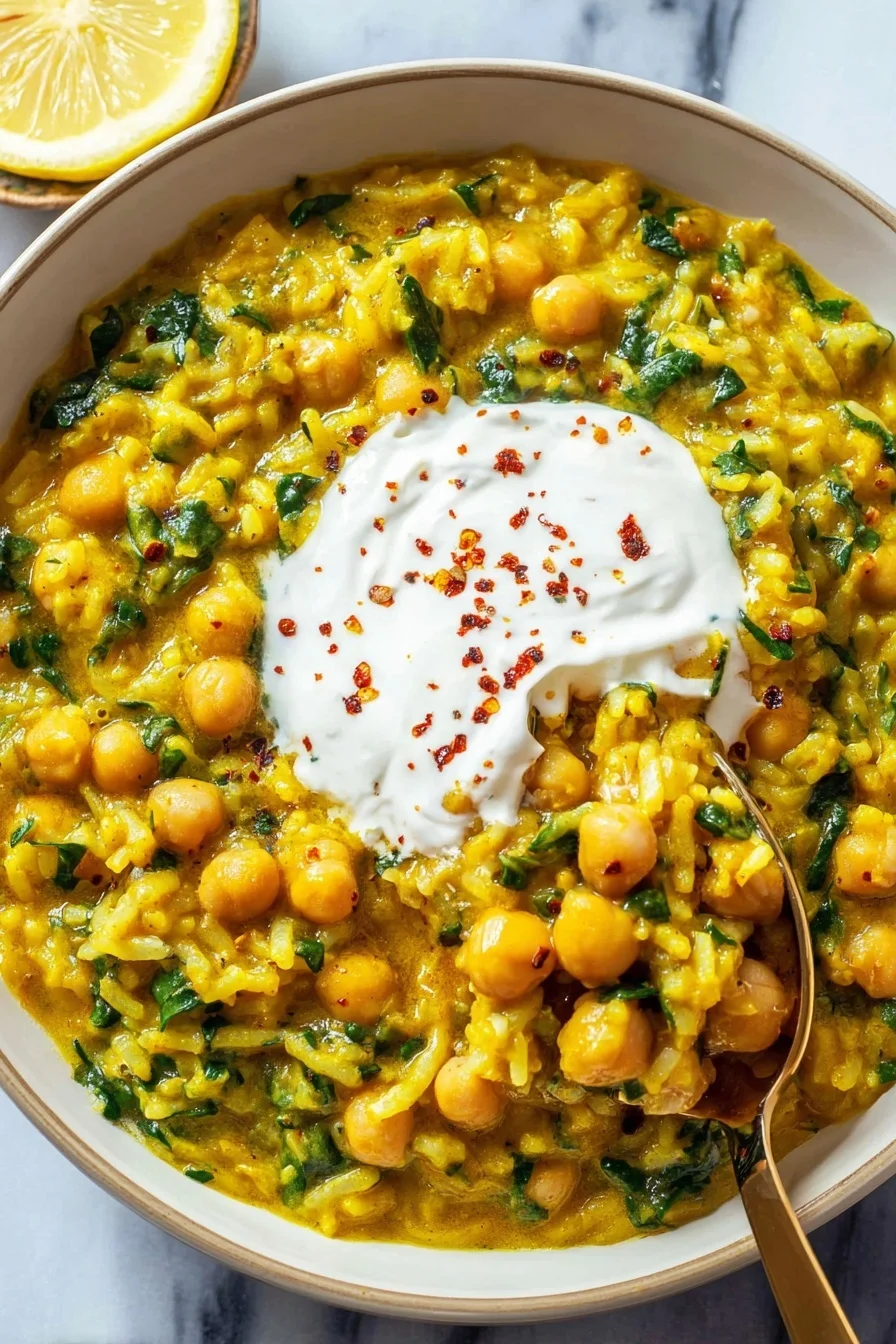
When you need a satisfying dinner that comes together in one pot without sacrificing flavor or nutrition, this turmeric chickpea and spinach rice delivers exactly that. The combination of golden turmeric-spiced rice, tender chickpeas, and fresh wilted spinach creates a complete meal that works beautifully for busy weeknights or easy meal prep. This dish brings warmth and comfort to the table while keeping things simple enough for any night of the week.
What makes this recipe especially practical is how it builds layers of flavor in a single pot. The aromatic base of onion, garlic, and ginger gets toasted with warm spices before the rice absorbs all those flavors during cooking. By the time you stir in the bright lemon juice and fresh herbs, you have a dinner that tastes like you spent hours in the kitchen.
Why You’ll Love This One-Pot Turmeric Chickpea and Spinach Rice
This recipe solves the weeknight dinner dilemma with minimal cleanup and maximum flavor. Everything cooks in one pot, which means less time scrubbing dishes and more time enjoying your meal. The combination of rice and chickpeas provides satisfying protein and fiber that keeps you full.
The golden turmeric gives the rice a beautiful color while adding earthy, warming notes that pair perfectly with the cumin and hint of cinnamon. Fresh spinach wilts right into the hot rice at the end, adding nutrients without any extra cooking steps. This dish works equally well as a vegetarian main course or as a flavorful side that complements grilled proteins.
The flavors improve as the rice sits, making this an excellent choice for meal prep. You can easily scale the recipe up or down depending on how many people you’re feeding. The bright finish of lemon and fresh cilantro keeps the dish from feeling heavy, even though it’s quite filling.
Ingredients for One-Pot Turmeric Chickpea and Spinach Rice
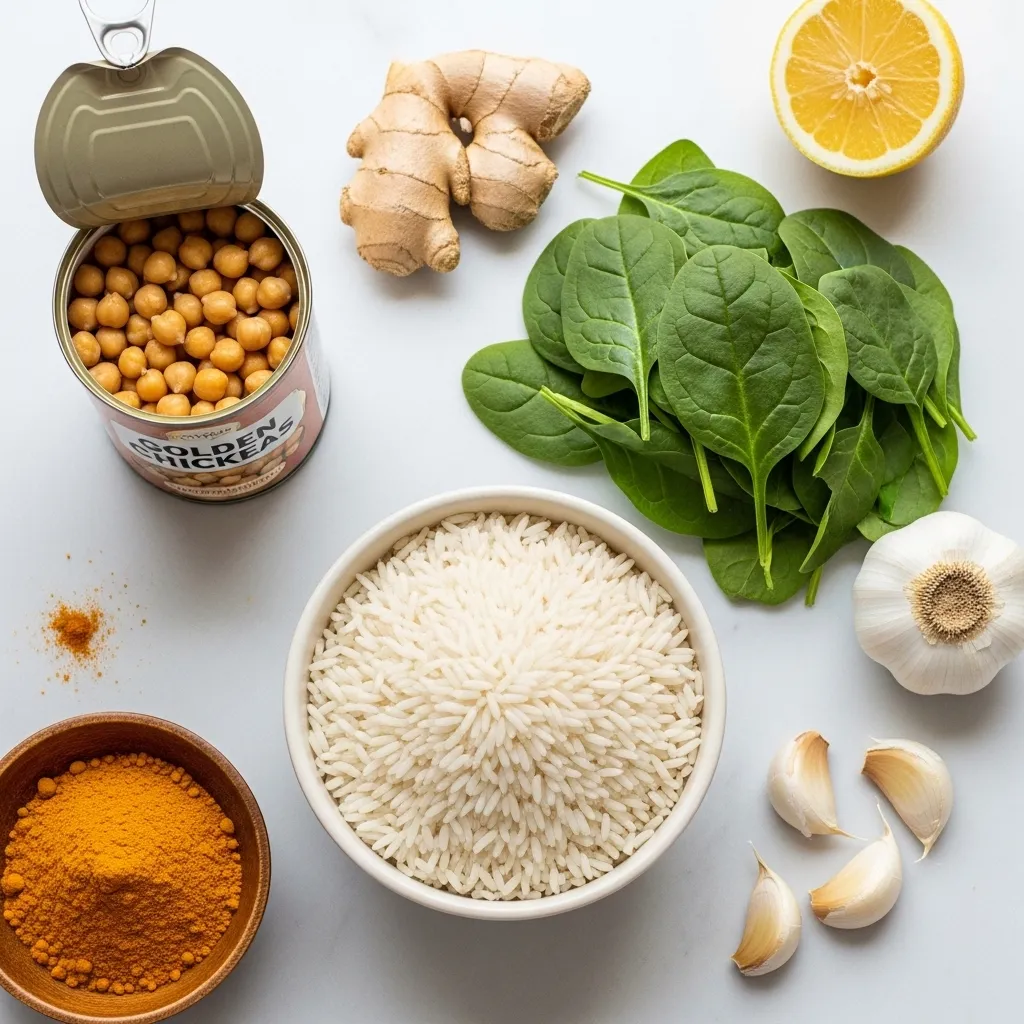
I always rinse my basmati rice thoroughly before cooking—this removes excess starch and helps the grains stay light and separate rather than clumpy. For the chickpeas, I prefer using canned for weeknight convenience, but if you have cooked chickpeas on hand, they work just as well.
The Rice Base:
- 1.5 cups basmati rice, rinsed
- 3 cups vegetable broth (or water)
- 1 can (15 oz) chickpeas, drained and rinsed
The Aromatics & Spices:
- 1 tablespoon olive oil (or coconut oil)
- 1 medium yellow onion, finely diced
- 3 cloves garlic, minced
- 1 tablespoon fresh ginger, grated
- 1.5 teaspoons ground turmeric
- 1 teaspoon ground cumin
- 1/2 teaspoon ground cinnamon (optional, for warmth)
- Salt and black pepper, to taste
The Finish:
- 3 cups fresh baby spinach
- Juice of 1/2 lemon
- 1/4 cup fresh cilantro or parsley, chopped
- Optional: Toasted pine nuts or slivered almonds for crunch
Ingredient Notes:
The quality of your turmeric makes a noticeable difference here. Fresh turmeric has the most vibrant color and flavor, but good ground turmeric works beautifully. I use vegetable broth instead of water whenever possible because it adds another layer of savory depth to the rice. If you only have water, add an extra pinch of salt to compensate.
Fresh ginger brings a bright, slightly spicy note that complements the earthy turmeric perfectly. You can substitute 1 teaspoon of ground ginger if needed, though the fresh version provides better flavor. The optional cinnamon might seem unusual, but it adds a subtle warmth that ties all the spices together without making the dish taste sweet.
Baby spinach wilts down significantly, so don’t worry if 3 cups looks like too much—it will reduce to just the right amount. Regular spinach works too, just remove any thick stems first. For the finishing herbs, cilantro provides a classic pairing with these spices, but flat-leaf parsley offers a milder option if you’re not a cilantro fan.
How to Make One-Pot Turmeric Chickpea and Spinach Rice
The key to getting perfectly fluffy rice with deeply developed flavor is building your base slowly before adding the liquid. Taking a few extra minutes to properly toast the spices and aromatics creates a foundation that makes the entire dish more flavorful.
- Sauté Aromatics: Heat the oil in a large pot or deep skillet over medium heat. Add the diced onion and sauté for about 5 minutes, stirring occasionally, until the pieces become soft and translucent. You want the onion to soften completely without browning too much.
- Toast Spices: Add the minced garlic, grated ginger, turmeric, cumin, and cinnamon to the pot. Stir constantly for about 1 minute until the mixture becomes very fragrant and the onion takes on a golden color. This step blooms the spices and brings out their full flavor while intensifying the yellow color from the turmeric.
- Toast Rice: Add the rinsed rice to the pot and stir everything together for 1–2 minutes. You want every grain coated in the spiced oil mixture. This toasting step helps the rice stay fluffy and separate during cooking rather than turning sticky.
- Simmer: Stir in the chickpeas and vegetable broth, then season with salt and pepper. Bring the mixture to a full boil over medium-high heat. Once you see active bubbling, immediately reduce the heat to low and cover the pot with a tight-fitting lid. Let it simmer undisturbed for 15–18 minutes, until all the liquid has been absorbed and the rice is tender.
- Wilt Spinach: Remove the pot from the heat completely. Quickly lift the lid and pile all the fresh spinach on top of the cooked rice, then replace the lid immediately. Let the pot sit for 5 minutes—the residual steam will perfectly wilt the spinach without making it soggy or overcooked.
- Fluff & Brighten: Use a fork to gently fluff the rice, working the wilted spinach and chickpeas throughout. Squeeze the lemon juice over everything and stir in the fresh cilantro. The lemon brightens all the warm spices and keeps the dish from tasting one-dimensional.
- Serve: Taste and adjust the seasoning with more salt, pepper, or lemon juice as needed. Serve the rice warm, topped with toasted nuts if you want extra texture and richness.
Resist the temptation to lift the lid while the rice cooks—releasing steam disrupts the cooking process and can result in unevenly cooked grains. If you notice the rice is still slightly wet after the cooking time, just let it sit covered off the heat for another 5 minutes to absorb the remaining liquid.
What to Serve with One-Pot Turmeric Chickpea and Spinach Rice
This rice is substantial enough to work as a complete vegetarian dinner on its own, but it also pairs beautifully with proteins and lighter sides that complement the warm spices.
Greek Yogurt or Raita: A cool, creamy dollop of plain Greek yogurt or cucumber raita provides a refreshing contrast to the warm spices and adds extra protein. The tangy dairy balances the earthiness of the turmeric and makes each bite more interesting.
Grilled Chicken or Lamb: If you want to add meat, grilled chicken thighs or lamb skewers seasoned with similar spices create a cohesive meal. The rice serves as a flavorful base that soaks up any juices from the grilled protein.
Simple Green Salad: A crisp salad with cucumber, tomatoes, and a light lemon vinaigrette adds freshness and crunch. The bright acidity cuts through the richness of the rice and chickpeas while keeping the meal feeling balanced.
Roasted Vegetables: Roasted carrots, cauliflower, or bell peppers seasoned with cumin and paprika echo the spices in the rice while adding different textures. The caramelized edges of roasted vegetables provide a nice contrast to the fluffy rice.
Hummus and Pita: Serving this rice with hummus and warm pita bread creates a Middle Eastern-inspired spread that works well for casual dinners or when you’re feeding a group. The creamy hummus adds richness while the pita provides something to scoop with.
Pickled Vegetables: Quick pickled onions, carrots, or turnips add a bright, acidic element that balances the warm, earthy flavors. The crunch and tang wake up your palate between bites of the softer rice.
Harissa or Hot Sauce: For those who enjoy heat, a small bowl of harissa paste or your favorite hot sauce on the side lets everyone adjust the spice level to their preference. The heat plays nicely with the turmeric and cumin.
Pro Tips & Variations
For Maximum Flavor: Toast your whole spices (cumin seeds, whole turmeric if you can find it) in a dry pan before grinding them. The flavor difference is remarkable, though pre-ground spices work perfectly fine for weeknight cooking.
Make-Ahead Strategy: This rice actually tastes better the next day after the flavors have had time to meld. Cook it in the evening, refrigerate overnight, and reheat portions throughout the week for quick lunches or dinners.
Texture Boost: Stir in a handful of toasted cashews, pine nuts, or slivered almonds just before serving. The crunch adds another dimension and makes the dish feel more special without much extra effort.
Creamier Version: Replace 1 cup of the vegetable broth with full-fat coconut milk for a richer, slightly sweeter variation. The coconut milk softens the spices and creates a more luxurious texture.
Brown Rice Adaptation: If you prefer brown rice, increase the broth to 3.5 cups and extend the cooking time to 40–45 minutes. Brown rice needs more liquid and time to become tender, but it adds nuttiness and extra fiber.
Protein Variations: Swap the chickpeas for white beans, lentils, or cubed tofu. Each option brings a different texture while maintaining the plant-based protein component.
Heat Level Adjustment: Add a pinch of red pepper flakes with the other spices if you like things spicy, or stir in a chopped fresh chili pepper with the onions. For a milder version, reduce or omit the black pepper.
Seasonal Changes: In summer, stir in diced tomatoes and fresh basil instead of spinach. In fall, add diced butternut squash at the beginning of cooking for a heartier, sweeter variation.
Storage & Reheating Tips
Store leftover rice in an airtight container in the refrigerator for up to 4 days. I find that glass containers work best because they don’t absorb the turmeric color or retain any lingering spice aromas.
For reheating, add a splash of water or broth to the rice and warm it gently in a covered pot over medium-low heat, stirring occasionally. The extra liquid prevents the rice from drying out and helps restore its fluffy texture. You can also microwave individual portions with a damp paper towel over the bowl to keep moisture in.
This rice freezes reasonably well for up to 2 months, though the texture of the spinach changes slightly after freezing. Portion it into freezer-safe containers and thaw overnight in the refrigerator before reheating. The chickpeas and rice maintain their texture better than the greens.
For meal prep, this recipe serves as an excellent base for building different meals throughout the week. Top it with different proteins, sauces, or vegetables each day to keep things interesting while minimizing your cooking time.
Common Questions
Can I use a different type of rice? Yes, jasmine rice works well with the same liquid ratio and cooking time as basmati. Long-grain white rice also works. For brown rice, increase the broth to 3.5 cups and cook for 40–45 minutes. Avoid short-grain or sticky rice varieties as they won’t give you the light, fluffy texture this dish needs.
What if I don’t have fresh ginger? Substitute 1 teaspoon of ground ginger for the fresh ginger. Add it with the other ground spices during the toasting step. The flavor will be slightly different but still delicious. Fresh ginger has a brighter, more complex taste, but ground ginger provides the warmth this recipe needs.
How can I make this dish gluten-free? This recipe is naturally gluten-free as long as you use a certified gluten-free vegetable broth. Check your broth label to ensure it doesn’t contain any wheat-based additives or flavorings.
Can I double this recipe? Absolutely. Use a larger pot and double all the ingredients. The cooking time remains the same, though you may need an extra 2–3 minutes for the liquid to fully absorb since there’s more volume. Just make sure your pot is large enough to accommodate everything comfortably.
Why is my rice mushy? The most common cause is using too much liquid or not rinsing the rice thoroughly before cooking. Always rinse basmati rice until the water runs clear to remove excess starch. Also, resist lifting the lid during cooking, as this releases steam and disrupts the absorption process.
This turmeric chickpea and spinach rice makes weeknight cooking feel effortless while delivering the kind of flavors that make everyone ask for seconds. The beauty of this dish is how it transforms simple pantry ingredients into something vibrant and satisfying. Give this recipe a try when you need dinner that’s both nourishing and delicious without requiring multiple pots or complicated techniques.
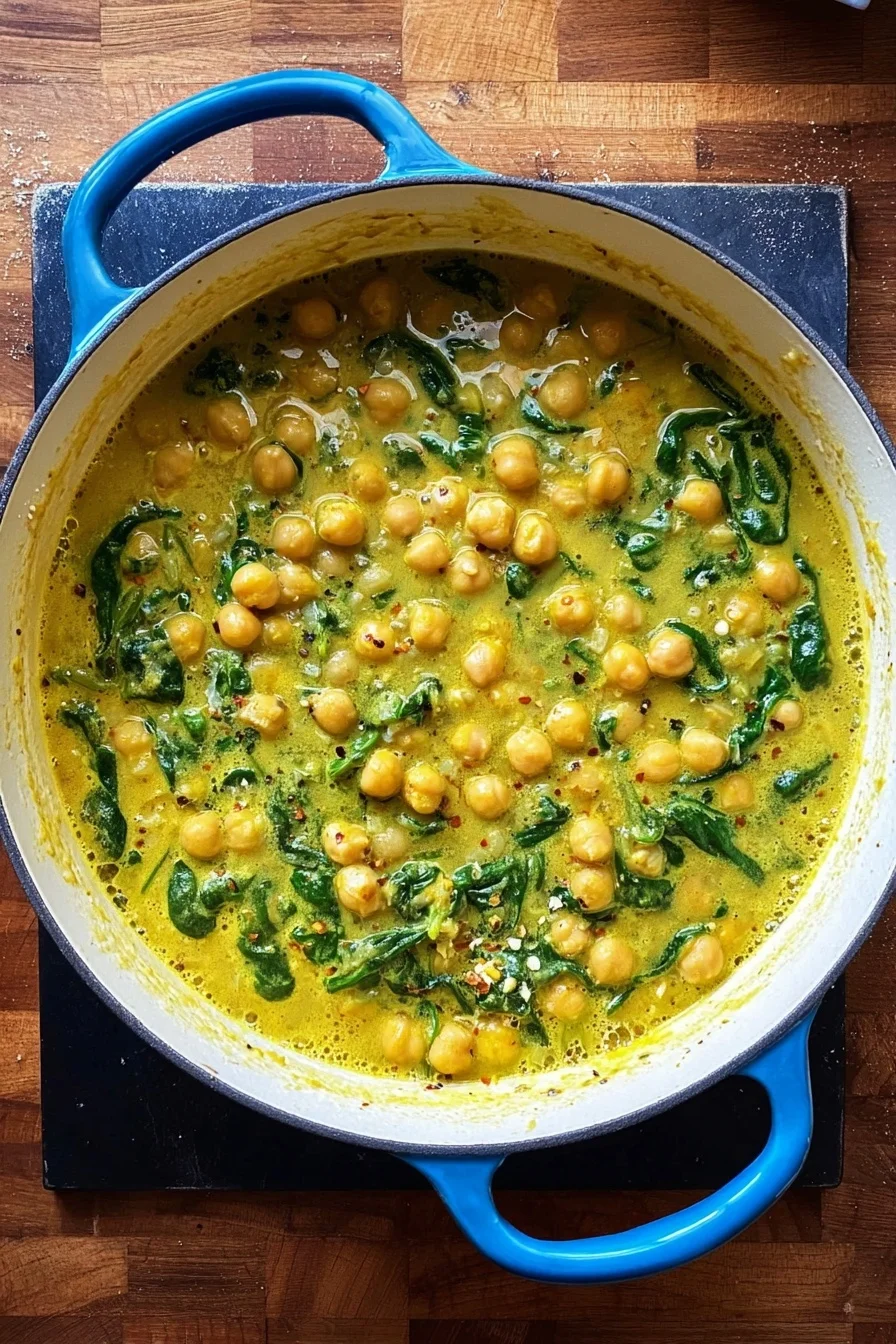
One-Pot Turmeric Chickpea and Spinach Rice
Ingredients
Equipment
Method
- Heat the oil in a large pot or deep skillet over medium heat. Add the diced onion and sauté for about 5 minutes, stirring occasionally, until soft and translucent.
- Add the minced garlic, grated ginger, turmeric, cumin, and cinnamon to the pot. Stir constantly for about 1 minute until the mixture becomes very fragrant and the onion takes on a golden color.
- Add the rinsed rice to the pot and stir everything together for 1-2 minutes, coating every grain in the spiced oil mixture.
- Stir in the chickpeas and vegetable broth, then season with salt and pepper. Bring to a full boil over medium-high heat, then immediately reduce heat to low and cover with a tight-fitting lid. Simmer undisturbed for 15-18 minutes until all liquid is absorbed.
- Remove the pot from heat. Quickly lift the lid and pile all the fresh spinach on top of the cooked rice, then replace the lid immediately. Let sit for 5 minutes to wilt the spinach.
- Use a fork to gently fluff the rice, working the wilted spinach and chickpeas throughout. Squeeze the lemon juice over everything and stir in the fresh cilantro.
- Taste and adjust seasoning with more salt, pepper, or lemon juice as needed. Serve warm, topped with toasted nuts if desired.