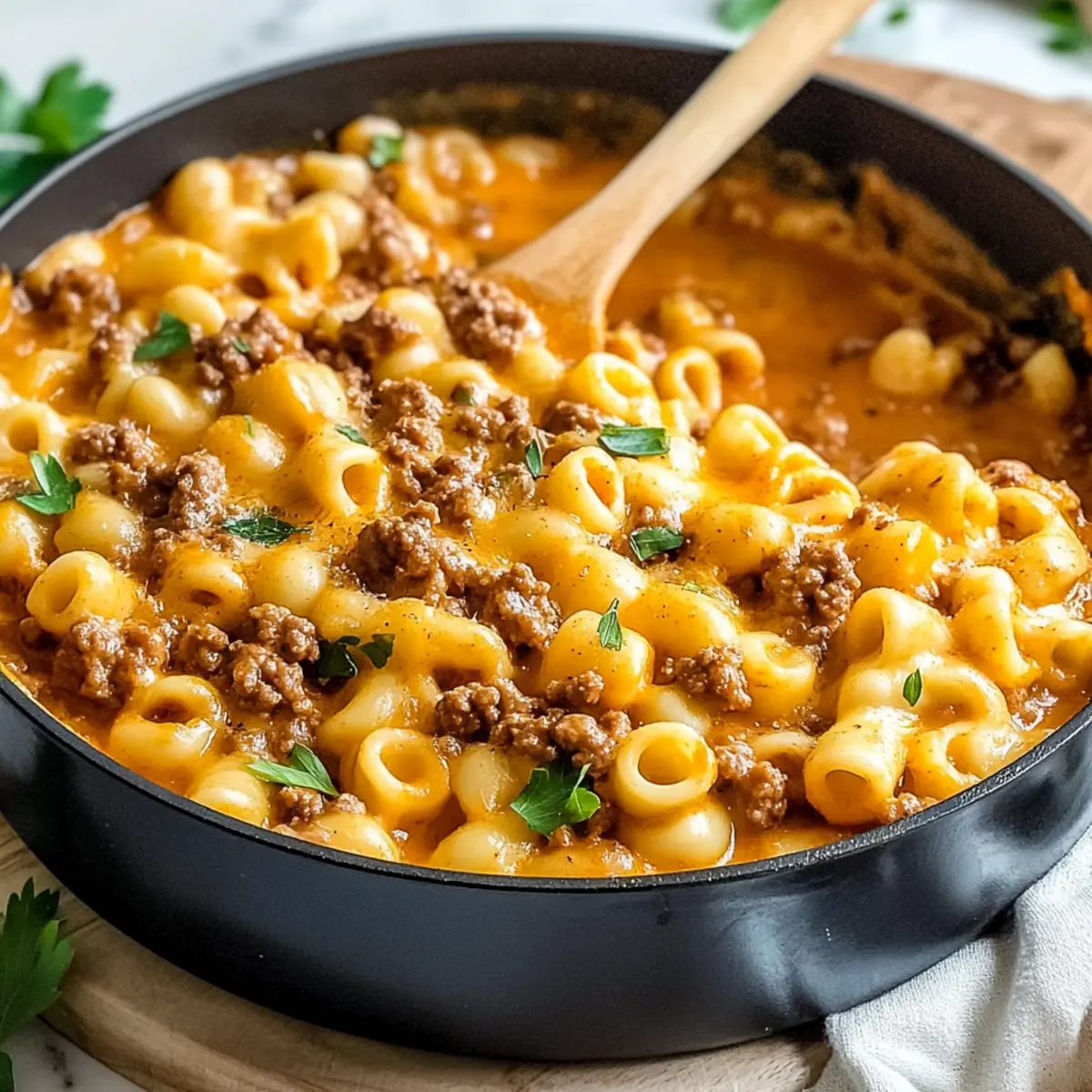
The boxed version of hamburger helper has a particular kind of comfort to it that’s hard to replicate, but this recipe doesn’t just replicate it. It improves on it in every measurable way while keeping exactly the nostalgic, cheesy, one-pan appeal that made the original worth eating in the first place. This high protein hamburger helper delivers over 50 grams of protein per serving, cooks in 25 minutes, and tastes like the kind of dinner that earns requests for seconds.
The upgrades are strategic rather than obvious. Ultra-lean ground beef, high-protein pasta, Fairlife milk, and optional Greek yogurt swap out the nutritionally thin components of the original without changing the cooking method or the finished texture. The sauce is still velvety and cheesy. The pasta still absorbs the beefy, seasoned broth directly in the skillet. The whole thing still comes together in a single pan.
This is comfort food that actually supports your goals rather than working against them, and it’s one of the most efficient dinners in the meal prep rotation.
Why You’ll Love This Macro-Friendly High-Protein Hamburger Helper
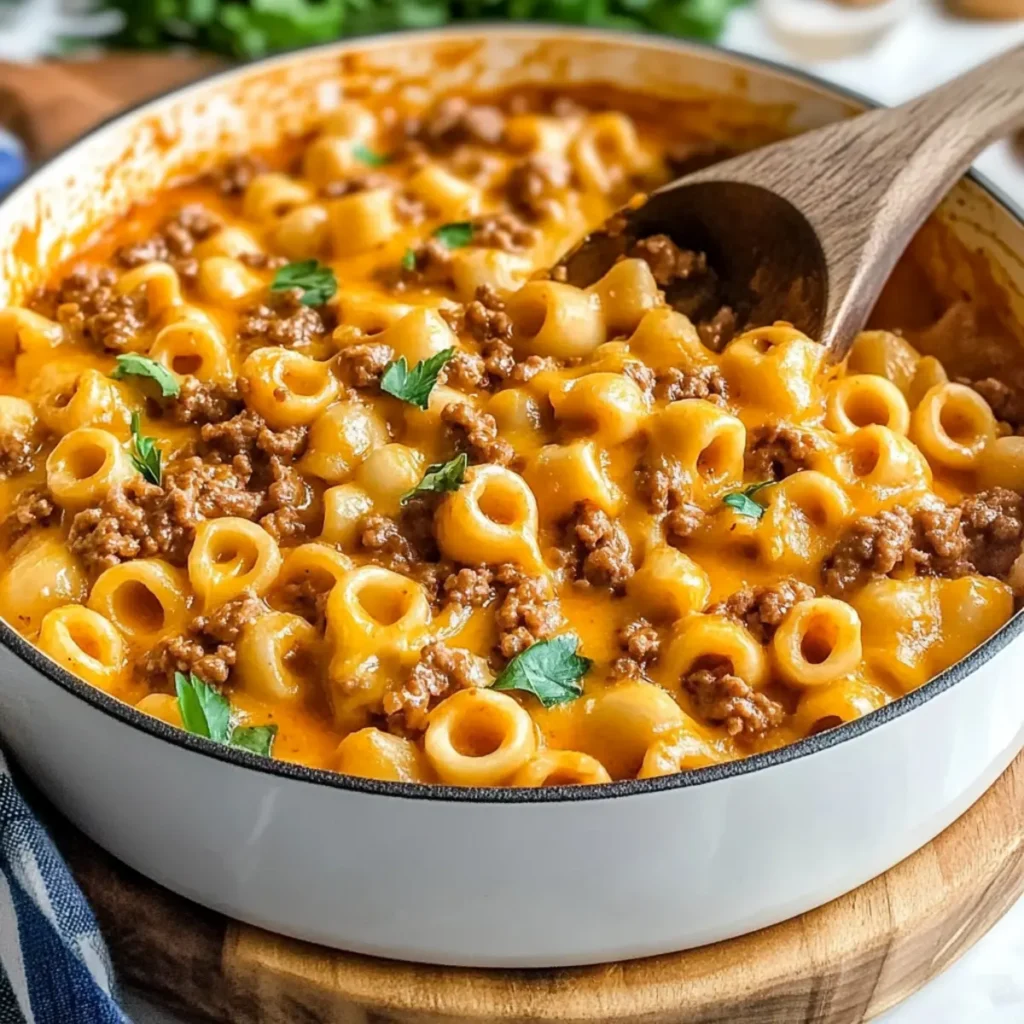
The one-pan pasta method is what keeps this recipe feeling like the real thing. Dry pasta cooked directly in beef broth and milk absorbs the seasoned liquid as it simmers, building flavor from the inside out rather than sitting in a separate sauce that gets stirred together at the end. The starch released from the pasta naturally thickens the broth and milk into a glossy, cohesive sauce that coats every piece.
The yellow mustard is the detail worth paying attention to. It sounds out of place but delivers exactly the tangy, slightly sharp background note that makes the original boxed version taste distinctly like itself rather than just a generic beef pasta dish. One teaspoon is all it takes and it disappears entirely into the sauce while contributing a flavor complexity that’s hard to explain and impossible to replicate with anything else.
The Greek yogurt finish is optional on paper but worth including if protein maximization is a goal. Stirred in off the heat, it adds creaminess, tang, and an additional protein boost without any dairy heaviness.
Ingredients for Macro-Friendly High-Protein Hamburger Helper
I always shred the cheddar from a block for this recipe. Pre-shredded cheese contains anti-caking starch that resists melting smoothly into the sauce and can produce a slightly grainy finished texture. Freshly shredded sharp cheddar melts into the hot pasta liquid in seconds and produces the glossy, velvety consistency that makes this dish what it is.
The Protein & Pasta:
- 1 lb 93/7 or 96/4 lean ground beef
- 8 oz high-protein pasta (Banza chickpea pasta or lupini bean pasta)
The Savory Base:
- 1 small yellow onion, finely diced
- 2 cloves garlic, minced
- 1 tablespoon tomato paste
- 1 teaspoon yellow mustard
The Sauce & Seasoning:
- 2 cups low-sodium beef broth (or bone broth for extra protein)
- 1 cup Fairlife skim milk or other high-protein milk
- 1 teaspoon smoked paprika
- 1 teaspoon onion powder
- 1/2 teaspoon chili powder
- Salt and black pepper to taste
The Cheesy Finish:
- 1 1/2 cups shredded sharp cheddar cheese, freshly grated
- 1/2 cup plain non-fat Greek yogurt (optional)
High-protein pastas behave differently from standard wheat pasta in a one-pan simmer. Chickpea and lentil pastas absorb liquid at a slightly different rate and can go from perfectly tender to soft more quickly than regular pasta. Check for doneness at the 8-minute mark and add extra broth in small splashes if the liquid absorbs before the pasta is fully cooked through. Banza elbow or rotini shapes work best for this recipe since they mirror the classic hamburger helper format and cook evenly in the skillet.
How to Make Macro-Friendly High-Protein Hamburger Helper
The key to the sauce is the tomato paste step. Stirring the tomato paste directly into the browned beef and aromatics for a full 1 to 2 minutes before the liquid goes in caramelizes the sugars in the paste and deepens its flavor from sharp and raw to rich and savory. This technique, called blooming the tomato paste, is what gives the finished sauce its rounded, complex base note rather than a flat, tinned tomato flavor.
- In a large, deep skillet or Dutch oven over medium-high heat, cook the ground beef and diced onion together, breaking the meat into small crumbles as it cooks, until the beef is fully browned and the onions are translucent. Drain any excess liquid from the pan.
- Add the minced garlic, tomato paste, yellow mustard, smoked paprika, onion powder, chili powder, salt, and pepper to the skillet. Stir continuously for 1 to 2 minutes until the tomato paste has darkened slightly and everything smells fragrant. This step builds the flavor foundation for the entire dish.
- Pour in the beef broth and milk. Stir to combine and bring the mixture to a gentle boil over medium-high heat.
- Add the dry pasta directly to the skillet and stir to submerge it in the liquid. Reduce the heat to medium-low, cover with a lid, and simmer for 8 to 10 minutes. Stir every 2 to 3 minutes to prevent the pasta from sticking to the bottom of the pan and to ensure even cooking throughout.
- Check the pasta at the 8-minute mark. If the sauce looks too thick before the pasta is tender, add broth in small splashes and continue simmering. Once the pasta is tender and has absorbed most of the liquid, remove the lid. If the sauce still looks thin, simmer uncovered for 1 to 2 more minutes.
- Remove the skillet from the heat. Add the shredded cheddar in two additions, stirring after each until completely melted and the sauce is smooth. If using, stir in the Greek yogurt at this stage until fully incorporated.
- Let the finished dish rest for 5 minutes before serving. The sauce thickens noticeably during this window and reaches the ideal consistency for plating.
Pro tip: If the sauce breaks or looks greasy after adding the cheese, add a tablespoon of the milk and stir vigorously off the heat. The additional liquid re-emulsifies the cheese into the sauce within seconds.
What to Serve with Macro-Friendly High-Protein Hamburger Helper
This is a complete, protein-forward meal on its own, but a few simple sides add volume, fiber, and micronutrients that round out the nutritional profile.
Steamed broccoli: The most practical and effective side for a cheesy beef pasta this rich. Broccoli adds fiber, Vitamin C, and bulk to the plate without competing with the flavors in the main dish. A squeeze of lemon and a pinch of salt is all it needs.
Roasted green beans: A sheet pan of green beans roasted at 425°F for 12 minutes until slightly blistered adds crunch and a mild, slightly sweet note that sits naturally alongside the savory beef sauce.
Simple cucumber salad: Thinly sliced cucumber with red wine vinegar, a pinch of salt, and fresh dill provides cool, acidic contrast to a warm, cheesy pasta. It takes two minutes to prepare and genuinely refreshes the palate between bites of the rich, beefy sauce.
Roasted asparagus: Asparagus roasted with olive oil and a pinch of garlic salt is one of the better green vegetable sides for a protein-focused dinner because it adds micronutrients and fiber while keeping the overall macro profile of the meal intact.
Side salad with vinaigrette: A simple green salad with a sharp lemon or red wine vinegar dressing provides the acidity and freshness that a one-pan cheesy pasta dish doesn’t have on its own. Keep it light so it serves as a genuine contrast.
Sliced avocado: A few slices of ripe avocado on the side of the bowl adds healthy fat, potassium, and a creamy element that complements the cheddar sauce. For anyone tracking macros, it’s a straightforward fat addition that also makes the plate feel more complete.
Pro Tips & Variations
Bone broth upgrade: Replacing the standard beef broth with bone broth adds approximately 9 grams of additional protein to the entire pot without changing any other element of the recipe. It’s a straightforward substitution that makes a measurable difference in the final macro count.
Ground turkey or chicken: Both work as direct protein substitutes for the ground beef with lower saturated fat. Ground turkey is the more neutral-tasting of the two and keeps the beefy sauce flavor in the foreground since the seasoning carries the dish. Season either one slightly more aggressively to compensate for the lower fat content.
Whole-wheat pasta: A reliable substitute if high-protein pasta isn’t available. Whole-wheat pasta increases the fiber content significantly and has a slightly nutty flavor that works well with the beef and cheddar sauce. Follow the same liquid ratio and check for doneness at the package-directed time.
Spice it up: An extra half teaspoon of chili powder and a pinch of cayenne in the seasoning step adds noticeable heat throughout the sauce without changing the fundamental flavor profile. A drizzle of hot sauce over individual bowls at serving is an easier option for households with different heat preferences.
Vegetable additions: A cup of frozen corn or a handful of baby spinach stirred in during the final 2 minutes of simmering adds color, fiber, and volume to the finished dish without requiring any additional prep or cooking steps.
Storage & Reheating Tips
This dish reheats exceptionally well, making it one of the more reliable options in the meal prep rotation. Store in airtight containers in the refrigerator for up to 4 days. The pasta continues to absorb the sauce as it sits, so the consistency thickens overnight considerably. I always add a splash of milk or broth, about 2 tablespoons per serving, before reheating to restore the original creamy consistency. Reheat in the microwave at 50 percent power in 90-second intervals, stirring between rounds, or warm on the stovetop over medium-low heat with the added liquid. The Greek yogurt in the sauce reheats without separating as long as the heat stays moderate. This recipe freezes reasonably well in portioned containers for up to 2 months, though the high-protein pasta texture softens slightly after thawing.
Common Questions
My sauce turned grainy when I added the cheese. What happened? Grainy cheese sauce almost always comes from adding cheese to a pan that’s still at full heat. Remove the skillet completely from the burner before stirring in the shredded cheddar. The residual heat of the pan and pasta liquid is sufficient to melt freshly shredded cheese without scorching it. Adding the cheese in two additions rather than all at once also helps it incorporate smoothly.
The pasta absorbed all the liquid before it finished cooking. What should I do? Add beef broth in quarter-cup splashes, stir, and continue simmering covered. High-protein pastas like Banza can absorb liquid faster than traditional wheat pasta, particularly in a smaller skillet where the liquid to pasta ratio is tighter. Having extra broth nearby before starting is the easiest way to handle this if it comes up.
Can I add more vegetables to increase the volume without affecting the macros significantly? Yes. Frozen spinach thawed and squeezed dry, frozen corn, diced zucchini, or shredded carrots all integrate well into the finished dish with minimal macro impact per serving. Add them during the last 3 to 4 minutes of the covered simmer so they cook through without becoming mushy.
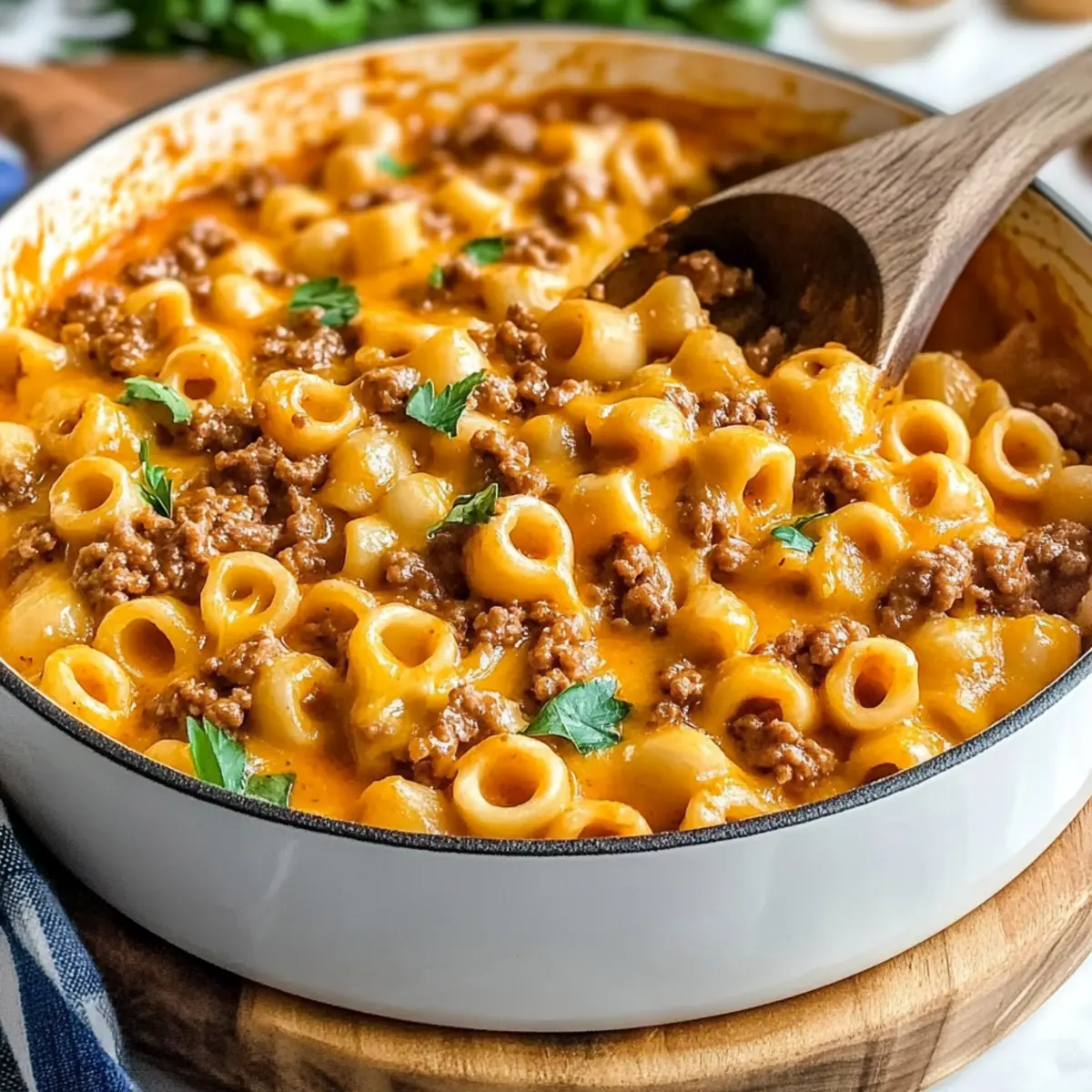
This macro-friendly high protein hamburger helper is the rare recipe that delivers on both the comfort food promise and the nutritional goal simultaneously. The 25-minute window keeps it practical, the one-pan method keeps cleanup minimal, and the 50-plus grams of protein per serving makes it genuinely worth building into a regular rotation. Make a full batch, portion it out, and have one of the better weeknight dinners waiting in the refrigerator all week.
Macro-Friendly High-Protein Hamburger Helper
Ingredients
Equipment
Method
- In a large deep skillet over medium-high heat, cook the ground beef and diced onion, breaking into small crumbles, until the beef is fully browned and the onion is translucent. Drain any excess liquid.
- Add the minced garlic, tomato paste, yellow mustard, smoked paprika, onion powder, chili powder, salt, and pepper. Stir continuously for 1 to 2 minutes until the tomato paste darkens and the mixture is fragrant.
- Pour in the beef broth and milk. Stir to combine and bring to a gentle boil over medium-high heat.
- Add the dry pasta directly to the skillet and stir to submerge. Reduce heat to medium-low, cover, and simmer for 8 to 10 minutes, stirring every 2 to 3 minutes. Add extra broth in small splashes if the liquid absorbs before the pasta is tender.
- Once the pasta is tender and most of the liquid is absorbed, remove the lid. Simmer uncovered for 1 to 2 minutes if the sauce is still too thin.
- Remove from heat. Add the shredded cheddar in two additions, stirring after each until completely melted. If using, stir in the Greek yogurt until fully incorporated.
- Let the dish rest for 5 minutes before serving. The sauce thickens significantly during this window.