The Japanese steakhouse experience is built on two things that home cooks underestimate: high heat and cold rice. This hibachi steak and shrimp plate with fried rice and yum yum sauce delivers both, and the difference between making this recipe correctly and making it adequately comes down almost entirely to those two variables. A genuinely screaming-hot pan produces the charred, caramelized crust on the steak cubes that defines hibachi cooking. Day-old refrigerated rice produces fried rice where every grain stays distinct and bouncy rather than clumping into a starchy mass.
The garlic butter is the ingredient that ties every component together. Made once at the start and used in the fried rice, on the steak, and on the shrimp, it carries a consistent garlic, soy, and herb character through every element on the plate in the way that Japanese steakhouses achieve their signature flavor continuity across the proteins, the vegetables, and the rice.
Forty minutes with some advance rice prep the day before. The yum yum sauce is worth making first and refrigerating while everything else cooks since it genuinely improves with 30 minutes of rest.
Why You’ll Love This Hibachi Steak & Shrimp with Fried Rice and Yum Yum Sauce
The garlic butter compound is the recipe element that makes this hibachi plate taste closer to the restaurant version than any other single technique. Softened butter mixed with grated garlic, soy sauce, and fresh parsley, divided across the fried rice, the steak, and the shrimp, creates flavor continuity that makes the assembled plate taste like a cohesive meal rather than three separately cooked proteins served alongside each other. A tablespoon of garlic butter melting over seared steak cubes in a hot pan produces a basting effect in the final 30 seconds of cooking that coats every cube in a glossy, savory finish.
The shrimp’s “C” shape doneness indicator is the most practical visual cue in this recipe. Raw shrimp are straight. Properly cooked shrimp curl into a C shape and turn fully pink and opaque. Overcooked shrimp curl into a tight O shape and become rubbery. The window between C and O is about 30 seconds at high heat for a medium shrimp. Watch the shape rather than the clock for consistent results.
The yum yum sauce made with refrigerated sitting time has a noticeably more developed, balanced flavor than yum yum sauce served immediately after mixing. The rest period allows the paprika to hydrate fully into the mayonnaise and the sugar to dissolve completely, producing a sauce that tastes unified rather than like individually detectable components.
Ingredients for Hibachi Steak & Shrimp with Fried Rice and Yum Yum Sauce
I always use day-old rice for fried rice and consider it non-negotiable rather than a suggestion. Freshly cooked rice contains too much surface moisture from the steam created during cooking. That moisture releases into the hot wok during stir-frying and produces rice that clumps together and steams rather than frying. Cold rice from the refrigerator has dried out overnight, which means each grain hits the hot pan dry and separates immediately rather than sticking to its neighbors. Spread the cold rice across the pan and stir-fry rather than stirring constantly for the best result.
The Proteins:
- 1 lb top sirloin or New York strip, cut into 1-inch cubes
- 1 lb raw shrimp, peeled and deveined
- 2 tablespoons soy sauce, 1 tablespoon sesame oil, 2 cloves minced garlic, 1 teaspoon grated ginger, black pepper
The Garlic Butter:
- 1/3 cup softened unsalted butter
- 2 cloves garlic, grated
- 1 teaspoon soy sauce
- 1 tablespoon fresh parsley, chopped
The Hibachi Fried Rice:
- 4 cups cooked white rice, chilled and preferably day-old
- 2 eggs, lightly beaten
- 1/2 yellow onion, diced
- 1/2 cup frozen peas and carrots
- 2 tablespoons soy sauce
- 1 tablespoon sesame oil
The Yum Yum Sauce:
- 1/2 cup mayonnaise
- 1 tablespoon melted butter
- 1 tablespoon ketchup
- 1/2 tablespoon rice wine vinegar
- 1/2 tablespoon paprika
- 1 teaspoon sugar
- 1 to 2 tablespoons water
Top sirloin and New York strip are both good choices for hibachi-style searing. Top sirloin is leaner and more economical. New York strip has more marbling and produces a richer, more buttery bite. Both sear well at high heat in cubed form, and the 1-inch cube size is worth cutting precisely rather than estimating, since uniform pieces develop their crust and reach medium-rare at the same time when every cube spends the same amount of time in contact with the hot pan surface.
How to Make Hibachi Steak & Shrimp with Fried Rice and Yum Yum Sauce
The key to this entire recipe is sequencing the three cooking stages correctly and having everything prepped and within reach before the pan goes on the heat. Hibachi cooking moves fast. The fried rice takes 6 to 8 minutes, the steak takes 4 to 5 minutes, and the shrimp takes 3 to 4 minutes. None of these components benefit from sitting in the pan past their doneness window while another component catches up. Prep the garlic butter, mix the yum yum sauce, and have the rice, proteins, and vegetables all ready before any heat is applied.
- Whisk together all yum yum sauce ingredients in a small bowl until smooth. Add water one tablespoon at a time to reach a drizzleable consistency. Refrigerate for at least 30 minutes before serving.
- Mix the softened butter with grated garlic, soy sauce, and chopped parsley until fully combined. Set aside at room temperature.
- In a small bowl, toss the steak cubes with soy sauce, sesame oil, minced garlic, grated ginger, and black pepper. Set aside. Toss the shrimp with a light coating of the same marinade mixture or simply season with salt and pepper.
- Heat a large wok or heavy skillet over the highest heat setting until it begins to smoke. Add a tablespoon of high-smoke-point oil. Add the beaten eggs and scramble quickly for 30 to 45 seconds until just set. Remove from the pan.
- Add another tablespoon of oil to the same hot pan. Add the diced onion, peas, and carrots. Stir-fry for 2 to 3 minutes until the onions are translucent and beginning to soften. Add the cold rice and break up any clumps with the back of the spatula. Spread across the pan and press against the hot surface. Let it sit undisturbed for 60 seconds before stirring, which is what produces the slight char and the characteristic “pop” of properly fried rice. Stir in the soy sauce, sesame oil, and a tablespoon of the garlic butter. Fold the scrambled eggs back into the rice. Taste and adjust seasoning. Remove from the pan and keep warm.
- Wipe the pan clean and return to high heat. Add a drizzle of oil. When the oil shimmers and just begins to smoke, add the steak cubes in a single layer without crowding. Do not move them for 2 to 3 minutes until a deep brown crust has developed on the bottom surface. Toss once, add a tablespoon of garlic butter and a splash of soy sauce, and cook to desired doneness, approximately 1 more minute for medium-rare. Remove from the pan.
- In the same pan over high heat, add the shrimp in a single layer. Cook for 1 to 2 minutes per side. Watch for the C-shape curl and full pink color as the doneness indicators. Add a final tablespoon of garlic butter in the last 30 seconds of cooking and toss to coat. Remove immediately.
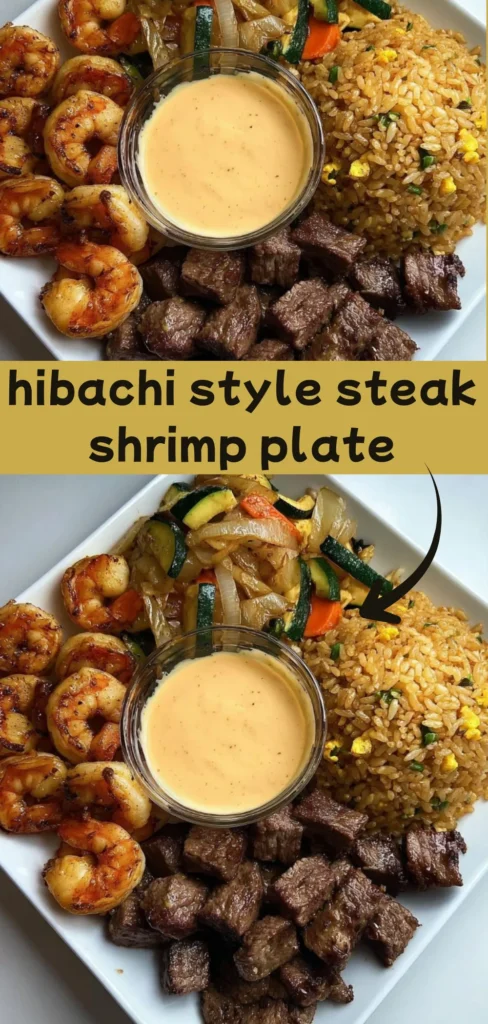
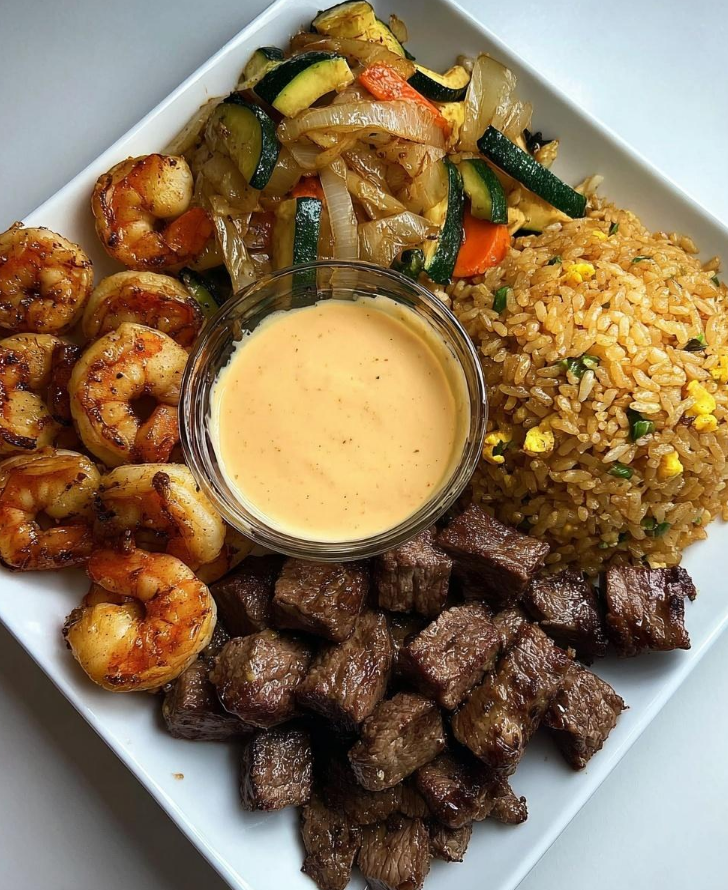
- Plate a generous scoop of fried rice alongside the steak and shrimp. Drizzle the yum yum sauce over everything and garnish with sliced green onions and sesame seeds.
Pro tip: For the closest approximation to the actual teppanyaki experience, squeeze a tablespoon of fresh lemon juice over the steak and shrimp immediately after plating. The acid brightens the garlic butter and gives the plate the clean, citrusy lift that Japanese steakhouses finish their proteins with before they leave the grill.
What to Serve with Hibachi Steak & Shrimp with Fried Rice and Yum Yum Sauce
Hibachi vegetables: Zucchini, mushrooms, and onions sautéed in the same garlic butter and soy sauce combination as the proteins in the same hot skillet is the most authentic accompaniment and the logical next step for anyone who wants to replicate the full steakhouse plate. The mushrooms absorb the garlic butter particularly well and produce the most satisfying vegetable component of the three.
Japanese clear onion soup: A simple clear broth with sliced onion, mushrooms, and green onion served as a starter before the hibachi plate mirrors the Japanese steakhouse sequence and creates a complete meal experience rather than just a main dish.
Cucumber salad: Thinly sliced cucumber with rice wine vinegar, a pinch of sugar, sesame oil, and sesame seeds provides a cool, acidic, crunchy contrast to the warm, rich hibachi plate. The rice vinegar in the dressing mirrors the rice wine vinegar in the yum yum sauce and creates a flavor bridge between the two components.
Miso soup: A simple miso soup with tofu and wakame alongside the hibachi plate adds a light, warm, umami-forward starter that complements the soy and sesame flavors throughout the main dish without competing.
Edamame: Steamed salted edamame as a starter or side provides a simple, high-protein, snackable element that fits the Japanese steakhouse context naturally and requires no additional cooking while the hibachi components are being prepared.
Ginger salad: A simple iceberg and romaine salad with Japanese ginger dressing is the steakhouse side salad that most people associate with the hibachi experience. The sharp, slightly sweet ginger dressing provides acidity and freshness that the garlic-butter-heavy main plate benefits from.
Pro Tips & Variations
Chicken variation: Boneless, skinless chicken thighs cut into 1-inch pieces replace the steak for a lighter and more budget-friendly plate. Chicken thighs need 5 to 6 minutes total in the hot pan to cook through completely. Use the same marinade and garlic butter finishing technique. The chicken version works particularly well alongside the shrimp as a surf-and-turf alternative to the steak and shrimp combination.
Tamari for gluten-free: Replace all soy sauce in the recipe with tamari at the same quantities for a gluten-free version that produces an indistinguishable result in flavor. Coconut aminos work as a slightly sweeter, lower-sodium alternative.
Make the garlic butter in advance: The garlic butter keeps in an airtight container in the refrigerator for up to a week. Roll it into a log in plastic wrap and slice off tablespoon portions as needed. It also works as a garlic bread butter, a pasta finisher, and a compound butter for grilled vegetables throughout the week.
Double the yum yum sauce: The yum yum sauce keeps in the refrigerator for up to a week and is versatile enough to function as a dipping sauce for virtually anything. Doubling the batch adds under two minutes of prep time and produces a refrigerator condiment worth having on hand.
Add hibachi noodles: Yakisoba noodles or thin udon tossed in the same garlic butter, soy sauce, and sesame oil combination as the fried rice served alongside or in place of the fried rice produces an alternative base that many Japanese steakhouses offer as a noodle option.
Storage & Reheating Tips
All components store well in separate airtight containers in the refrigerator for up to 3 days. I always reheat the fried rice and proteins together in a hot skillet over medium-high heat with a teaspoon of oil and a splash of soy sauce rather than the microwave. The skillet method re-crisps the rice and restores some of the original char without drying out the steak or shrimp. The microwave is faster but softens the rice texture significantly and can make the shrimp rubbery through uneven heating. The yum yum sauce keeps refrigerated for up to a week. The garlic butter keeps refrigerated for up to a week or frozen for up to 2 months.
Common Questions
My fried rice came out mushy and clumped together. What went wrong? Freshly cooked rice is almost always the cause. Fresh rice contains too much steam moisture, which releases immediately when it hits the hot pan and produces the mushy, clumped result. Rice needs at minimum 4 hours of uncovered refrigerator time after cooking to dry out enough for proper stir-frying, and overnight produces the best result. If same-day rice is the only option, spread it across a baking sheet and refrigerate for 30 to 45 minutes to remove as much surface moisture as possible before frying.
My steak released a lot of liquid into the pan and steamed rather than searing. How do I prevent this? An overcrowded pan is the most common cause of steaming rather than searing. Every cube needs direct contact with the hot pan surface without touching other pieces. If the cubes are touching each other, the steam released from the meat surfaces has nowhere to escape and the pan temperature drops below the searing threshold. Cook in two batches if needed, wiping the pan and reheating between batches to ensure each batch starts in a fully hot, dry pan.
The yum yum sauce tastes flat immediately after mixing. Is this normal? Yes. The paprika needs time to hydrate into the mayonnaise and the flavors need time to meld. Thirty minutes of refrigerator time produces a noticeably more developed sauce. An hour produces an even better result. If time is short, microwave the sauce for 10 seconds, stir well, and return it to the refrigerator for 10 minutes. The brief warmth accelerates the hydration process and produces a more unified flavor faster than cold resting alone.
Hibachi steak and shrimp with fried rice and yum yum sauce is the restaurant dinner that’s worth mastering at home because the technique translates completely once the high-heat discipline and the cold rice requirement are understood. The garlic butter, the properly seared steak, the C-shaped shrimp, and the distinct, slightly charred fried rice produce the full steakhouse plate at a fraction of the cost and with complete control over every component. Make it on a weekend evening and find out how satisfying it is to pull off a Japanese steakhouse dinner from a single home kitchen skillet.
Hibachi Steak & Shrimp with Fried Rice and Yum Yum Sauce
Ingredients
Equipment
Method
- Whisk all yum yum sauce ingredients until smooth. Refrigerate for at least 30 minutes before serving.
- Mix softened butter with grated garlic, soy sauce, and parsley to make the garlic butter compound. Set aside at room temperature.
- Toss steak cubes and shrimp separately with soy sauce, sesame oil, garlic, ginger, and pepper. Set aside.
- Heat a wok or large skillet over highest heat until smoking. Add 1 tbsp oil. Scramble the eggs quickly for 30 to 45 seconds until just set. Remove from pan.
- Add another tablespoon of oil. Stir-fry onion, peas, and carrots for 2 to 3 minutes. Add cold rice, breaking up clumps. Let sit undisturbed for 60 seconds to char slightly. Stir in soy sauce, sesame oil, and 1 tbsp garlic butter. Fold eggs back in. Remove and keep warm.
- Wipe pan. Return to high heat with a drizzle of oil. Add steak cubes in a single layer without crowding. Sear undisturbed for 2 to 3 minutes. Toss, add 1 tbsp garlic butter and a splash of soy sauce. Cook to desired doneness. Remove.
- Add shrimp to the same hot pan in a single layer. Cook 1 to 2 minutes per side until pink and C-shaped. Add 1 tbsp garlic butter in the final 30 seconds. Remove immediately.
- Plate fried rice alongside steak and shrimp. Drizzle with yum yum sauce. Garnish with green onions and sesame seeds.