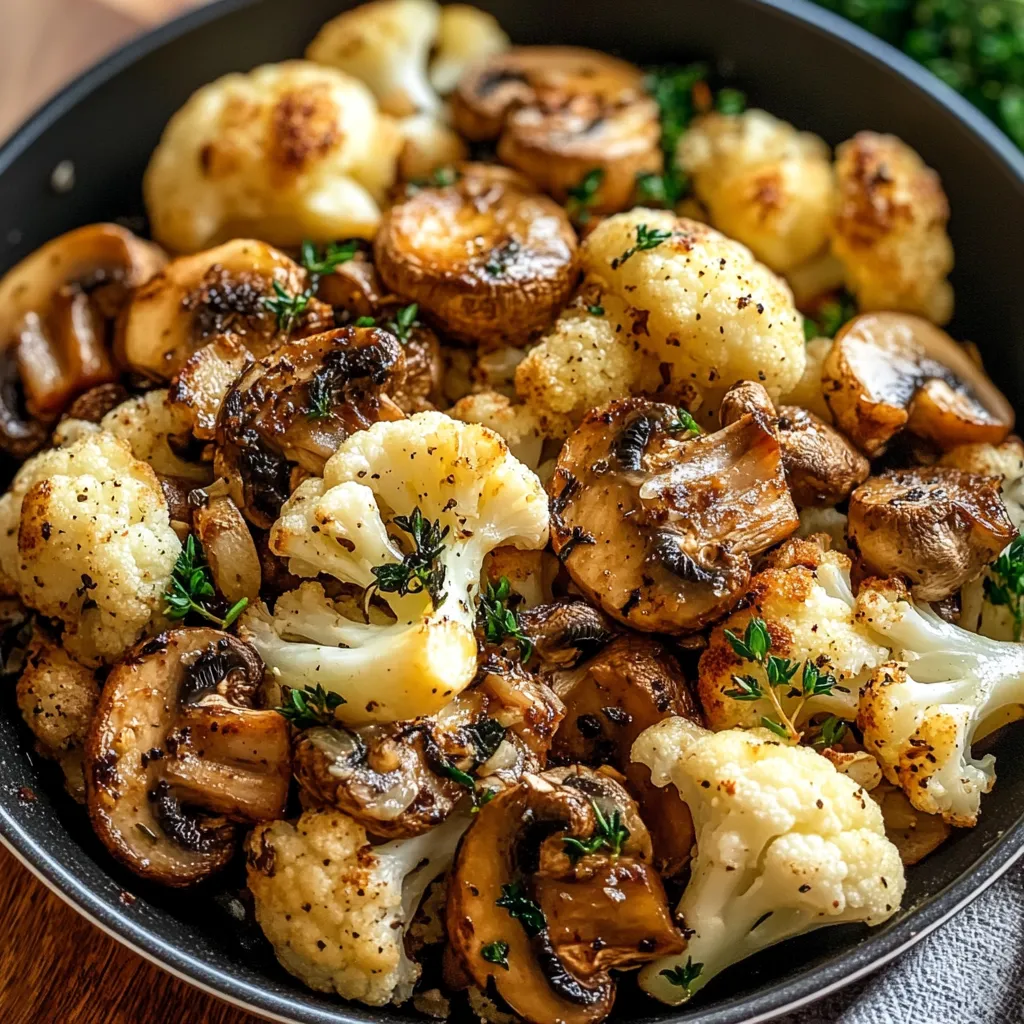
When you need a healthy dinner that’s ready in 30 minutes without sacrificing flavor, this garlic mushroom cauliflower skillet delivers on all fronts. The cauliflower absorbs the savory garlic and earthy mushroom flavors while maintaining a tender-crisp texture, and the bright lemon finish adds freshness that keeps every bite interesting. This recipe works equally well as a vegetarian main course or as a side dish alongside grilled proteins.
The technique is straightforward: sauté garlic until fragrant, brown mushrooms to develop their umami depth, then add cauliflower to cook until just tender. Fresh herbs and a squeeze of lemon at the end bring brightness that balances the earthiness of the vegetables. Despite its simplicity, this dish feels substantial enough to satisfy while remaining light and nutritious.
Why You’ll Love This Garlic Mushroom Cauliflower Dinner
The 30-minute cooking time makes this perfect for busy weeknights when you want something nutritious without spending hours in the kitchen. Most of that time is hands-off cooking, leaving you free to prepare other components or simply relax while dinner comes together.
Low-carb and keto-friendly, this recipe fits into various eating plans without modification. Cauliflower provides the bulk and satisfaction of a starchy side without the carbohydrates, while mushrooms add meaty texture and umami flavor that makes the dish feel hearty.
The ingredient list stays simple with pantry staples and fresh vegetables. You don’t need specialty items or complicated techniques to achieve restaurant-quality results. Olive oil, garlic, and fresh herbs create incredible flavor from basic components.
Versatility makes this recipe valuable in your rotation. Serve it as a vegetarian main course for four, a side dish for six to eight, or alongside grilled chicken, steak, or fish for a complete meal. The flavors complement nearly any protein without competing.
Make-ahead potential simplifies meal planning. This dish reheats beautifully and actually improves slightly as the flavors meld overnight. Prepare it on Sunday for quick weeknight dinners, or make a double batch to ensure leftovers.
Ingredients for Garlic Mushroom Cauliflower Skillet
I choose cremini mushrooms for this recipe because they have more flavor than standard button mushrooms, though button mushrooms work perfectly well if that’s what you have available. The key is slicing them uniformly so they cook evenly.
Main Ingredients:
- 1 medium head of cauliflower, cut into florets
- 2 tablespoons olive oil
- 4 cloves garlic, minced
- 1 pound (about 450g) cremini or button mushrooms, sliced
- 1/2 teaspoon salt
- 1/4 teaspoon black pepper
- 1/4 teaspoon crushed red pepper flakes, optional for heat
- 1 tablespoon fresh thyme leaves (or 1 teaspoon dried thyme)
- 2 tablespoons fresh chopped parsley
- Lemon wedges, for serving
The cauliflower should be a medium head weighing about 2 pounds before trimming. Cut it into bite-sized florets, roughly 1 to 1.5 inches across, so they cook evenly and in the same timeframe. Smaller florets cook faster but can become mushy, while larger ones may stay too firm in the center.
Fresh garlic makes a noticeable difference here since it’s a primary flavor. Four cloves provide assertive garlic flavor without overwhelming the vegetables. Mince the garlic finely so it distributes evenly and doesn’t create harsh pockets of raw garlic taste.
For the mushrooms, aim for slices about 1/4-inch thick. Thicker slices take longer to brown and release moisture, while thinner ones can become too soft and lose their texture. One pound of mushrooms seems like a lot initially, but they shrink significantly as they release moisture during cooking.
Olive oil serves as the cooking fat and adds its own subtle flavor. Use regular olive oil rather than extra virgin if you’re concerned about the smoke point, though extra virgin works fine at medium-high heat for this recipe’s cooking time.
Fresh thyme provides the best aromatic quality, but dried thyme works when fresh isn’t available. The conversion is roughly three to one, so 1 teaspoon dried equals 1 tablespoon fresh. Add dried herbs earlier in cooking to allow them to bloom, while fresh can be added toward the end.
How to Make Garlic Mushroom Cauliflower Dinner
Success with this recipe comes from proper heat management and avoiding overcrowding the pan, which ensures good browning rather than steaming.
Prepare the Vegetables:
Cut the cauliflower head into bite-sized florets, removing most of the thick stem but keeping enough to hold the florets together. Aim for uniform size so everything cooks at the same rate. Rinse the florets if needed and pat them dry with a kitchen towel, as excess moisture prevents proper browning.
Clean the mushrooms by wiping them with a damp paper towel rather than washing them under running water, which makes them soggy. Slice them about 1/4-inch thick, keeping the slices as uniform as possible for even cooking.
Start the Aromatics:
Heat a large skillet, at least 12 inches in diameter, over medium-high heat. A larger pan is important here because it gives the vegetables room to brown rather than steam. Add 2 tablespoons of olive oil and let it heat for about 30 seconds until it shimmers and flows easily when you tilt the pan.
Add the minced garlic and sauté for about 1 minute, stirring constantly. The garlic should become fragrant and just barely golden but not brown. Watch it carefully, as garlic can burn quickly and turn bitter. If your garlic seems to be browning too fast, reduce the heat slightly.
Cook the Mushrooms:
Add the sliced mushrooms to the skillet and spread them in an even layer. Resist the urge to stir constantly. Let them sit for 2-3 minutes to develop golden-brown spots, then stir and let them sit again. Cook for a total of 5-7 minutes, stirring occasionally, until the mushrooms release their moisture, it evaporates, and they develop nice brown edges.
The mushrooms will shrink noticeably as they cook and their liquid evaporates. This concentration of flavor is exactly what you want. The pan should look fairly dry by the time they’re ready.
Add the Cauliflower:
Add the cauliflower florets to the skillet with the mushrooms and garlic. Stir everything together to combine well. The cauliflower should be coated with the garlic-infused oil and mixed evenly with the mushrooms.
Season with salt, black pepper, crushed red pepper flakes if using, and thyme. Stir to distribute the seasonings evenly throughout the vegetables. The salt will help draw out a bit of moisture from the cauliflower and enhance all the flavors.
Finish Cooking:
Continue cooking the vegetable mixture for 8-10 minutes, stirring occasionally to ensure even cooking. The cauliflower should become tender when pierced with a fork but still have a slight bite to it. You want tender-crisp rather than mushy. If the vegetables start sticking to the pan or browning too quickly, reduce the heat to medium and add a tablespoon or two of water.
Taste the vegetables and adjust seasoning as needed. The cauliflower may need a bit more salt, as it’s relatively mild on its own. Black pepper can be adjusted for those who prefer more spice.
Garnish and Serve:
Remove the skillet from the heat and sprinkle fresh chopped parsley over the top. The bright green herbs add color and a fresh note that contrasts nicely with the earthy vegetables.
Serve immediately while hot, with lemon wedges on the side. Encourage everyone to squeeze fresh lemon juice over their portion just before eating. The acidity brightens all the flavors and adds a wonderful zing that takes this dish from good to outstanding.
What to Serve with Garlic Mushroom Cauliflower
This versatile skillet works as either a main course or a side dish, depending on what you pair it with.
Grilled Chicken Breast: Simply seasoned chicken breast grilled until juicy provides lean protein that complements the vegetables without competing with their garlicky flavor. The combination creates a balanced, healthy dinner.
Pan-Seared Salmon: Rich salmon stands up beautifully to the earthy mushrooms and cauliflower. The fish’s omega-3 content pairs well with the vegetables’ nutrients, creating a powerhouse meal.
Ribeye Steak: For a heartier dinner, serve this skillet alongside a grilled or pan-seared ribeye. The vegetables provide balance to the rich, fatty steak while the garlic and herbs complement the beef’s flavor.
Baked Cod or Halibut: Mild white fish works wonderfully with these vegetables. The delicate fish benefits from the bold garlic and herb flavors without being overwhelmed.
Quinoa or Brown Rice: For a vegetarian main course, serve the skillet over cooked quinoa or brown rice. The grains add protein and make the dish more filling while absorbing the garlicky juices.
Crusty Bread: A slice of toasted whole grain bread on the side helps soak up the flavorful juices and adds satisfying texture. This works especially well if serving this as a light main course.
Simple Green Salad: Fresh mixed greens with a lemon vinaigrette provide additional vegetables and a refreshing element that balances the cooked components.
Pro Tips & Variations
Don’t Crowd the Pan: Use a large skillet, at least 12 inches, to give vegetables room to brown. If your pan is smaller, cook in two batches. Overcrowding causes steaming instead of browning, resulting in mushy vegetables without the desirable golden edges.
Achieve Better Browning: Pat the cauliflower dry before cooking and avoid stirring too frequently. Letting the vegetables sit undisturbed for 2-3 minutes at a time allows browning to develop, which creates depth of flavor through caramelization.
Fresh Lemon is Essential: The lemon juice adds brightness that balances the earthy vegetables and rich garlic. Don’t skip this step, as it transforms the dish from one-dimensional to complex and interesting.
Add Protein Directly: Stir in cooked chickpeas, white beans, or cubed tofu during the last 2-3 minutes of cooking to turn this into a complete vegetarian main course. The protein absorbs the garlic flavors beautifully.
Cheese Topping: Sprinkle grated Parmesan, Pecorino Romano, or crumbled feta over the finished dish for added richness and saltiness. For a vegan option, nutritional yeast provides cheesy flavor without dairy.
Herb Variations: Swap thyme for fresh rosemary, oregano, or a combination. Fresh basil added at the end provides a completely different but equally delicious flavor profile.
Add Greens: Stir in a few handfuls of fresh spinach or chopped kale during the last 2 minutes of cooking. The greens will wilt into the dish, adding nutrients and color.
Storage & Reheating Tips
Store leftover garlic mushroom cauliflower in an airtight container in the refrigerator for up to 4 days. The vegetables actually improve as they sit, with the flavors melding together beautifully. The cauliflower may soften slightly, but the texture remains pleasant.
For reheating, the stovetop method works best. Heat a skillet over medium heat, add the leftover vegetables, and stir occasionally for 5-7 minutes until heated through. Add a tablespoon of water if the mixture seems dry. This method helps restore some of the original texture.
The microwave works for quick reheating. Place the vegetables in a microwave-safe dish, cover with a damp paper towel, and heat in 1-minute intervals at 70% power, stirring between each, until warmed through. The microwave will soften the vegetables more than stovetop reheating.
Freezing is possible but not ideal, as both cauliflower and mushrooms release water when thawed, resulting in a softer texture. If you do freeze, use within 2 months and expect texture changes. Thaw overnight in the refrigerator before reheating.
For meal prep, this dish stays fresh for several days, making it perfect for preparing on Sunday and enjoying throughout the week. Store in individual portions for grab-and-go lunches or quick dinners.
Common Questions
Can I use frozen cauliflower? Fresh cauliflower works best for texture and flavor, but frozen can work in a pinch. Thaw completely and pat very dry before cooking. Frozen cauliflower tends to release more moisture, so you may need to cook it a bit longer to evaporate the excess liquid.
How do I prevent mushy cauliflower? Cut florets uniformly and don’t overcook. The cauliflower should be tender when pierced with a fork but still have a slight bite. Cooking at medium-high heat helps moisture evaporate quickly, preventing sogginess.
What if I don’t have fresh herbs? Dried herbs work well in this recipe. Use 1 teaspoon dried thyme instead of 1 tablespoon fresh, and add it earlier in the cooking process to allow the flavors to bloom. Dried parsley is less flavorful than fresh, so consider omitting it or using a different dried herb.
Can I make this ahead for a dinner party? You can prepare the vegetables up to a day ahead and store them separately. When ready to serve, combine and reheat in a skillet, finishing with fresh parsley and lemon. The dish tastes best freshly made, but this approach saves time while maintaining quality.
How do I make this more filling as a main course? Add cooked quinoa, brown rice, or pasta to the skillet. Stir in chickpeas, white beans, or cubed firm tofu for protein. Top with a fried or poached egg for richness and additional protein that makes it a complete meal.
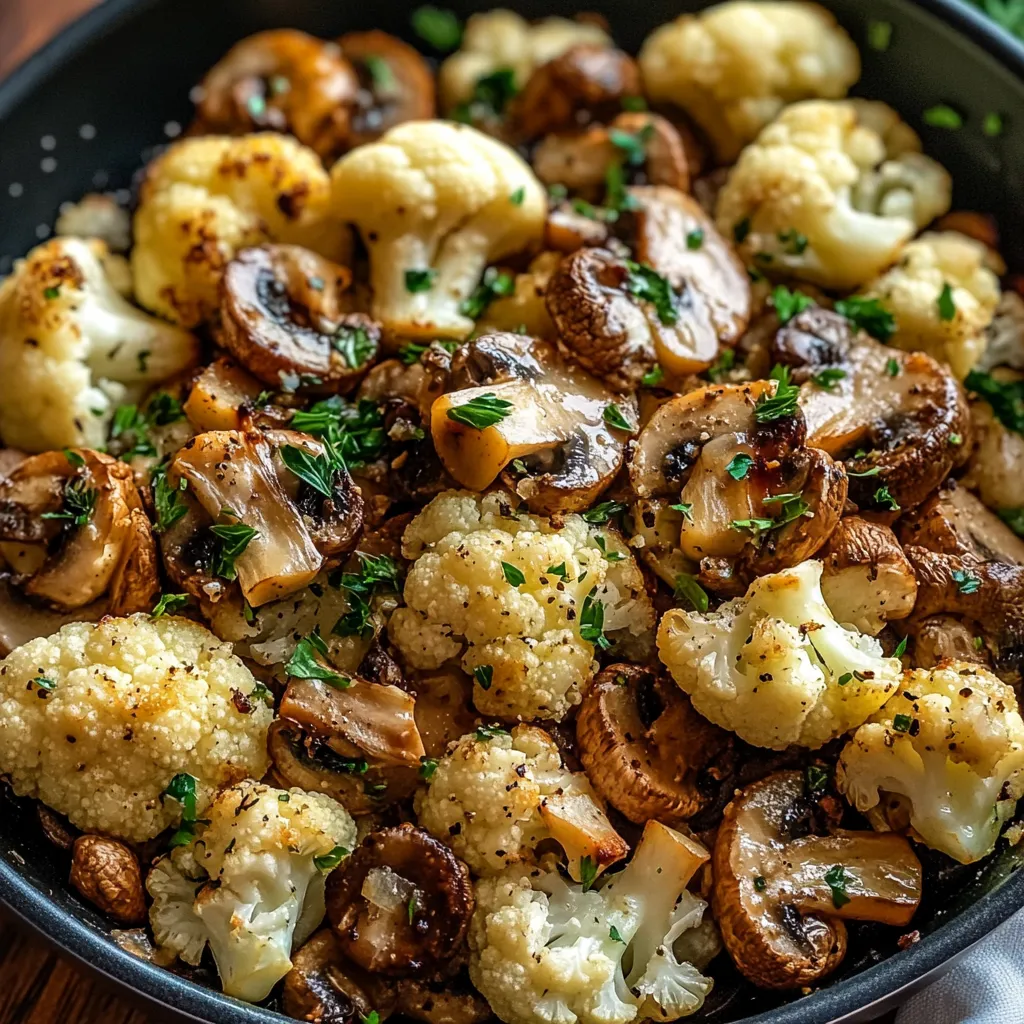
This garlic mushroom cauliflower skillet proves that healthy eating doesn’t mean sacrificing flavor or satisfaction. The combination of earthy mushrooms, tender cauliflower, and bright garlic creates a dish that works for any occasion, from quick weeknight dinners to special gatherings.
Garlic Mushrooms Cauliflower Skillet
Ingredients
Equipment
Method
- Cut the cauliflower head into bite-sized florets, roughly 1 to 1.5 inches across. Rinse if needed and pat dry with a kitchen towel.
- Clean mushrooms by wiping with a damp paper towel. Slice about 1/4-inch thick, keeping slices as uniform as possible.
- Heat a large skillet (at least 12 inches) over medium-high heat. Add 2 tablespoons olive oil and let heat for about 30 seconds until it shimmers.
- Add minced garlic and sauté for about 1 minute, stirring constantly, until fragrant and just barely golden but not brown.
- Add sliced mushrooms and spread in an even layer. Let sit for 2-3 minutes without stirring to develop brown spots, then stir and repeat. Cook for a total of 5-7 minutes until mushrooms release moisture, it evaporates, and they develop nice brown edges.
- Add cauliflower florets to the skillet and stir to combine with mushrooms and garlic. Season with salt, black pepper, crushed red pepper flakes if using, and thyme. Stir to distribute seasonings evenly.
- Continue cooking for 8-10 minutes, stirring occasionally, until cauliflower is tender when pierced with a fork but still has a slight bite. If vegetables start sticking or browning too quickly, reduce heat to medium and add 1-2 tablespoons water.
- Taste and adjust seasoning with additional salt and pepper if needed.
- Remove from heat and sprinkle fresh chopped parsley over the top. Serve immediately while hot with lemon wedges on the side. Squeeze fresh lemon juice over portions just before eating.