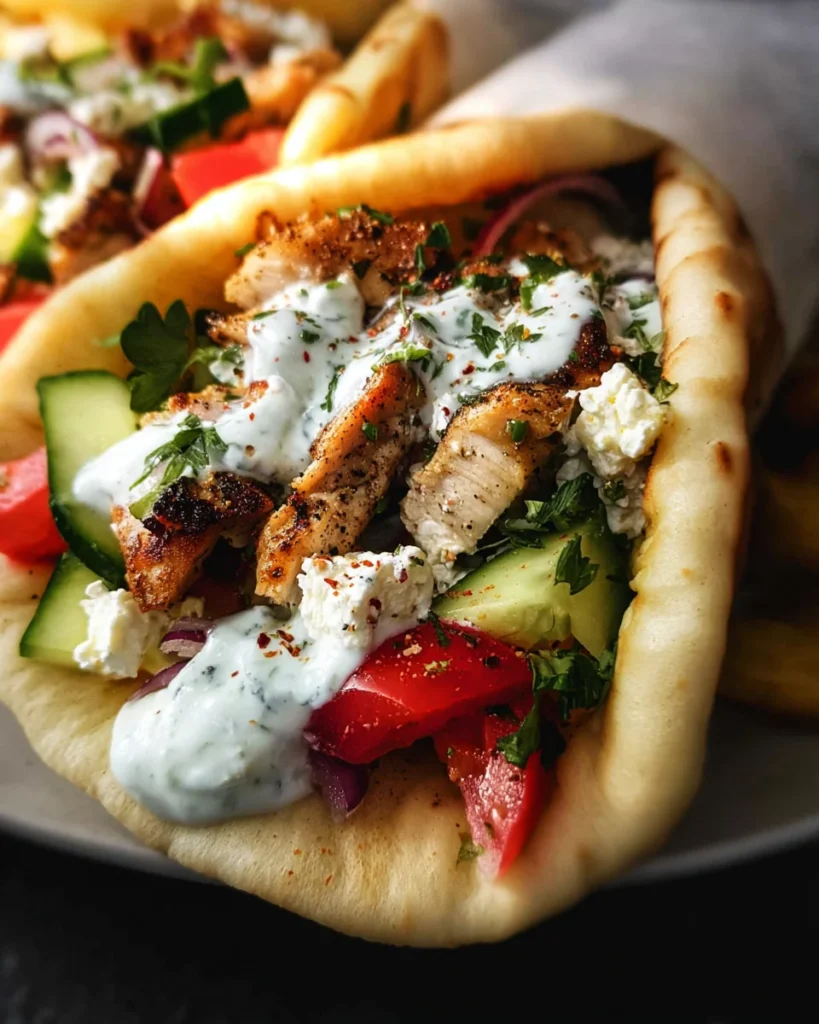
The smell of oregano and garlic hitting a hot pan is one of the most immediately appetizing things that can happen in a kitchen, and that’s exactly what these easy chicken gyros deliver about 30 minutes into the process. Yogurt-marinated chicken thighs get seared in a hot skillet until the edges char slightly and the surface caramelizes into something that holds its own against the cool, garlicky tzatziki waiting in the refrigerator.
The yogurt marinade is doing two things simultaneously. The lactic acid in the Greek yogurt gently breaks down the surface proteins in the chicken over the marinating period, which produces a noticeably more tender result than a straight oil-and-acid marinade. The yogurt also coats the exterior of each strip, and that coating caramelizes beautifully against a hot pan in a way that leaves the chicken juicy inside and golden outside.
The homemade tzatziki is what separates this from a grocery store gyro kit. Grated English cucumber, squeezed completely dry, stirred into thick Greek yogurt with fresh dill, lemon, and garlic produces a sauce that’s genuinely thick and cool and bright, nothing like the watery versions that come premade. These easy chicken gyros with homemade tzatziki sauce feed four people in 35 minutes of active time and deliver the kind of fresh, vibrant dinner that makes weeknight cooking feel like a worthwhile effort.
Why You’ll Love This Easy Chicken Gyros with Tzatziki Sauce
The yogurt marinade is the technique that makes chicken thighs significantly more tender than a quick sear would normally produce. Even 30 minutes in the marinade produces a meaningful difference in texture, and 4 hours produces chicken that practically pulls apart on the pita.
The cucumber squeezing step for the tzatziki is the detail that determines whether your sauce is a thick, dip-like spread or a watery puddle that soaks through the pita within minutes. English cucumber has a high water content that needs to come out before it dilutes the yogurt, and a kitchen towel wrung tightly removes enough liquid to keep the tzatziki holding its consistency through the full meal and the next day’s leftovers.
The batch cooking approach for the chicken is the technique that ensures browning rather than steaming. A crowded pan drops the surface temperature and causes the yogurt-coated chicken to release moisture and steam rather than sear. Working in two batches takes an extra 8 minutes and produces dramatically better-colored, more flavorful meat.
The build-your-own assembly format also makes this a practical family dinner where everyone customizes their own pita, which eliminates negotiation about toppings and works well for tables with different preferences.
Ingredients for Easy Chicken Gyros with Homemade Tzatziki Sauce
The ingredient list splits into three clear groups: the marinated chicken, the tzatziki, and the assembly toppings.
For the chicken and marinade:
- 1 1/2 lbs boneless, skinless chicken thighs, cut into strips
- 1/2 cup plain Greek yogurt
- 2 tablespoons olive oil
- 2 tablespoons lemon juice
- 3 cloves garlic, minced
- 1 tablespoon dried oregano
- 1 teaspoon salt and 1/2 teaspoon black pepper
For the homemade tzatziki:
- 1 cup plain Greek yogurt
- 1/2 large English cucumber, grated and squeezed completely dry
- 1 tablespoon fresh dill, chopped
- 1 tablespoon lemon juice
- 1 clove garlic, finely minced
- Pinch of salt
For assembly:
- 4 to 6 warm pita breads or flatbreads
- Sliced red onion, sliced tomatoes, chopped cucumbers
- Optional: crumbled feta cheese and Kalamata olives
For the chicken, thighs are significantly better than breasts for this application. The higher fat content in thighs keeps them moist through the high-heat sear, and they brown more deeply and evenly than the leaner breast meat. Chicken breast can be used but benefits from a shorter cook time and more careful attention since it goes from cooked to dry very quickly. Cut the thighs into strips about 1 to 1.5 inches wide before marinating so they cook quickly and evenly in the pan.
For the tzatziki yogurt, full-fat Greek yogurt is the right choice. Low-fat and non-fat versions have a higher water content that makes the tzatziki thinner even after the cucumber is properly squeezed, and the fat in full-fat yogurt contributes to the richness and body that makes a good tzatziki feel substantial on the pita.
For the cucumber, English cucumber is preferable to standard cucumbers for tzatziki since the skin is thinner, the seeds are smaller, and the water content is slightly more manageable. If using a standard cucumber, peel it first and scoop out the seeds before grating. The grating itself should be done on the large holes of a box grater, not the fine holes, which produces a texture that stays slightly present in the finished sauce rather than completely disappearing into the yogurt.
How to Make Easy Chicken Gyros with Homemade Tzatziki Sauce
The tzatziki is best made at the beginning of the marinating period so it has time to develop in the refrigerator before it goes on the pita.
- Whisk together the Greek yogurt, olive oil, lemon juice, minced garlic, dried oregano, salt, and pepper in a large bowl until fully combined. Add the chicken strips and toss until every piece is evenly coated. Cover the bowl with plastic wrap and refrigerate for at least 30 minutes. If your schedule allows, the 2 to 4 hour range produces noticeably more tender chicken. The marinade can also be done the night before, which makes the active dinner prep genuinely 15 minutes.
- While the chicken marinates, make the tzatziki. Grate the cucumber half on the large holes of a box grater into a clean kitchen towel. Gather the towel around the cucumber and wring it firmly over the sink, squeezing out as much liquid as you can manage. Open the towel, reposition the cucumber to a dry section, and squeeze again. The cucumber should feel almost dry to the touch when you’re done rather than just slightly less wet. Combine the squeezed cucumber with the Greek yogurt, lemon juice, fresh dill, minced garlic, and a pinch of salt in a small bowl. Stir to combine, taste for seasoning, and refrigerate until you’re ready to assemble. In my experience, tzatziki made an hour ahead and allowed to rest in the refrigerator has more cohesive, developed flavor than tzatziki made and immediately used.
- When the chicken is ready to cook, remove it from the refrigerator about 10 minutes before cooking to take the immediate chill off. Heat a large skillet or grill pan over medium-high heat until very hot. Add a thin drizzle of olive oil. Working in batches, add the chicken strips in a single layer with visible space between pieces. Cook for 3 to 4 minutes per side until deeply golden-brown and cooked through to 165°F at the thickest part. The marinade on the exterior will caramelize and char slightly at the edges, which is exactly what you want. Transfer to a plate and tent loosely with foil while the second batch cooks.
- While the second batch of chicken cooks, warm the pita breads. A dry skillet over medium heat for about 30 seconds per side produces the best result, leaving the pita soft, slightly pliable, and with a little color on the surface. A microwave wrapped in a damp paper towel for 15 to 20 seconds works for a quicker option.
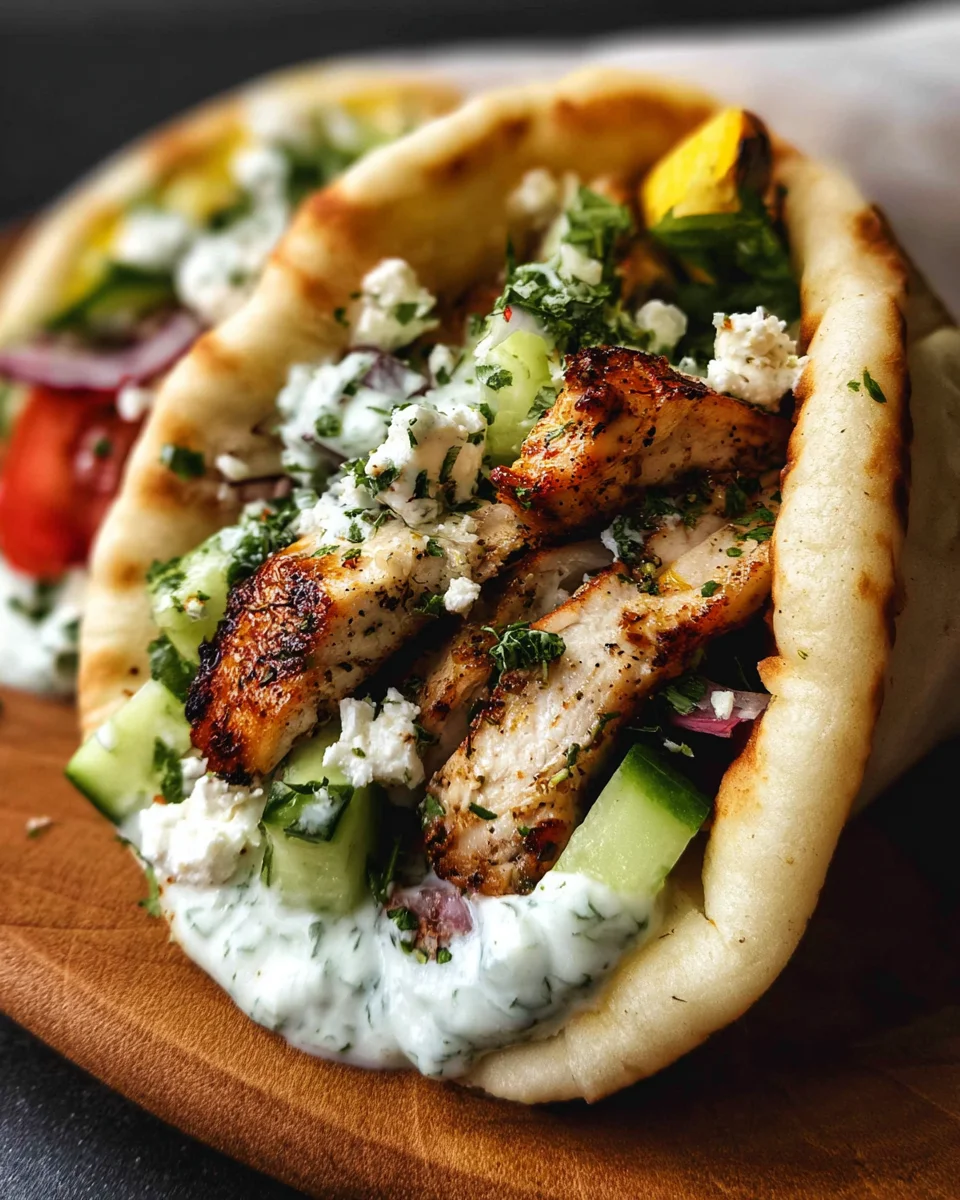
- To assemble, spread a generous dollop of tzatziki across the center of each warmed pita, reaching toward the edges rather than just the middle. Add a portion of the chicken strips, then layer sliced red onion, sliced tomatoes, and chopped cucumber over the chicken. Add crumbled feta and Kalamata olives if using. Fold the pita over the filling and serve immediately.
What to Serve with Easy Chicken Gyros with Tzatziki Sauce
These gyros are a complete dinner on their own, but a few Greek-inspired sides extend the meal into something that feels like a full Mediterranean spread.
Crispy Greek Lemon Potatoes: Oven-roasted potatoes with olive oil, lemon, garlic, and oregano are the most classic side for Greek-style chicken. They soak up the lemon and herb flavors over the long roast and develop a slightly crispy exterior with a fluffy interior that pairs naturally with the spiced chicken and cool tzatziki.
Chickpea Salad: A cold salad of chickpeas, cucumber, cherry tomatoes, red onion, olives, and a lemon-olive oil dressing adds a hearty, protein-rich side that keeps the Mediterranean flavor direction consistent. It comes together in about 5 minutes and benefits from sitting while the chicken cooks.
Simple Greek Salad: Sliced tomatoes, cucumber, red onion, Kalamata olives, and crumbled feta dressed with olive oil, lemon, and dried oregano is the most natural accompaniment for gyros. The same ingredients that go inside the pita, served alongside it in a bowl.
Hummus with Pita Chips: A bowl of hummus for dipping alongside the gyros extends the appetizer feel of the meal and keeps the Middle Eastern and Mediterranean flavor profile consistent. It also works as a second spread inside the pita for anyone who wants more creaminess alongside the tzatziki.
Tabbouleh: A fresh tabbouleh with parsley, bulgur, tomato, lemon, and olive oil adds a bright, herby element and a different texture from the warm, seared chicken. The parsley-forward freshness of tabbouleh is a natural companion for the dill and lemon in the tzatziki.
Pro Tips & Variations
Squeeze the cucumber twice. Most recipes tell you to squeeze the cucumber once in a kitchen towel. I find squeezing a second time after repositioning the cucumber to a dry section of the towel removes significantly more moisture than a single squeeze. The difference between one squeeze and two is the difference between tzatziki that holds its consistency through the meal and tzatziki that becomes watery within 20 minutes.
Don’t skip the batch cooking for the chicken. Crowding the pan drops the surface temperature and causes the yogurt marinade to steam rather than caramelize. The characteristic char and browning on gyro-style chicken comes from consistent direct contact with a very hot pan surface, which only happens when each strip has its own space.
Marinate overnight for the best flavor. The 30-minute minimum produces good chicken. Four hours produces noticeably more tender, deeply flavored chicken. Overnight, up to 8 hours, produces the most authentic result and reduces the day-of prep to about 15 minutes of active cooking. The lemon in the marinade continues to work through extended marinating without making the chicken mushy the way a pure acid marinade would.
Grill for the most authentic flavor. A hot cast iron grill pan or an outdoor grill produces more authentic char marks and a slightly smokier flavor than a flat skillet. If using a grill pan, let it heat for at least 3 to 4 minutes before the chicken goes on so the ridges are hot enough to mark and sear immediately.
Make a bowl version instead of a wrap. The same chicken, tzatziki, and toppings served over a base of rice or couscous rather than a pita produces a Greek-style grain bowl that works well for anyone avoiding bread or wanting a larger, more filling portion.
Storage & Reheating Tips
Store the cooked chicken and the tzatziki in separate airtight containers in the refrigerator for up to 3 days. The tzatziki will release a small amount of liquid as it sits, which is normal. Stir it back together before using and it returns to its original consistency.
To reheat the chicken, I find a hot dry skillet for 2 to 3 minutes over medium-high heat produces the best result, reviving some of the surface caramelization without drying the strips out. A microwave at medium power for 60 seconds works for a quick option but doesn’t restore any of the exterior texture.
The tzatziki is served cold directly from the refrigerator, so no reheating required. If it’s been sitting for more than a day, give it a taste before serving since the garlic becomes more pronounced over time. A small squeeze of fresh lemon juice stirred in brightens it back up.
For meal prep, the marinated raw chicken can sit in the refrigerator for up to 24 hours before cooking, which makes this a practical make-ahead dinner. Marinate in the morning, cook in the evening, and the tzatziki can be made at any point during the day.
Common Questions
My tzatziki turned watery after sitting in the refrigerator. What went wrong? The cucumber wasn’t squeezed dry enough before it went into the yogurt. Even a small amount of residual moisture in the grated cucumber will continue releasing into the yogurt as it sits, eventually producing a watery sauce. The fix for future batches is two rounds of squeezing in a kitchen towel. If the current batch is already watery, strain it through a fine mesh strainer for 10 minutes in the refrigerator to remove some of the excess liquid.
Can I use chicken breast instead of thighs? Yes, with adjusted cooking time. Chicken breast strips cook faster than thigh strips since they’re leaner and less dense. Cut them slightly thicker than you would thighs and reduce the cook time to 2 to 3 minutes per side, checking for 165°F rather than relying on time alone. Overcooking breast strips turns them dry very quickly, especially in a hot pan.
How long can the marinated chicken sit before cooking? Up to 8 hours is the sweet spot for yogurt-based marinades. Beyond 8 hours, the lactic acid and lemon together can begin to change the texture of the outer surface of the chicken, making it slightly mushy rather than tender. The 30-minute minimum and 4 to 8 hour maximum gives you a wide practical window that fits most schedules.
Easy chicken gyros with homemade tzatziki sauce are the kind of dinner that makes Tuesday feel like an occasion without requiring significantly more effort than a standard weeknight meal. The yogurt marinade does most of the flavor work while the chicken sits in the refrigerator, the tzatziki comes together in about 8 minutes, and the cooking itself takes less than 20 minutes. The result is a fresh, bright, properly built gyro that holds its own against any restaurant version.
Easy Chicken Gyros with Homemade Tzatziki Sauce
Ingredients
Equipment
Method
- Whisk together yogurt, olive oil, lemon juice, minced garlic, dried oregano, salt, and pepper in a large bowl. Add chicken strips and toss to coat. Cover and refrigerate for at least 30 minutes and up to 8 hours.
- Grate the cucumber on the large holes of a box grater. Place in a clean kitchen towel and squeeze out as much liquid as possible. Reposition cucumber to a dry section and squeeze again. Combine the squeezed cucumber with Greek yogurt, lemon juice, fresh dill, minced garlic, and salt. Stir, taste for seasoning, and refrigerate.
- Remove chicken from the refrigerator 10 minutes before cooking. Heat a large skillet or grill pan over medium-high heat until very hot. Add a thin drizzle of olive oil. Cook chicken strips in a single layer in batches without crowding for 3 to 4 minutes per side until deeply golden and the internal temperature reaches 165°F. Transfer to a plate and tent loosely with foil.
- Warm pita breads in a dry skillet for 30 seconds per side or microwave wrapped in a damp paper towel for 15 to 20 seconds until soft and pliable.
- Spread a generous dollop of tzatziki across the center of each warm pita. Add a portion of chicken strips, sliced red onion, sliced tomatoes, and chopped cucumber.
- Add crumbled feta and Kalamata olives if desired. Fold the pita over the filling and serve immediately.