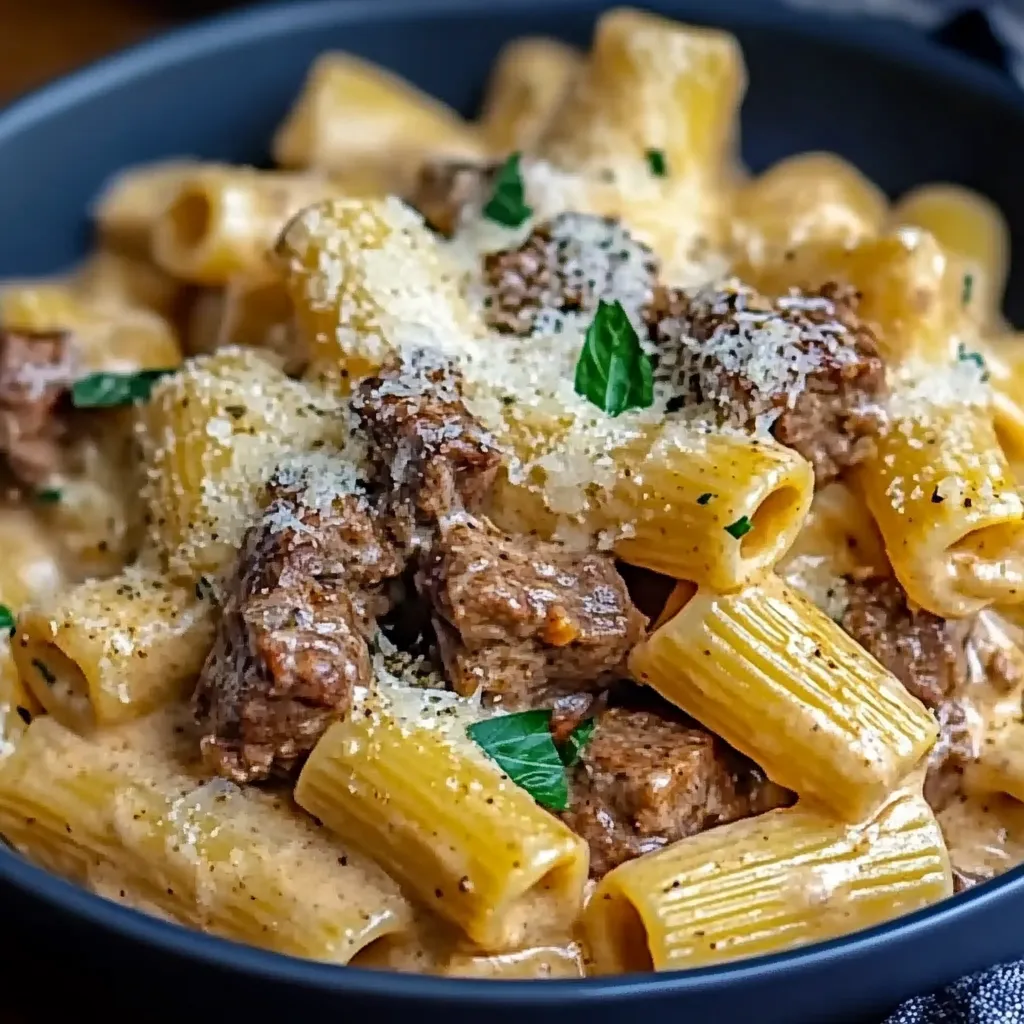
When you’re craving something rich and satisfying but don’t want to spend all evening in the kitchen, this creamy Parmesan beef with rigatoni delivers. Tender beef strips meet al dente pasta in a velvety Parmesan sauce that coats every piece perfectly. The combination of heavy cream, beef broth, and freshly grated Parmesan creates layers of flavor that taste like you’ve been cooking for hours, not 35 minutes.
This recipe draws inspiration from Italian comfort food while keeping things approachable for weeknight cooking. The beef gets a quick sear to lock in flavor, then everything comes together in one pan for a complete meal. The rigatoni’s ridges catch the creamy sauce beautifully, making every bite as good as the last.
Why You’ll Love This Creamy Parmesan Beef with Rigatoni
The timing makes this ideal for busy evenings when you still want real food on the table. Everything from prep to plating happens in 35 minutes, with the pasta and beef cooking simultaneously to save time. Most of the work is hands-off simmering, giving you a chance to pull together a salad or help with other tasks.
Beef strips seared quickly over high heat stay tender and juicy while developing a flavorful crust. The key is not overcooking them—just a couple of minutes per batch gives you that golden exterior while keeping the inside medium to medium-rare. They finish cooking gently in the sauce, so there’s no risk of tough, chewy meat.
The sauce hits all the right notes between rich and balanced. Heavy cream provides luxurious texture, beef broth adds savory depth, and Parmesan brings both saltiness and that nutty complexity that makes Italian cooking so satisfying. Tomato paste adds a subtle sweetness and helps thicken the sauce naturally.
Each serving packs substantial protein thanks to the generous amount of beef. The pasta provides carbs for energy, making this a complete meal that keeps everyone full and satisfied. It’s substantial enough for active families or anyone who needs fuel after a long day.
Ingredients for Creamy Parmesan Beef with Rigatoni
I always slice the beef against the grain into thin strips for this recipe. This breaks up the muscle fibers and ensures tender bites even with a quick sear. Flank steak works beautifully, but sirloin or even ribeye strips are excellent choices if you want extra richness.
For the Pasta:
- 400g (14 oz) rigatoni pasta
- Salt for pasta water
For the Beef:
- 500g (1.1 lbs) beef strips or flank steak, thinly sliced
- 1 tsp paprika powder
- Salt and black pepper to taste
- 2 tbsp olive oil
For the Sauce:
- 1 small onion, finely diced
- 3 cloves garlic, minced
- 1 tbsp tomato paste
- 2 tbsp butter
- 1/2 cup beef broth
- 1 cup heavy cream
- 1 cup freshly grated Parmesan cheese
- 1 tsp dried oregano
For Garnish:
- Fresh basil or parsley, chopped
- Extra Parmesan cheese
Rigatoni is my pasta choice here because those ridges and the hollow center trap the creamy sauce perfectly. Penne or tortiglioni work equally well if that’s what you have. The tubular shape is important—the sauce clings to it much better than flat noodles would.
Fresh Parmesan grated from a block melts smoothly into the sauce without any graininess. Pre-grated cheese often contains anti-caking agents that can make the sauce gritty or prevent it from melting properly. Take the extra minute to grate it yourself—the difference in texture and flavor is worth it.
Good quality beef broth makes a noticeable impact. I reach for low-sodium versions so I can control the salt level, especially since Parmesan is already quite salty. If you only have regular broth, just hold back on adding extra salt until the end.
Heavy cream is what creates that luxurious, silky sauce. Don’t substitute with milk or half-and-half—they don’t have enough fat to create the proper texture and may curdle when combined with the Parmesan and acid from the tomato paste.
How to Make Creamy Parmesan Beef with Rigatoni
The technique here relies on good timing and high heat for the beef. Get your skillet screaming hot before the beef goes in, and resist the urge to move it around. A proper sear only develops when the meat sits undisturbed against the hot surface.
1. Cook the Pasta: Bring a large pot of generously salted water to a rolling boil. Add the rigatoni and cook according to package directions until al dente, usually about 10-12 minutes. Before draining, scoop out about half a cup of the starchy pasta water and set it aside. Drain the pasta but don’t rinse it—the starch helps the sauce cling better.
2. Prepare and Sear the Beef: While the pasta cooks, pat the beef strips completely dry with paper towels. Season both sides generously with salt, black pepper, and paprika. Heat olive oil in a large, heavy skillet over high heat until it shimmers and just begins to smoke. Working in batches to avoid crowding, add the beef strips in a single layer. Let them sear undisturbed for 1-2 minutes until deeply browned, then flip and cook another 1-2 minutes. The beef should still be slightly pink in the center. Transfer to a plate and set aside. Repeat with remaining beef if needed.
3. Build the Sauce Base: Reduce the heat to medium and add the butter to the same skillet. Once melted, add the diced onion and cook for 3-4 minutes, stirring occasionally, until soft and translucent. The onions will pick up all those flavorful browned bits left from the beef. Add the minced garlic and tomato paste, stirring constantly for about 1 minute until fragrant. The tomato paste should darken slightly and coat the onions.
4. Deglaze and Create the Cream Sauce: Pour in the beef broth, scraping the bottom of the pan with a wooden spoon to release any stuck-on bits. This is pure flavor. Let it bubble for about 30 seconds, then pour in the heavy cream and add the dried oregano. Stir to combine and bring to a gentle simmer. Let the sauce cook for 3-5 minutes, stirring occasionally, until it thickens enough to coat the back of a spoon.
5. Add the Parmesan: Reduce the heat to low. Add the freshly grated Parmesan cheese a handful at a time, stirring constantly until each addition melts smoothly into the sauce. Don’t rush this step or add all the cheese at once—gradual addition prevents clumping. The sauce should be smooth, creamy, and glossy.
6. Combine Everything: Add the drained rigatoni to the skillet along with the seared beef and any accumulated juices from the plate. Toss everything together gently but thoroughly, making sure every piece of pasta and beef gets coated with sauce. If the sauce seems too thick or isn’t coating well, add a splash of the reserved pasta water and toss again. The starchy water helps loosen the sauce and makes it cling better.
7. Final Touches: Taste and adjust seasoning with additional salt and pepper if needed. Remember that Parmesan is salty, so you may not need much extra salt.
8. Serve: Transfer to a serving dish or individual plates. Garnish generously with chopped fresh basil or parsley and an extra sprinkle of Parmesan. Serve immediately while the sauce is hot and creamy.
The pasta water trick is essential here. That starchy water is liquid gold for adjusting sauce consistency without diluting flavor. Add just a little at a time until you get the perfect coating texture.
What to Serve with Creamy Parmesan Beef with Rigatoni
A crisp arugula salad dressed simply with lemon juice, olive oil, and shaved Parmesan provides peppery freshness that cuts through the rich pasta. The bitter greens balance the creamy sauce perfectly, and the lemon adds brightness.
Garlic Bread: Crusty Italian bread brushed with garlic butter and toasted until golden is perfect for soaking up any extra sauce on the plate. Make it while the pasta cooks for perfect timing.
Roasted Asparagus: Tender asparagus spears roasted with olive oil, salt, and a squeeze of lemon offer a light vegetable side that complements the beef without overwhelming the dish. Roast at 425°F for 12-15 minutes until tips are slightly crispy.
Caprese Salad: Fresh mozzarella, ripe tomatoes, and basil drizzled with balsamic glaze and olive oil brings classic Italian flavors that pair naturally with the Parmesan and beef. The cool, fresh elements balance the hot, creamy pasta.
Sautéed Spinach: Quick-sautéed spinach with garlic adds greens to the meal without much effort. Cook it in the same pan after removing the beef to save on cleanup. The slight bitterness of spinach works well with the rich sauce.
Roasted Cherry Tomatoes: Halved cherry tomatoes roasted with olive oil, garlic, and herbs until they burst create a sweet-tart contrast to the savory beef and cheese. Roast at 400°F for 15-20 minutes.
Caesar Salad: Classic Caesar salad with crisp romaine, Parmesan, croutons, and creamy dressing echoes the cheesy theme while adding crunch and freshness. The anchovy notes in traditional Caesar dressing complement the beef nicely.
Pro Tips & Variations
Get the Pan Hot: The biggest mistake with seared beef is not getting the pan hot enough. You want that oil shimmering and almost smoking before the beef goes in. This creates a proper crust quickly without overcooking the interior.
Don’t Overcrowd: Sear the beef in batches if necessary. Crowding the pan lowers the temperature and causes the meat to steam instead of sear. Each strip should have space around it to develop that golden-brown crust.
Slice Against the Grain: Look at the direction of the muscle fibers in your beef and slice perpendicular to them. This shortens the fibers and makes every bite tender, even with tougher cuts like flank steak.
Fresh Parmesan Only: The pre-shredded stuff just doesn’t melt the same way. Invest in a block of good Parmesan and grate it yourself. The flavor and texture difference is substantial.
Reserve Pasta Water: Always save some before draining. That starchy water is your secret weapon for adjusting sauce consistency without watering down the flavor. Start with just a tablespoon or two and add more if needed.
Add Greens: Stir in a couple handfuls of fresh baby spinach or arugula just before serving. The residual heat wilts the greens perfectly, adding color and nutrients without extra cooking.
Chicken Swap: Boneless, skinless chicken breasts or thighs cut into strips work equally well if you prefer poultry. Season and sear the same way, adjusting cooking time to ensure the chicken reaches 165°F.
Mushroom Addition: Sautéed mushrooms add earthy depth that pairs beautifully with beef. Slice cremini or button mushrooms and cook them after searing the beef, before adding the onions.
Spice It Up: Add a pinch of red pepper flakes to the sauce if you like some heat. The cream tempers the spice, creating a pleasant warmth rather than overwhelming heat.
Wine Deglaze: Substitute half the beef broth with dry red wine for deeper, more complex flavor. Let it reduce by half before adding the cream.
Storage & Reheating Tips
Store leftovers in an airtight container in the refrigerator for up to 3 days. The sauce will thicken considerably as it sits, which is normal. The pasta continues to absorb the liquid even when cold.
For reheating, the stovetop works best. Place the pasta in a skillet over medium-low heat and add a few tablespoons of beef broth, cream, or even water. Stir gently as it heats, adding more liquid as needed to restore the creamy consistency. This takes about 5-7 minutes and produces better results than the microwave.
If using the microwave, transfer to a microwave-safe dish and add a splash of liquid. Cover loosely and heat at 50% power in one-minute intervals, stirring between each, until warmed through. The lower power prevents the sauce from separating.
This dish doesn’t freeze particularly well because cream sauces tend to separate and become grainy when frozen and thawed. If you must freeze it, undercook the pasta slightly and freeze without the cream. When reheating, add fresh cream and Parmesan to finish the sauce.
For meal prep, you can cook the beef and make the sauce base up to a day ahead. Store separately from the pasta. When ready to eat, cook fresh pasta and combine with the reheated sauce and beef for the best texture.
Common Questions
What cut of beef works best for this recipe? Flank steak is ideal because it’s flavorful, relatively lean, and slices beautifully into thin strips. Sirloin, skirt steak, or ribeye also work well. Choose a cut that’s easy to slice thinly and cooks quickly. Avoid tougher cuts that need long cooking times.
Can I use a different type of pasta? Yes, any short pasta with ridges or texture works well. Penne, tortiglioni, paccheri, or even farfalle are good options. The key is choosing a shape that will catch and hold the creamy sauce. Avoid delicate pastas like angel hair.
How do I prevent the Parmesan from clumping? Make sure the heat is low when adding the cheese, and add it gradually while stirring constantly. Freshly grated Parmesan melts much more smoothly than pre-shredded. If you see clumps forming, remove from heat and whisk vigorously.
My sauce is too thick. How do I fix it? Add the reserved pasta water one tablespoon at a time, stirring well after each addition. The starchy water loosens the sauce while helping it cling to the pasta. You can also use a splash of cream or broth if you’ve run out of pasta water.
Can I make this with ground beef instead of strips? Yes, brown ground beef in place of the strips. Season it the same way and break it up as it cooks. The texture will be different, but the flavors will still work well together. This makes the dish more budget-friendly too.
This creamy Parmesan beef with rigatoni brings together tender beef, perfectly cooked pasta, and a rich sauce that tastes like special-occasion cooking without the time commitment. The combination of textures and flavors makes this more than just another pasta dinner. Give it a try when you want something comforting and impressive that still fits into a busy weeknight schedule.
Creamy Parmesan Beef with Rigatoni
Ingredients
Equipment
Method
- Bring a large pot of generously salted water to a boil. Cook rigatoni according to package directions until al dente, about 10-12 minutes. Reserve 1/2 cup pasta water before draining. Drain pasta but do not rinse.
- While pasta cooks, pat beef strips dry with paper towels. Season both sides with salt, pepper, and paprika. Heat olive oil in a large skillet over high heat until shimmering. Working in batches to avoid crowding, sear beef strips for 1-2 minutes per side until browned but still slightly pink in center. Transfer to a plate and set aside.
- Reduce heat to medium and melt butter in the same skillet. Add diced onion and cook for 3-4 minutes until soft and translucent. Add minced garlic and tomato paste, stirring constantly for 1 minute until fragrant and paste darkens slightly.
- Pour in beef broth, scraping the bottom of the pan to release browned bits. Let bubble for 30 seconds, then add heavy cream and dried oregano. Stir to combine and bring to a gentle simmer. Cook for 3-5 minutes, stirring occasionally, until sauce thickens enough to coat the back of a spoon.
- Reduce heat to low. Add freshly grated Parmesan cheese a handful at a time, stirring constantly until each addition melts smoothly. The sauce should be smooth, creamy, and glossy.
- Add drained rigatoni and seared beef (with any accumulated juices) to the skillet. Toss everything together gently until pasta and beef are thoroughly coated with sauce. If sauce is too thick, add reserved pasta water one tablespoon at a time until desired consistency is reached.
- Taste and adjust seasoning with additional salt and pepper if needed. Garnish with chopped fresh basil or parsley and extra Parmesan. Serve immediately.