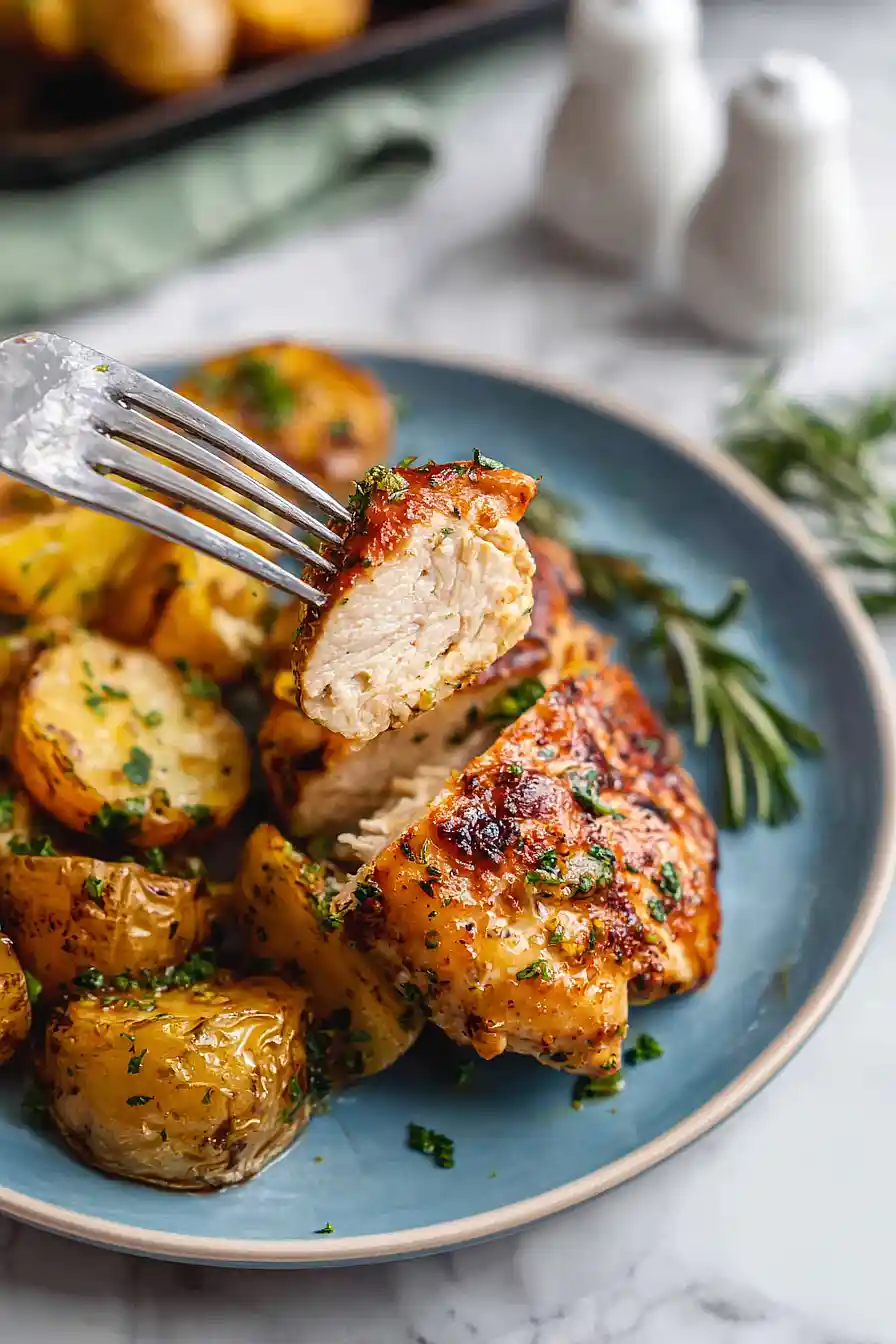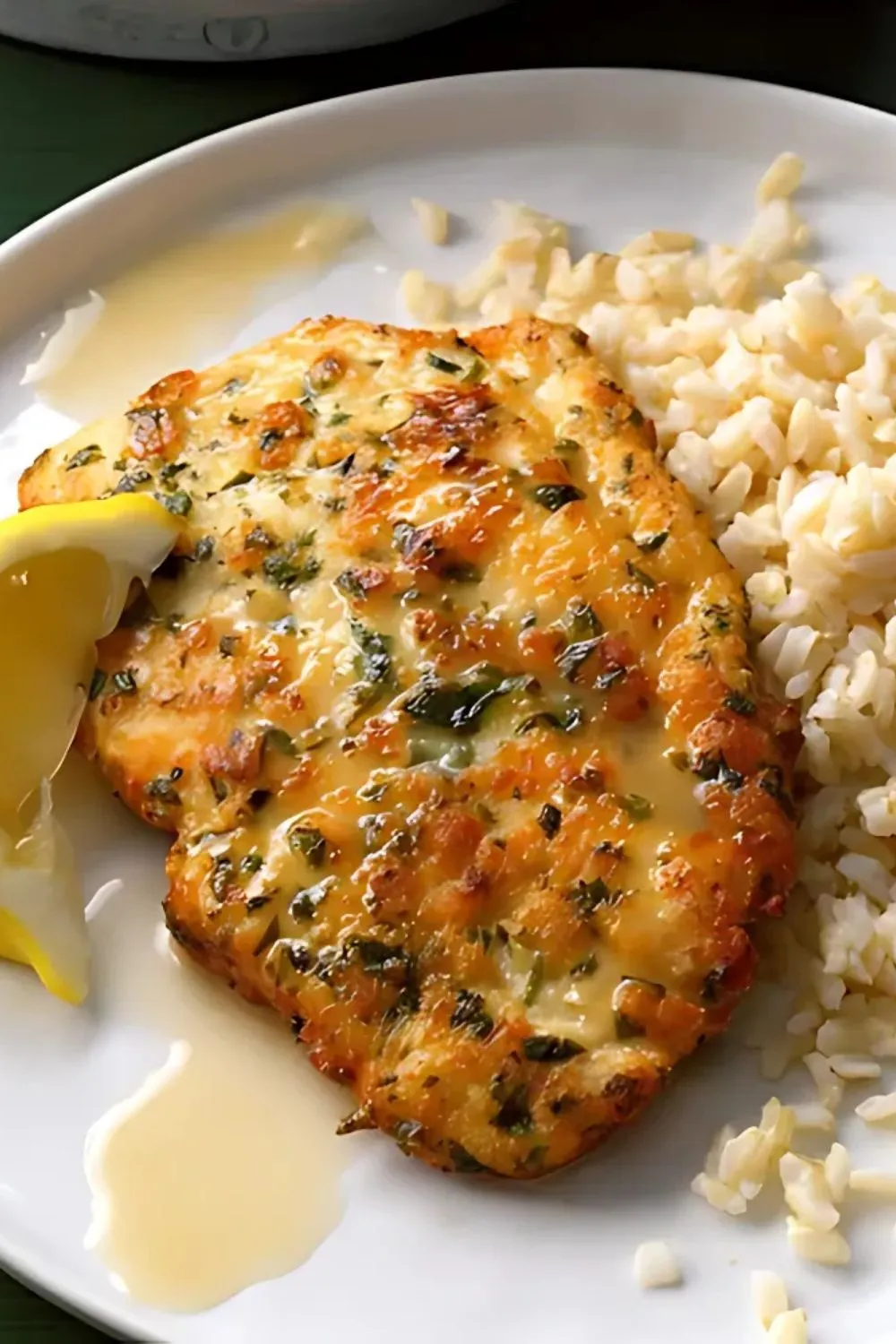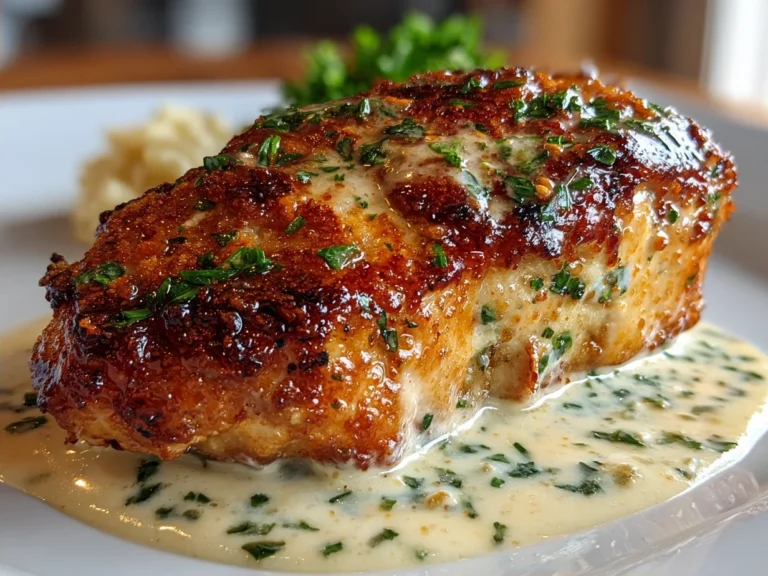
Some dinners require a long ingredient list to taste like something special. This isn’t one of them. Creamy one-pan Boursin chicken gets its entire sauce from a single package of Boursin Garlic & Fine Herbs cheese melted into chicken broth with sautéed shallot, and what comes out of that combination is a velvety, herb-forward sauce that tastes considerably more involved than the 10 minutes of active work it requires.
The Boursin does the heavy lifting here. It already contains the garlic, the herbs, and the cream that a standard pan sauce would require you to add individually, which means the sauce stage of this recipe is essentially: deglaze, add cheese, whisk, done. The chicken broth thins the cheese into a pourable consistency and the fond from the sear dissolves into the sauce base as the cheese melts, adding a savory, roasted chicken depth that makes everything taste like it developed for much longer than it did.
This chicken with Boursin sauce is a 30-minute, one-pan dinner that works on a weeknight but looks and tastes like something you’d order at a restaurant that takes reservations. It serves four from a single skillet and pairs best with something starchy enough to catch every bit of sauce on the plate.
Why You’ll Love This Chicken with Boursin Sauce
The Boursin shortcut is what makes this recipe genuinely weeknight-practical without tasting like a shortcut. The cheese contains enough garlic, herbs, and creaminess that the sauce builds itself around the broth and the pan fond without requiring heavy cream, a separate herb chop, or a garlic preparation step beyond what’s already in the cheese.
The one-pan method means the sear fond stays in the pan through the sauce build, which is where the depth in the finished dish comes from. Every brown bit scraped off the pan during the deglaze becomes part of the sauce that coats the chicken when it returns to the skillet.
The recipe also works particularly well with optional baby spinach added in the final minute before the chicken returns. The spinach wilts instantly in the warm sauce and adds a fresh, slightly bitter green note that cuts through the richness of the Boursin without changing the character of the sauce.
Boursin chicken reheats reliably with a splash of broth, which makes it a practical make-ahead option and a strong candidate for intentional leftovers.
Ingredients for Creamy One-Pan Boursin Chicken
The ingredient list is deliberately minimal. The Boursin does the work that would normally require five or six separate ingredients.
For the chicken:
- 2 large boneless skinless chicken breasts, halved lengthwise into 4 cutlets
- 1 teaspoon garlic powder
- 1/2 teaspoon salt and 1/4 teaspoon black pepper
- 1 tablespoon olive oil plus 1 tablespoon butter for searing
For the Boursin sauce:
- 1/2 medium yellow onion or 1 large shallot, finely diced
- 3/4 cup low-sodium chicken broth
- 1 package (5.2 oz) Boursin Garlic & Fine Herbs cheese, softened to room temperature
- 1 handful fresh baby spinach, optional
- 1 tablespoon fresh parsley, chopped for garnish
For the chicken, halving the breasts lengthwise into four thin cutlets is the preparation step that makes the 5 to 6 minute sear time accurate rather than aspirational. A whole chicken breast at its natural thickness takes considerably longer to cook through and is much more likely to be overcooked on the outside before the center reaches 165°F. Thin cutlets cook quickly and evenly, produce more seared surface area per serving, and absorb more of the Boursin sauce relative to their thickness.
For the Boursin, the Garlic & Fine Herbs variety is the one this recipe is built around. The other Boursin flavors, shallot and chive, pepper, or the cranberry and cinnamon variety, all produce different results. Shallot and chive is the closest alternative and works well if Garlic & Fine Herbs isn’t available. Softening the cheese to room temperature before it goes into the pan is not optional if you want a smooth sauce. Cold Boursin takes significantly longer to melt, doesn’t incorporate as evenly, and can produce a slightly grainy or broken-looking sauce in the time before the pan cools enough for the cheese to catch up.
For the shallot versus onion decision, shallot produces a more delicate, slightly sweeter aromatic base that complements the herb character of the Boursin without the assertive sharpness that yellow onion can introduce. If using yellow onion, the finer the dice the better, since smaller pieces soften more completely in the 3 to 5 minute sauté window.
How to Make Creamy One-Pan Boursin Chicken
The sequence is designed to use one pan from start to finish with the sauce built directly on the fond from the sear.
- Slice each chicken breast in half lengthwise to produce four cutlets. If either half is significantly thicker at one end, a few gentle taps with a meat mallet brings it to a more uniform thickness. Pat all surfaces dry with paper towels. Season both sides of each cutlet with garlic powder, salt, and pepper.
- Heat the olive oil and butter together in a large skillet over medium-high heat. Wait until the butter foam has subsided before adding the chicken, which indicates the water has evaporated from the butter and the fat is hot enough to sear rather than steam the surface of the cutlets. Add the chicken in a single layer. Cook for 5 to 6 minutes per side until a deep golden-brown crust has formed and the internal temperature reads 165°F. Transfer to a plate and tent loosely with aluminum foil to keep warm. Don’t discard any juices that collect on the plate.
- Reduce the heat to medium. Add the diced shallot or onion to the same skillet, directly into the remaining fat and fond. Sauté for 3 to 5 minutes, stirring occasionally, until the shallot is fully softened, translucent, and beginning to pick up some color from the fond on the pan surface.
- Pour in the chicken broth and scrape the bottom of the pan immediately with a wooden spoon or spatula, dissolving all the browned bits into the liquid. This deglaze step is what carries the concentrated chicken and butter flavor from the sear directly into the sauce base.
- Add the room-temperature Boursin cheese to the skillet in pieces rather than dropping the whole block in at once. Whisk or stir constantly over medium-low heat as the cheese melts into the broth, working out any lumps as they form. The sauce will look broken at first as the cheese encounters the hot liquid, but consistent whisking brings it together into a smooth, velvety consistency within 2 to 3 minutes. Let it simmer gently on medium-low for 2 additional minutes once smooth, which concentrates it slightly and eliminates any raw broth taste.
- If using spinach, stir it into the sauce now and cook for about 1 minute until just wilted. The spinach will shrink dramatically in the warm sauce and distribute evenly through it.
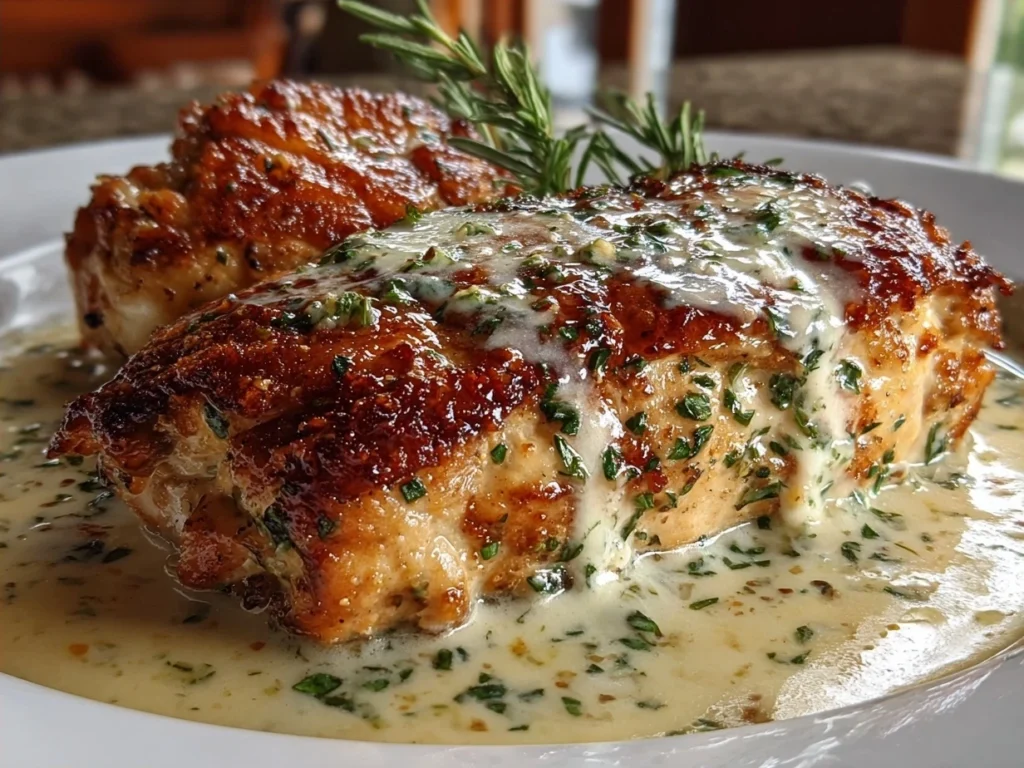
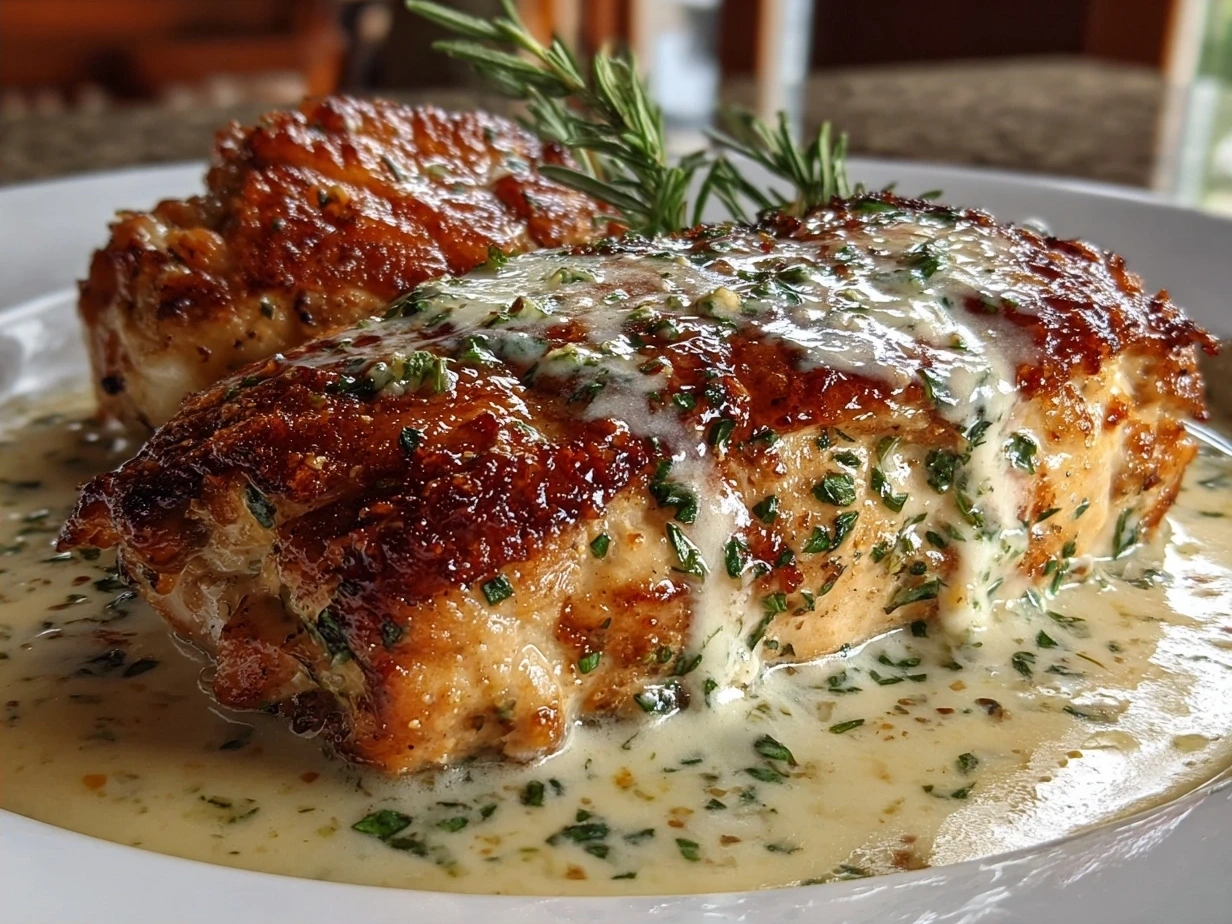
- Return the chicken cutlets to the skillet along with any juices that have collected on the resting plate. Those juices are part of the dish and add more chicken flavor to the sauce when they go in. Spoon the sauce generously over the chicken and let everything warm through together for 1 to 2 minutes.
- Garnish with fresh parsley and serve immediately over mashed potatoes, rice, or pasta, with extra sauce spooned over the top.
What to Serve with Creamy One-Pan Boursin Chicken
The Boursin sauce is rich, herby, and generous in volume, which means the base underneath the chicken matters significantly for the finished plate.
Garlic Mashed Potatoes: The most natural base for a cream-forward pan sauce. The garlic in both the mashed potatoes and the Boursin creates a cohesive flavor direction across the whole plate, and the starchy potato absorbs the sauce in a way that makes every bite complete.
Fettuccine or Pappardelle: Wide pasta noodles underneath the chicken and sauce produce a pasta dish that feels genuinely restaurant-quality from a 30-minute recipe. Toss the pasta with a little of the sauce before plating and spoon additional sauce over the top.
Steamed Rice: A simple base of jasmine or basmati rice underneath the chicken keeps the plate light and lets the Boursin sauce be the focus. It’s the most practical option for a weeknight when you want minimum effort from the side.
Roasted Asparagus: A tray of asparagus roasted at 400°F with olive oil and salt while the chicken cooks adds a slightly bitter, grassy vegetable element that cuts through the richness of the Boursin sauce without competing with the herb flavors in it.
Steamed Green Beans: Green beans with a light butter finish alongside the Boursin chicken add color and crunch that the plate, being otherwise entirely soft-textured, benefits from. They also keep the preparation simple since they require almost no active work.
Pro Tips & Variations
Soften the Boursin before cooking. Taking the cheese out of the refrigerator 30 minutes before you start cooking is the step that most directly determines whether the sauce is smooth and velvety or slightly grainy. Cold Boursin doesn’t melt as cleanly into hot broth and the fat in the cheese can separate before the curds fully incorporate. Room temperature Boursin melts within seconds of hitting the warm liquid and whisks into a seamless sauce.
Add every plate juice back to the sauce. The liquid that pools under the resting chicken on the plate is concentrated chicken juices that carry significant flavor. Pouring them directly into the skillet when the chicken returns adds a depth that gets lost if you pour them off or forget about them.
Use shallot over onion when possible. Shallot has a more delicate, slightly sweet flavor that matches the herb and garlic profile of the Boursin more seamlessly than yellow onion. If yellow onion is what you have, a very fine dice and the full 5-minute sauté ensures it softens completely and doesn’t leave any sharpness in the finished sauce.
Add white wine to the deglaze. A splash of dry white wine added before the chicken broth deepens the flavor of the deglaze significantly. Let the wine reduce by half before adding the broth, which burns off the alcohol and leaves behind the wine’s flavor compounds in the sauce base.
Swap to chicken thighs for a richer result. Boneless, skinless chicken thighs seared for 7 to 8 minutes per side produce more fat in the pan, which makes the fond deeper and more flavorful and contributes additional richness to the Boursin sauce. The method is identical with the adjusted timing.
Storage & Reheating Tips
Store leftovers with the chicken and sauce together in an airtight container in the refrigerator for up to 3 days. The Boursin sauce thickens considerably as it chills since the fat in the cheese sets at refrigerator temperature. This is normal and corrects completely on reheating.
To reheat, I warm the chicken and sauce together in a small covered saucepan over medium-low heat, adding a tablespoon of chicken broth or a splash of milk before warming to loosen the sauce as it heats. Stir gently every minute or so and keep the heat low enough that the sauce doesn’t bubble aggressively, which can cause it to separate. Microwave reheating at medium power in 60-second intervals with a tablespoon of broth added before heating works for individual portions.
The sauce doesn’t freeze well since the Boursin’s cream and herb emulsion breaks during freezing and thawing, producing a separated, grainy result that doesn’t come back together with reheating. Plan to use the leftovers within 3 days.
Common Questions
My sauce looks broken or grainy. How do I fix it? A broken Boursin sauce almost always means the cheese went into a pan that was too hot or the cheese was still cold when it was added. Remove the pan from heat immediately, add a tablespoon of cold broth or milk, and whisk vigorously while the pan cools slightly. The emulsion often comes back together once the temperature drops and the added liquid helps re-incorporate the fat. For future batches, reduce to medium-low before the cheese goes in and ensure it’s fully softened to room temperature first.
Can I make the sauce ahead of time? The sauce can be made up to 24 hours ahead and refrigerated separately from the chicken. Reheat gently over medium-low heat with a splash of broth before the chicken goes in, whisking to restore the smooth consistency. The garlic and herb flavors from the Boursin intensify slightly overnight, which produces a more pronounced sauce on day two.
I can’t find Boursin Garlic & Fine Herbs. What’s the best substitute? A block of full-fat cream cheese at room temperature whisked with 1 teaspoon garlic powder, 1 teaspoon dried parsley, 1/2 teaspoon dried chives, and a pinch of dried thyme produces a very close functional substitute. It won’t replicate the specific Boursin flavor exactly, but it produces a smooth, garlic-herb cream sauce using the same method.
Creamy one-pan Boursin chicken is the kind of recipe that goes into permanent rotation not because it’s the most complex dinner you’ll ever make, but because it consistently delivers results that feel far more sophisticated than a 30-minute pan sauce has any right to. The Boursin does the heavy lifting, the fond does the flavor building, and the whole thing comes together in one skillet with almost no active effort.
Creamy One-Pan Boursin Chicken
Ingredients
Equipment
Method
- Slice each chicken breast lengthwise into 2 thin cutlets. Pat dry with paper towels. Season both sides with garlic powder, salt, and pepper.
- Heat olive oil and butter in a large skillet over medium-high heat until the butter foam subsides. Add chicken cutlets in a single layer. Cook for 5 to 6 minutes per side until deeply golden and internal temperature reaches 165°F. Transfer to a plate and tent loosely with foil.
- Reduce heat to medium. Add the diced shallot or onion to the same skillet. Sauté for 3 to 5 minutes until fully softened and translucent.
- Pour in the chicken broth. Scrape the bottom of the pan immediately with a wooden spoon to dissolve all the fond into the liquid.
- Add the room-temperature Boursin cheese in pieces. Whisk or stir constantly over medium-low heat until fully melted and the sauce is smooth and velvety. Simmer gently for 2 minutes.
- Optional: Stir in baby spinach and cook for 1 minute until just wilted.
- Return the chicken cutlets and any collected plate juices to the skillet. Spoon the sauce generously over the chicken and warm through for 1 to 2 minutes.
- Garnish with fresh parsley and serve immediately over mashed potatoes, rice, or pasta.