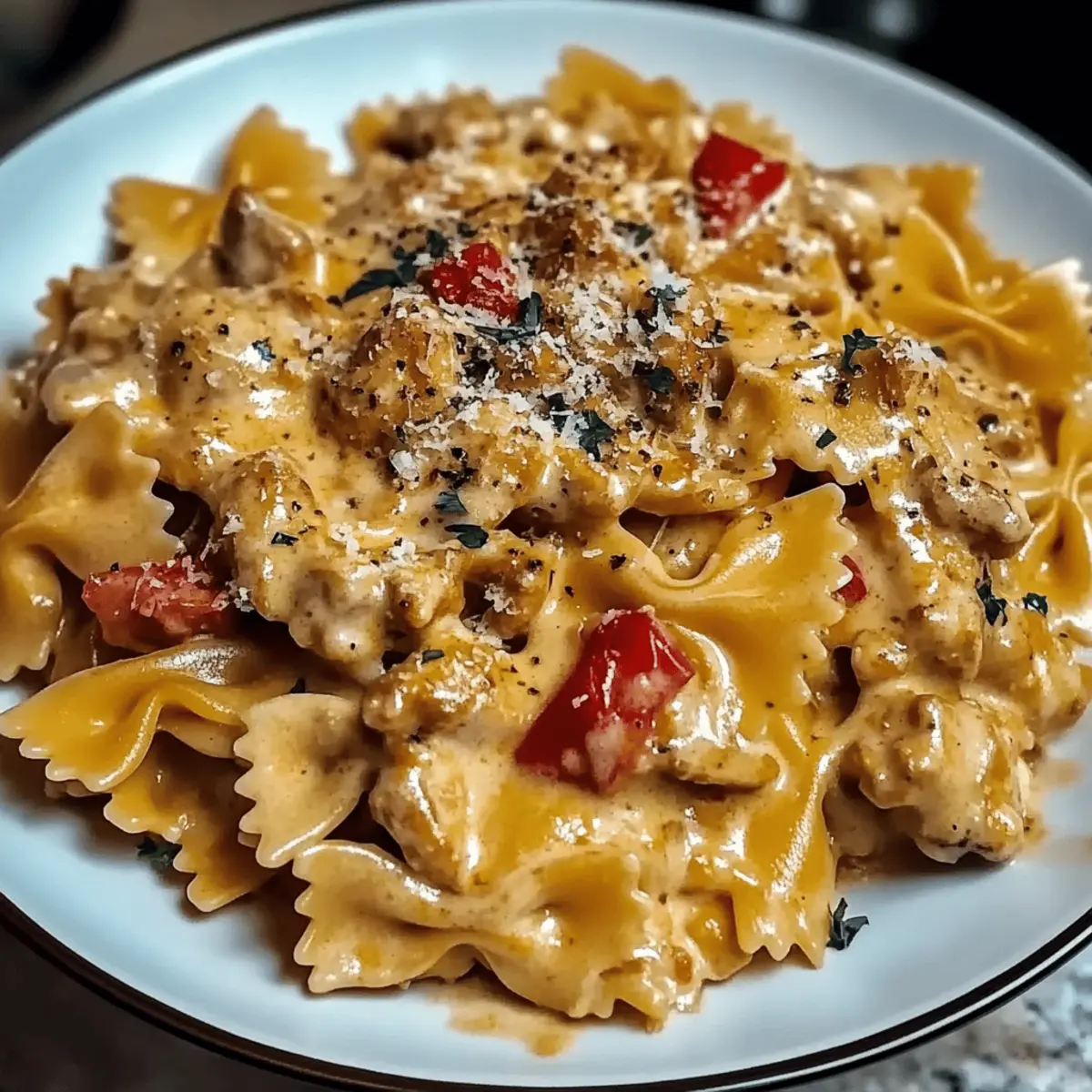
Roasted red peppers in a cream sauce do something that most other vegetables don’t. They add a smoky, slightly sweet depth that softens as the cream absorbs it and distributes evenly through every bite of pasta. Combined with four cloves of garlic, a generous pour of heavy cream, and freshly grated Parmesan, they produce a sauce that tastes considerably more complex than its 15 minutes of active development would suggest.
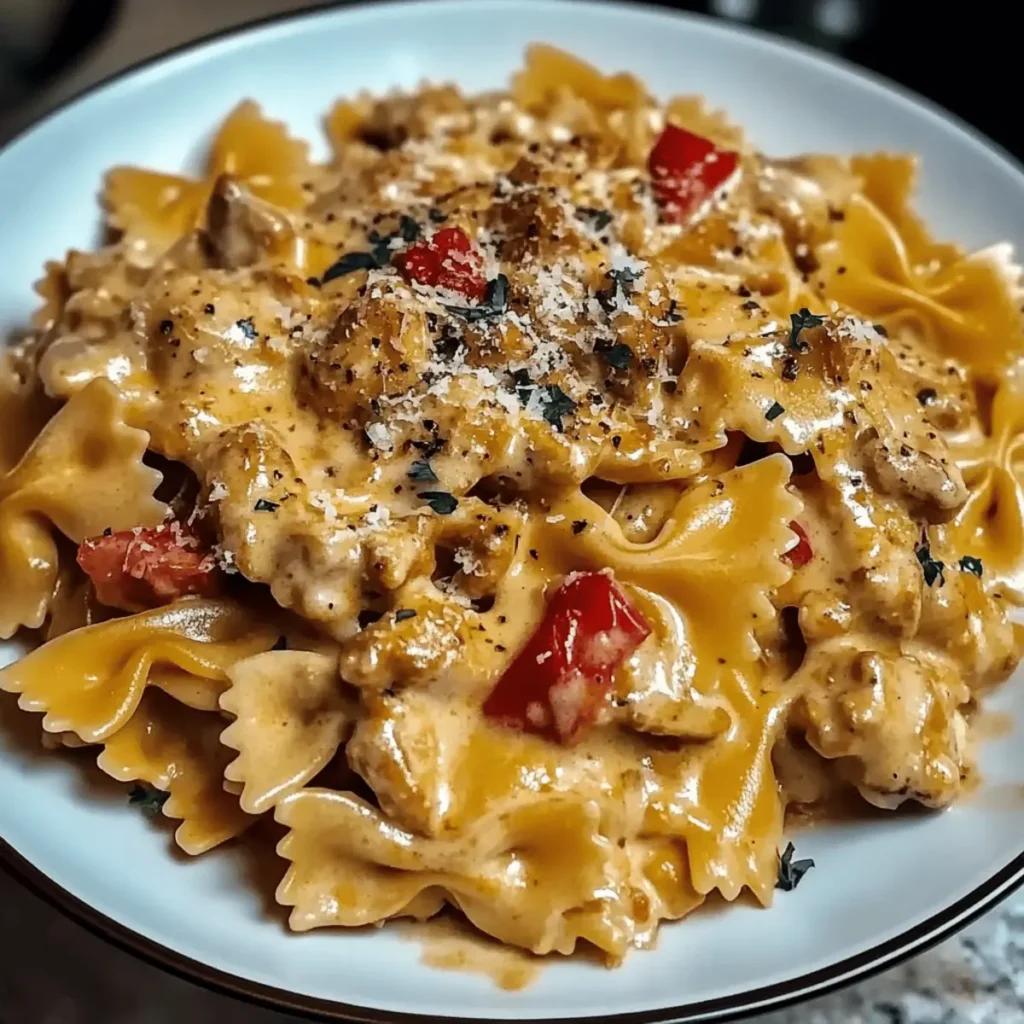
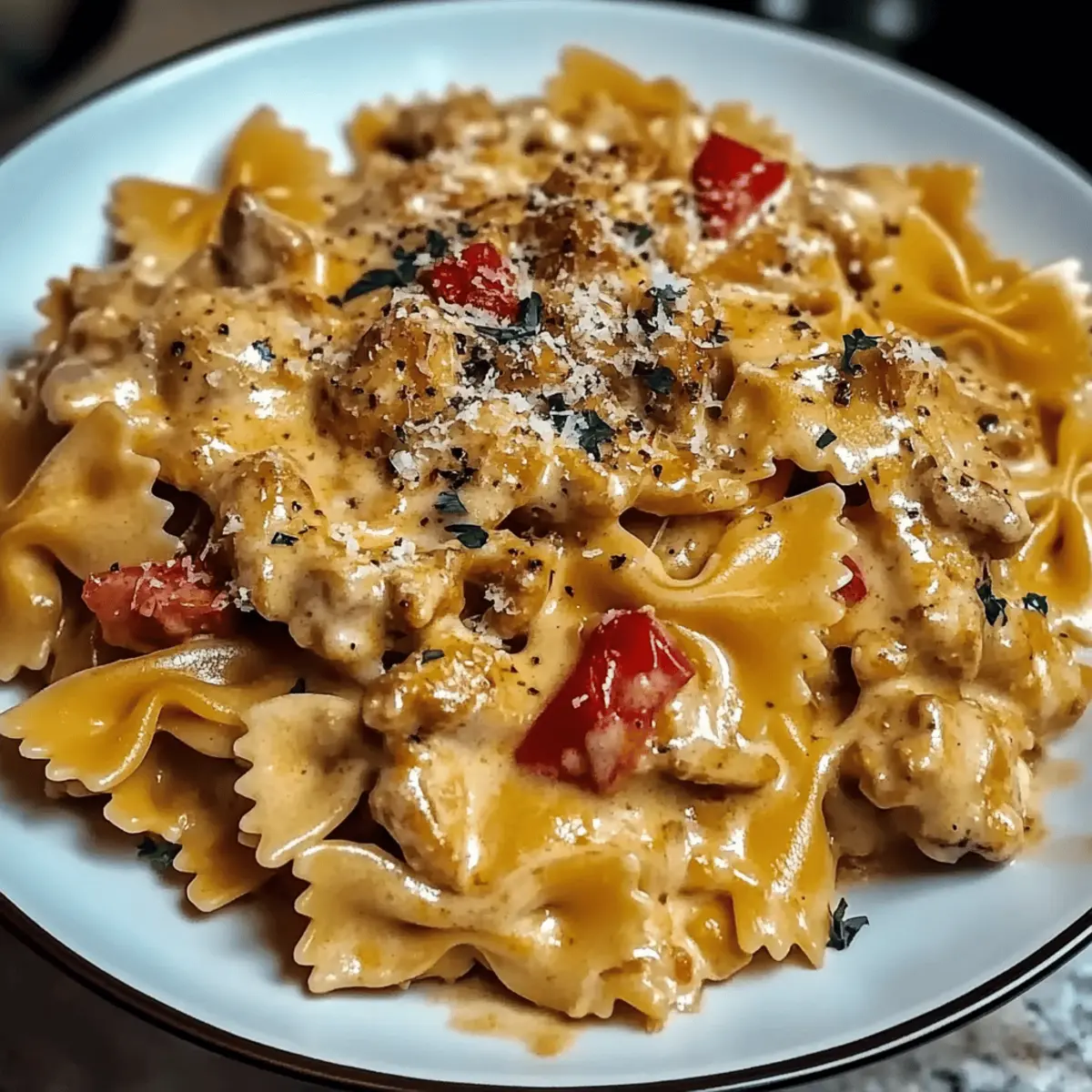
The bowtie pasta choice is deliberate rather than decorative. The folded center of each farfalle traps the cream sauce in a way that flat noodles can’t manage, which means every bite delivers a concentrated pocket of roasted red pepper and Parmesan flavor alongside the seared chicken. It’s the kind of textural detail that makes a pasta dish feel considered rather than arbitrary.
The optional cream cheese addition is worth noting as a technique decision rather than just an ingredient swap. Two ounces of cream cheese melted into the sauce before the Parmesan goes in adds a subtle tang and a thicker, more velvety body to the sauce that the heavy cream alone doesn’t produce. It’s not the same as adding more cream, and for anyone who wants a sauce that sits on the pasta rather than flowing through it, the cream cheese is the detail that gets it there.
This best Parmesan roasted red pepper chicken with bowtie pasta serves four in 30 minutes from a single skillet.
Why You’ll Love This Best Parmesan Roasted Red Pepper Chicken
The roasted red pepper and Parmesan combination produces a flavor profile that sits distinctly between a sun-dried tomato pasta and a straight cream sauce. The peppers add a gentle smokiness and natural sweetness that rounds the edges of the Parmesan’s sharpness, producing a sauce that’s simultaneously rich and bright in a way that neither ingredient achieves alone.
The cream cheese option is the technique detail that elevates the sauce from a standard heavy cream base to something with more body and tang. Cream cheese melted into warm cream before the Parmesan goes in produces a sauce with a slightly thicker consistency and a subtle dairy complexity that makes the finished dish taste closer to a restaurant sauce than a home version.
The pat-dry chicken technique is the step that determines whether the sear produces genuine golden color or pale, grey meat. Surface moisture on chicken breast is the enemy of browning since the water needs to evaporate before the pan surface can transfer enough heat to initiate the Maillard reaction. Thirty seconds of firm patting with paper towels before seasoning produces a sear that starts immediately on contact with the hot pan.
The bowtie pasta is also the right choice for this specific sauce since the folded center of each farfalle creates a pocket that holds the pepper-Parmesan cream, producing a more sauce-forward bite than a smooth pasta surface would allow.
Ingredients for Best Parmesan Roasted Red Pepper Chicken Bowties
For the pasta and chicken:
- 12 oz bowtie pasta (farfalle)
- 1 lb boneless skinless chicken breast, sliced thinly
- 1 tablespoon olive oil
- 1 teaspoon garlic powder
- Salt and black pepper, to taste
For the garlic cream sauce:
- 2 tablespoons butter
- 4 cloves garlic, minced
- 1/2 cup roasted red peppers, jarred or homemade, sliced
- 3/4 cup heavy cream
- 2 oz cream cheese, optional
- 3/4 cup freshly grated Parmesan cheese
- 1/2 teaspoon Italian herb blend
For garnish:
- Fresh parsley or basil
- Optional: red pepper flakes or a balsamic drizzle
For the roasted red peppers, jarred peppers packed in water or light brine are convenient and produce a very good result. Drain them well and pat them dry with paper towels before slicing them into the sauce since excess liquid from the jar dilutes the cream and extends the thickening time. Oil-packed jarred peppers work but add additional fat to the sauce that can make it slightly heavier. Homemade roasted red peppers, charred directly over a gas flame or under the broiler and peeled, produce the most intensely smoky flavor and are worth the extra 20 minutes when time allows.
For the Parmesan, freshly grated from a block is the standard recommendation across every cream pasta in this series, and it applies here for the same reason. The anti-caking agents in pre-shredded Parmesan prevent clean melting in warm cream, which produces a slightly grainy texture that’s especially noticeable in a sauce where the Parmesan is the primary thickener. A fine grater or microplane produces the best texture for sauce incorporation and the most even flavor distribution.
For the cream cheese, full-fat block cream cheese produces the best result. Reduced-fat cream cheese has a higher water content that can make the sauce thinner rather than thicker. Whipped cream cheese incorporates faster but doesn’t add the same body. If using cream cheese, soften it at room temperature before it goes into the pan so it melts smoothly rather than leaving small unmixed lumps in the sauce.
How to Make Best Parmesan Roasted Red Pepper Chicken Bowties
The sauce builds on the chicken sear fond, and the cream cheese goes in early enough to melt completely before the Parmesan finishes the sauce.
- Bring a large pot of heavily salted water to a boil. Cook the bowtie pasta for 10 to 12 minutes until al dente. Bowtie pasta takes slightly longer than penne or rigatoni to cook through because the folded center is thicker than the edges. Check at 10 minutes and continue until the center of each bowtie is fully tender rather than chalky. Reserve 1/2 cup of the starchy pasta water before draining. Drain and set aside.
- While the pasta cooks, pat the chicken breast slices completely dry with paper towels on both sides. The slices should feel dry to the touch before seasoning goes on. Season with garlic powder, salt, and pepper. Heat the olive oil in a large skillet over medium-high heat until shimmering. Add the chicken slices in a single layer without crowding, working in two batches if the pan is not large enough to hold all of them with visible space between. Cook for 3 to 4 minutes per side until golden brown and cooked through to 165°F. Transfer to a plate.
- Reduce the heat to medium. Melt the butter in the same skillet. Add the minced garlic and sauté for 1 minute, stirring constantly. Four cloves of garlic is a generous amount and the residual heat from the chicken sear makes the pan run hot enough to burn garlic quickly, so consistent stirring and medium heat rather than medium-high is important here.
- Add the sliced roasted red peppers to the garlic butter and stir for 30 seconds to warm them through and allow them to begin releasing their flavor into the butter. Pour in the heavy cream and stir to combine. If using cream cheese, add it now in pieces and whisk over medium heat until fully melted and the sauce is smooth. The cream cheese incorporates more easily at this stage, before the Parmesan goes in, since the sauce temperature is high enough to melt it without the risk of the Parmesan seizing if it gets too hot.
- Whisk in the freshly grated Parmesan and the Italian herb blend. Reduce the heat to medium-low and simmer gently for 2 to 3 minutes, stirring frequently, until the sauce has thickened and the Parmesan is fully incorporated. The sauce should coat the back of a spoon and hold a line when you drag your finger through it. If it’s still thin at 3 minutes, continue simmering with occasional stirring until it reaches the right consistency.
- Return the seared chicken and any collected plate juices to the skillet. Add the drained bowtie pasta. Toss everything together gently until the pasta and chicken are evenly coated with the roasted red pepper cream sauce. The bowties will absorb some of the sauce as they’re tossed, so if the sauce looks tight, add the reserved pasta water a tablespoon at a time, tossing between each addition, until the consistency is silky and flowing rather than thick and sticky.
- Taste for seasoning. Adjust salt, pepper, or a pinch of red pepper flakes as needed. Serve immediately in warm bowls or plates garnished with fresh parsley or basil, an optional sprinkle of red pepper flakes, and a thin balsamic drizzle if using.
What to Serve with Best Parmesan Roasted Red Pepper Chicken Bowties
The cream sauce is rich and the dish is filling on its own, but a few sides add contrast and complete the table.
Crusty Garlic Bread: The most natural companion to a rich cream sauce pasta. Toasted bread rubbed with garlic and a drizzle of olive oil is both practical for mopping up sauce and keeps the Italian-inspired flavor direction of the meal consistent.
Balsamic Glazed Asparagus: Asparagus roasted or pan-seared and finished with a balsamic reduction adds a slightly bitter, tangy element that cuts through the richness of the Parmesan cream. The balsamic note also pairs with the optional balsamic drizzle garnish on the pasta, which ties the plate together.
Crisp Green Salad: A simple salad with a lemon vinaigrette adds freshness and acidity that balances the cream sauce. The lemon in the dressing does the same work that a squeeze of acid directly in the sauce would do, but from the side of the plate rather than changing the sauce itself.
Roasted Cherry Tomatoes: A small tray of cherry tomatoes roasted at 425°F until blistered and juicy alongside the pasta adds a fresh, acidic tomato element that complements the roasted red pepper in the sauce without duplicating it. The tomatoes can be served on the side or scattered over the pasta before serving.
Steamed Broccolini: Lightly steamed broccolini with olive oil and a pinch of red pepper flakes alongside the bowtie pasta keeps the Italian flavor profile cohesive while adding a green vegetable element that the dish benefits from nutritionally and visually.
Pro Tips & Variations
Pat the chicken completely dry before searing. This is the technique detail that produces a proper golden crust rather than steamed, grey chicken breast. The drier the surface of the chicken before it hits the pan, the faster the browning begins and the more pronounced the sear color. Do it firmly with paper towels on both sides of each slice, not just a light blot.
Drain and dry the roasted red peppers. Excess liquid from the jar dilutes the cream sauce and extends the time it takes to thicken. Draining and then patting the peppers dry with paper towels before slicing them removes enough moisture that the sauce thickens in the expected 2 to 3 minute window rather than requiring additional simmering time.
Add the cream cheese before the Parmesan. Adding the cream cheese while the sauce is still hot enough to melt it smoothly, before the Parmesan goes in and reduces the heat further, produces a fully smooth sauce without lumps. Reversing the order or adding both at once can produce a sauce that looks smooth initially but has small cream cheese pockets that don’t fully incorporate.
Use a balsamic drizzle as a finishing garnish. A thin drizzle of balsamic reduction or thick balsamic glaze over the finished pasta adds a sweet, tangy note that amplifies the smoky roasted red pepper flavor in the sauce. It’s an optional garnish but one that changes the character of each bite from purely rich and creamy to something with more dimension.
Blend half the roasted red peppers for a smoother, more vibrant sauce. If you want a sauce with a more intense red color and a fully smooth texture, blend half of the roasted red peppers with a splash of the cream before adding everything to the pan. Leave the remaining peppers sliced for texture contrast. The blended portion disperses the pepper flavor and color throughout the entire sauce rather than concentrating it in sliced pieces.
Storage & Reheating Tips
Store leftovers in an airtight container in the refrigerator for up to 3 days. The bowtie pasta absorbs the cream sauce during storage and the dish will look considerably drier when cold than it did fresh. The folded centers of the bowties hold the sauce through storage and reheat particularly well.
To reheat, I add a tablespoon of milk or cream to the container before warming and stir it through before heating. Stovetop reheating in a covered pan over medium-low heat with occasional gentle stirring produces the best result, loosening the absorbed sauce as the liquid heats and distributing it back through the pasta. Microwave reheating at medium power in 60-second intervals with a tablespoon of cream or milk added before heating works for individual portions.
The cream sauce doesn’t freeze well since the emulsion breaks during freezing. The roasted red pepper pieces survive freezing reasonably well but the Parmesan cream sauce separates into a greasy, grainy mixture after thawing that doesn’t recover with reheating. Plan to use leftovers within 3 days.
Common Questions
The sauce looks thin and isn’t coating the pasta. How do I fix it? Thin sauce in this recipe usually means either the cream didn’t simmer long enough to reduce or the peppers released excess liquid into the sauce. Remove the pasta from the pan temporarily and continue simmering the sauce alone over medium heat, stirring frequently, until it thickens to the right consistency. Then return the pasta and toss to coat. For future batches, drain and dry the roasted red peppers thoroughly before adding them and ensure the cream simmers for the full 2 to 3 minutes before the pasta goes in.
Can I blend the roasted red peppers into the sauce for a smoother texture? Yes, and this produces a noticeably different but equally good result. Blend the drained roasted red peppers with a splash of heavy cream until completely smooth before adding to the pan. The blended version produces a uniformly orange-red, smooth sauce rather than a cream sauce with visible pepper slices. Both approaches work and the choice is purely textural preference.
My Parmesan sauce turned grainy. What went wrong? Grainy Parmesan sauce is almost always caused by the cheese going into a sauce that was too hot, or by using pre-shredded Parmesan with anti-caking agents. Reduce to medium-low before the Parmesan goes in, add it in two additions with whisking between each, and use freshly grated from a block. If the sauce is already grainy, removing the pan from heat and whisking vigorously while adding a tablespoon of cold cream sometimes smooths it out as the temperature drops.
Parmesan roasted red pepper chicken bowties deliver a bistro-quality cream pasta from a 30-minute one-pan method that’s straightforward enough for a weeknight but impressive enough for a dinner that’s meant to feel like more of an occasion. The roasted red pepper and Parmesan combination is what makes this dish memorable rather than just another cream pasta, and once you’ve made it once, the technique is easy to reproduce with confidence.
Best Parmesan Roasted Red Pepper Chicken Bowties
Ingredients
Equipment
Method
- Cook bowtie pasta in heavily salted boiling water for 10 to 12 minutes until al dente throughout the folded center. Reserve 1/2 cup pasta water before draining. Drain and set aside.
- Pat chicken breast slices completely dry with paper towels. Season with garlic powder, salt, and pepper. Heat olive oil in a large skillet over medium-high heat until shimmering. Sear chicken in a single layer in batches for 3 to 4 minutes per side until golden and internal temperature reaches 165°F. Transfer to a plate.
- Reduce heat to medium. Melt butter in the same skillet. Add minced garlic and sauté for 1 minute, stirring constantly, until fragrant.
- Add the sliced roasted red peppers and stir for 30 seconds. Pour in the heavy cream. If using cream cheese, add it now in pieces and whisk until fully melted and smooth.
- Whisk in the Parmesan and Italian herb blend. Reduce to medium-low and simmer for 2 to 3 minutes, stirring frequently, until the sauce coats the back of a spoon.
- Return the seared chicken and all plate juices to the skillet. Add the drained bowtie pasta. Toss to coat, adding reserved pasta water a tablespoon at a time if the sauce is too thick.
- Taste for seasoning. Serve immediately garnished with fresh parsley or basil, optional red pepper flakes, and an optional balsamic drizzle.