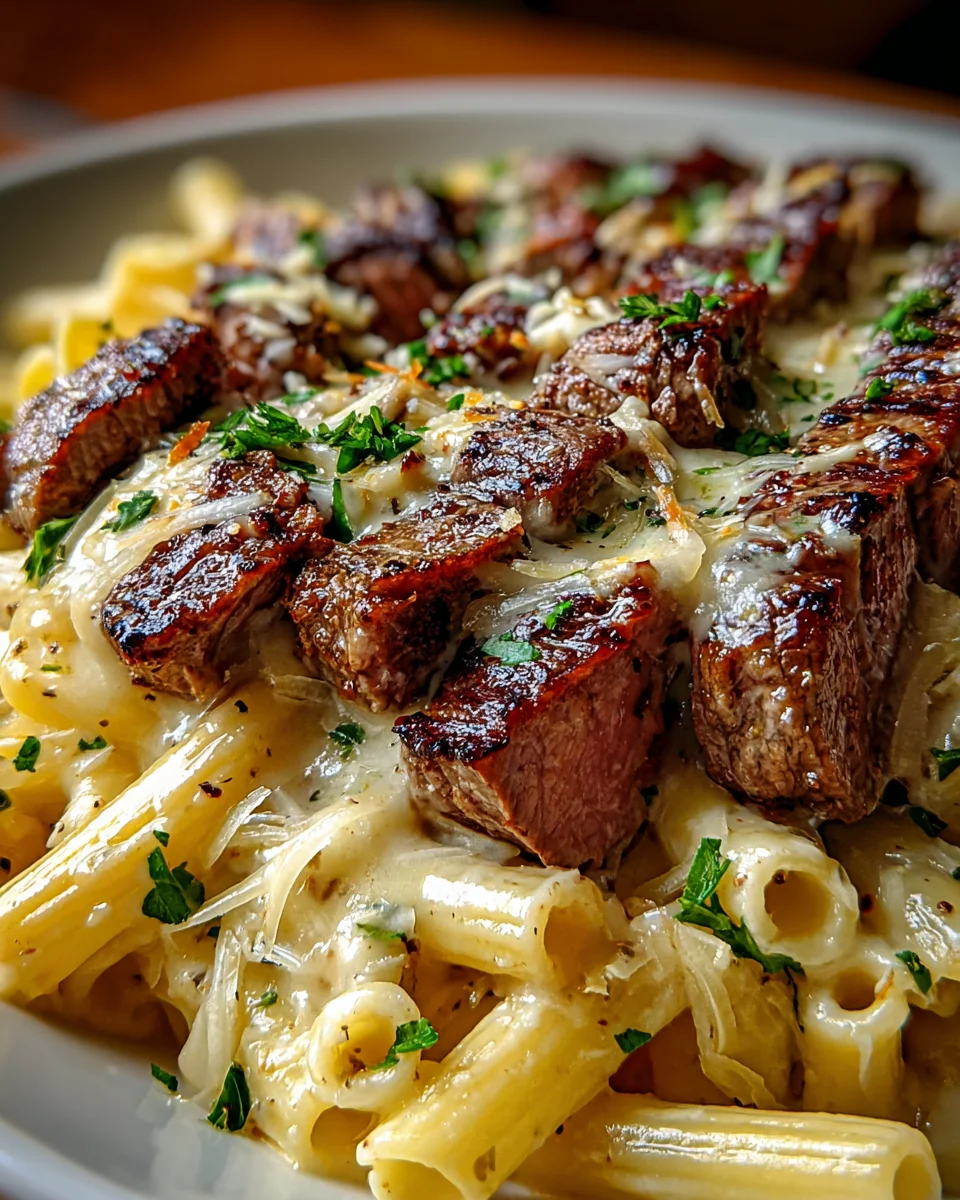
A ribeye or sirloin seared in a very hot pan and rested properly before slicing is one of the most reliable paths to a genuinely good weeknight steak. When that steak gets sliced and stirred into a garlic Parmesan cream sauce built in the same skillet, the result is a dinner that tastes like considerably more effort than 30 minutes actually requires.
The steak resting step is the technique that determines whether the slices stay juicy through the final warm-up in the sauce or dry out before they reach the plate. Five minutes on a warm plate after the sear allows the muscle fibers to relax and reabsorb the juices that the high heat forced toward the center of the steak. Slicing immediately after the sear sends those juices running onto the cutting board rather than staying in the meat, which is the difference between tender, moist steak slices and ones that taste overdone even when the internal temperature was right.
The optional beef broth addition to the sauce is the detail that shifts this from a standard garlic Parmesan cream to something with more savory depth. A half cup of broth simmered into the butter and garlic base before the cream goes in adds a roasted, meaty note that ties the sauce to the steak in a way that feels deliberate rather than coincidental.
This steak and creamy garlic Parmesan pasta serves two to three in 30 minutes and delivers a dinner that earns its place at both a casual weeknight table and a slightly more considered occasion meal.
Why You’ll Love This Steak and Creamy Garlic Parmesan Pasta
The one-skillet sauce build on the steak fond is what gives this dish its restaurant-quality depth without requiring any additional components. After the steak rests and is removed from the pan, the butter and garlic go directly into the residual fat and caramelized beef proteins left on the pan surface. Those bits dissolve into the sauce base during the deglaze and distribute a roasted, concentrated beef flavor throughout the entire cream sauce.
The resting and slicing sequence also matters for the final texture of the dish. Rested steak sliced thinly against the grain and added to warm sauce at the very end, rather than cooked further, stays at the doneness level the sear produced rather than continuing to cook toward well-done in the hot cream.
The pasta water adjustment is the finishing technique that determines whether the sauce coats the pasta or pools beneath it. The starch dissolved in the reserved cooking water loosens the Parmesan cream without thinning it, which produces a glossy, cling-to-the-pasta consistency that a splash of plain water or extra cream doesn’t replicate.
Ingredients for Steak and Creamy Garlic Parmesan Pasta
For the steak:
- 2 boneless ribeye or sirloin steaks, approximately 6 oz each
- 1 tablespoon olive oil
- Salt and black pepper, to taste
For the pasta and sauce:
- 12 oz spaghetti, fettuccine, or penne
- 1 tablespoon olive oil
- 2 tablespoons butter
- 4 cloves garlic, minced
- 1/2 cup beef broth, optional
- 1/2 cup heavy cream
- 1/2 cup freshly grated Parmesan cheese, plus extra for serving
- 1/2 teaspoon crushed red pepper flakes, optional
For garnish:
- 1/4 cup fresh basil or parsley, chopped
For the steak, ribeye and sirloin produce different results in this application. Ribeye has more intramuscular fat that renders during the sear and produces more flavor in the pan fond and in the final sauce. Sirloin is leaner, sears to a slightly firmer texture, and produces a cleaner-tasting fond. Both are excellent choices and the decision comes down to preference for richness versus a leaner result. Either cut at approximately 6 oz sears properly in 4 to 5 minutes per side in a hot pan.
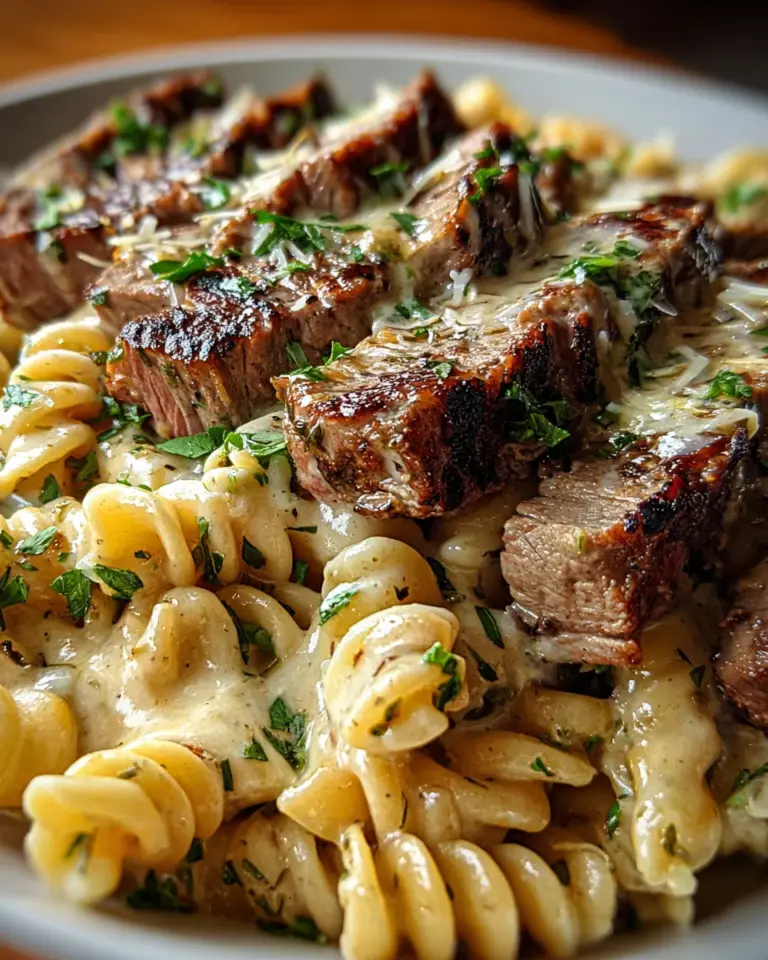
For the pasta shape, fettuccine or spaghetti produces the most visually elegant result since the long strands wrap around the steak slices in the bowl and hold the sauce between them. Penne produces a heartier, more casual result with the cream sauce collecting inside the tubes. All three work with the same method. For a more substantial dish or a larger serving that stretches to three people, penne or rigatoni accommodates more sauce per bite.
For the Parmesan, the same guidance applies here as in every cream pasta in this series. Freshly grated from a block melts into warm cream immediately and produces a seamless, smooth sauce. Pre-shredded Parmesan contains cellulose that prevents clean melting and produces a slightly grainy texture that’s noticeable in a sauce with only a half cup of heavy cream as its base.
How to Make Steak and Creamy Garlic Parmesan Pasta
The steak sears while the pasta cooks, which keeps the 30-minute timeline accurate rather than aspirational.
- Bring a large pot of heavily salted water to a boil. Cook the pasta until al dente, 1 to 2 minutes under the package time since it finishes briefly in the sauce. Reserve 1/2 cup of the starchy pasta water before draining. Drain and set aside.
- While the pasta cooks, pat both steaks completely dry on all surfaces with paper towels. Moisture on the steak surface is the primary obstacle to a proper sear since the water needs to evaporate before the pan temperature can produce browning. Season generously with salt and pepper on both sides, pressing the seasoning gently into the surface. Heat 1 tablespoon of olive oil in a large skillet over medium-high heat until shimmering and just beginning to smoke.
- Add the steaks to the hot pan. Sear without moving for 4 to 5 minutes per side for medium-rare, which produces an internal temperature of 130 to 135°F. The steaks will continue cooking slightly during the 5-minute rest. For medium, add 1 minute per side. Transfer to a warm plate and rest for a minimum of 5 minutes before slicing. The resting period is what keeps the juices in the meat rather than on the cutting board. After resting, slice thinly against the grain and set aside. Pour any collected plate juices into the sauce later.
- Reduce the heat to medium. Add the remaining tablespoon of olive oil and the 2 tablespoons of butter to the same skillet. The residual heat from the steak sear is significant, so the butter will melt immediately. Add the minced garlic and sauté for 1 to 2 minutes, stirring constantly. Four cloves in a hot pan need consistent attention since they can go from fragrant and golden to bitter in under a minute at medium-high heat. Keep the temperature at medium and keep stirring.
- If using beef broth, pour it in now and scrape the bottom of the pan immediately to dissolve the steak fond into the liquid. The fond is concentrated beef fat and protein, and dissolving it into the sauce base is what gives the cream sauce its savory depth beyond what the garlic and Parmesan alone produce. Let the broth simmer for 2 to 3 minutes until slightly reduced. If skipping the broth, pour in the heavy cream directly and scrape the fond into the cream as it heats.
- Add the heavy cream and bring to a gentle simmer over medium heat. Whisk in the freshly grated Parmesan in two additions, whisking fully between each, until the sauce is smooth and thickened, about 3 to 4 minutes of gentle simmering. Add the red pepper flakes if using. Taste for salt and pepper.
- Add the drained pasta to the skillet and toss to coat. If the sauce is too thick or the pasta is absorbing it faster than it’s coating, add the reserved pasta water a tablespoon at a time, tossing between each addition, until the consistency is glossy and flowing.
- Add the sliced steak and any collected plate juices to the pasta and sauce. Toss very gently and briefly, just enough to distribute the steak through the pasta and warm it through in the residual heat. The goal is to warm the steak rather than cook it further, so 30 to 60 seconds of gentle tossing over low heat is sufficient.
- Serve immediately in warm bowls, garnished with fresh basil or parsley and an additional sprinkle of Parmesan.
What to Serve with Steak and Creamy Garlic Parmesan Pasta
The dish is rich and protein-forward and works as a complete dinner, but a few simple sides add contrast.
Lemon Arugula Salad: Peppery arugula dressed with fresh lemon juice, olive oil, and shaved Parmesan alongside steak pasta is the pairing that provides the most effective contrast to the cream sauce. The lemon acidity cuts through the richness immediately and the peppery arugula adds bitterness that balances the savory depth of the Parmesan cream.
Garlic Bread: Thick toasted bread rubbed with garlic alongside a rich pasta is practical, satisfying, and useful for mopping up any cream sauce that pools on the plate. It keeps the flavor direction cohesive and requires almost no additional effort.
Roasted Asparagus: Asparagus roasted at 400°F with olive oil and salt while the pasta cooks adds a fresh, slightly bitter vegetable element that balances the richness of the steak and cream sauce. A squeeze of lemon over the asparagus when it comes out of the oven adds the acid note the plate benefits from.
Sautéed Mushrooms: Mushrooms sautéed in butter with a pinch of thyme alongside the steak pasta deepen the earthy, savory direction of the meal and add a textural element alongside the tender steak slices. They also work stirred directly into the pasta as a variation rather than served as a separate side.
Caesar Salad: A crisp Caesar salad with a properly anchovy-forward dressing provides enough acidity and savory depth to stand up to the richness of the steak and Parmesan cream without being overwhelmed by either.
Pro Tips & Variations
Always rest the steak before slicing. The 5-minute rest is what keeps every slice juicy when it goes into the warm sauce. Steak sliced immediately after searing loses its accumulated juices onto the cutting board, which means drier meat in the finished dish and flavor that went onto the board rather than into the pasta. Set a timer for 5 minutes and use the time to build the sauce base.
Add every plate juice to the sauce. The liquid that collects under the resting steak on the plate is concentrated beef juice carrying significant flavor. Pouring it directly into the skillet when the steak is added back to the pasta at the end adds a beefy depth to the sauce that makes the whole dish taste more cohesive.
Use beef broth in the sauce for maximum depth. The half cup of beef broth simmered into the garlic butter before the cream goes in is the optional addition that most noticeably elevates the sauce. It adds a roasted, savory note that connects the sauce to the steak and produces a depth that plain cream and Parmesan alone doesn’t achieve.
Slice thinner than you think necessary. Thin steak slices in a cream pasta warm through in the residual heat without overcooking, which keeps them at the doneness level the sear produced. Thick slices take longer to warm and are more likely to continue cooking toward well-done before they’re distributed through the pasta.
Add sautéed mushrooms for a more substantial dish. Cremini or baby bella mushrooms sautéed in the butter at the same stage as the garlic add an earthy depth and a meaty texture that extends the dish for three to four servings without changing the fundamental character of the recipe.
Storage & Reheating Tips
Store leftovers with the steak and pasta together in an airtight container in the refrigerator for up to 3 days. The pasta absorbs the cream sauce during storage and the steak continues to absorb the sauce flavors as it sits, which makes day-two portions deeply flavorful even if the texture is slightly softer than the original.
To reheat, I warm the pasta and steak together in a covered saucepan over medium-low heat, adding a tablespoon of broth or a splash of water before warming to loosen the absorbed sauce. Stir gently every minute and keep the heat low to prevent the cream sauce from breaking and to avoid overcooking the already-cooked steak further. Microwave reheating at medium power in 60-second intervals with a tablespoon of water added before heating works for individual portions.
The cream sauce doesn’t freeze well since the emulsion breaks during freezing and thawing. Plan to use leftovers within 3 days.
Common Questions
My steak is overcooked by the time it goes into the pasta. How do I prevent this? The steak only needs 30 to 60 seconds in the warm sauce at the very end to heat through, not to cook further. Add it off direct heat or on the lowest heat setting and toss gently rather than stirring vigorously. If the steak was cooked to medium-rare during the sear and rested properly, it will be warm and still slightly pink in the center after 45 seconds in the sauce. Cooking it longer at this stage pushes it to well-done regardless of how it was seared.
The Parmesan sauce is lumpy rather than smooth. What went wrong? Lumpy Parmesan sauce usually means the cheese went into a sauce that was either too hot or not hot enough to melt it cleanly, or that pre-shredded cheese was used. Add freshly grated Parmesan in two additions over medium-low rather than medium heat, whisking between each. If the sauce is already lumpy, remove from heat and whisk vigorously while adding a tablespoon of warm pasta water. The sauce often smooths out once the temperature drops slightly.
Can I use a different cut of steak? Yes. New York strip produces a result between ribeye and sirloin in fat content and flavor. Flank steak works well sliced very thinly against the pronounced grain and is significantly more affordable. Tenderloin produces the most tender result but contributes less flavor to the fond since it has minimal marbling. Any cut works with the same sear method adjusted for thickness.
Steak and creamy garlic Parmesan pasta is a dinner that delivers well above its effort level on every occasion. The steak fond in the sauce, the rested and properly sliced beef, and the Parmesan cream adjusted with pasta water are the three technique points that separate a genuinely good version from a basic one, and once you’ve made it once with those details locked in, it becomes one of those reliable recipes that works equally well for a Tuesday night or a dinner worth making for guests.
Steak and Creamy Garlic Parmesan Pasta
Ingredients
Equipment
Method
- Cook pasta in salted boiling water until al dente, 1 to 2 minutes under package time. Reserve 1/2 cup pasta water before draining. Drain and set aside.
- Pat steaks completely dry on all surfaces. Season generously with salt and pepper. Heat 1 tablespoon olive oil in a large skillet over medium-high heat until shimmering. Sear steaks without moving for 4 to 5 minutes per side for medium-rare (130 to 135°F internal). Transfer to a warm plate and rest for 5 minutes before slicing thinly against the grain.
- Reduce heat to medium. Add remaining olive oil and butter to the same skillet. Add minced garlic and sauté for 1 to 2 minutes, stirring constantly, until fragrant but not browned.
- If using beef broth, pour it in and scrape the fond from the bottom of the pan immediately. Simmer for 2 to 3 minutes until slightly reduced. Pour in the heavy cream and bring to a gentle simmer.
- Whisk in the Parmesan in two additions until the sauce is smooth and thickened, about 3 to 4 minutes. Add red pepper flakes if using. Taste for seasoning.
- Add the drained pasta and toss to coat. Add reserved pasta water a tablespoon at a time if the sauce is too thick.
- Add the sliced steak and all collected plate juices. Toss gently over low heat for 30 to 60 seconds until warmed through. Do not cook further.
- Serve immediately garnished with fresh basil or parsley and additional Parmesan.