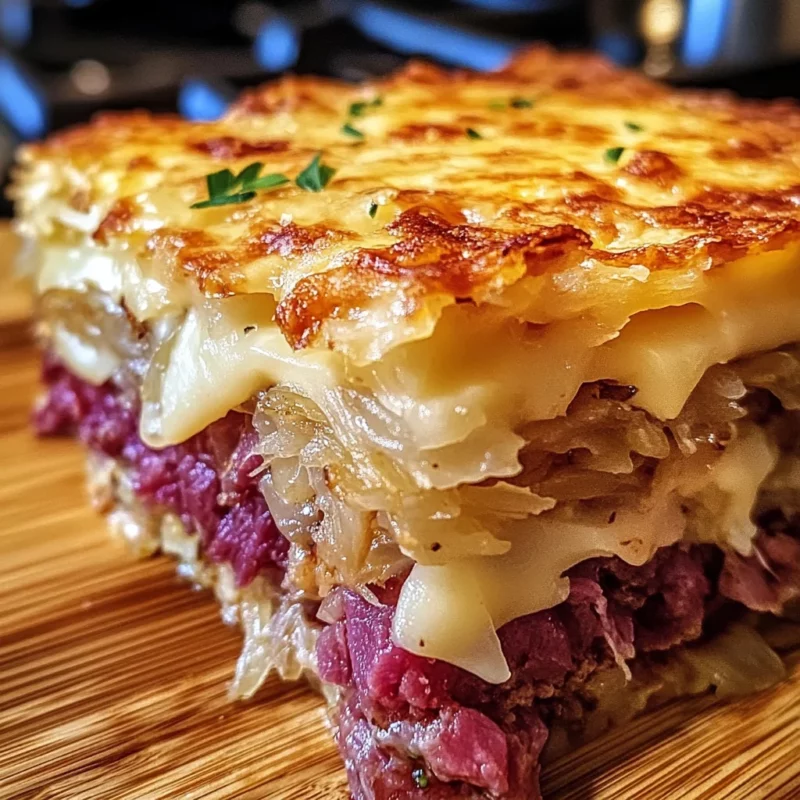
There’s a specific craving that only a Reuben sandwich satisfies, and this casserole delivers every element of it in a form that feeds eight people from a single baking dish. Buttery rye bread cubes toasted golden in the oven, tender corned beef, tangy squeezed-dry sauerkraut, creamy Thousand Island dressing, and two full cups of melted Swiss cheese layered in a format that’s considerably easier to pull together than individually assembling eight sandwiches for a crowd.
This homemade Reuben bake is the dinner worth making for St. Patrick’s Day, a casual weekend gathering, or any weeknight when the deli sandwich craving hits but the situation calls for something that feeds the whole table. The layering approach ensures every scoop pulls up buttery bread, corned beef, sauerkraut, and melted cheese simultaneously, and the 40-minute total time means it’s realistic on a weeknight without any shortcuts that compromise the result.
The squeezed-dry sauerkraut step is the technique that separates a properly structured casserole from a soggy one. It takes two minutes and makes the entire difference.
Why You’ll Love This Homemade Reuben Casserole Bake
The bread cube technique is what gives this casserole its identity beyond a standard layered bake. Marble rye cut into cubes and tossed in melted butter before layering produces two distinct textures in the finished casserole. The bread cubes on the bottom absorb the Thousand Island dressing and the sauerkraut liquid and become soft, almost stuffing-like, while the bread cubes on top toast in the oven heat and develop the same buttery crunch as a perfectly griddled Reuben sandwich exterior. Both textures are intentional and both make the casserole more satisfying than a version where all the bread ends up soft.
The double cheese layer, one cup in the middle and one cup on top, ensures the Swiss is present throughout every scoop rather than just on the surface. The middle layer melts into the Thousand Island dressing and the sauerkraut and becomes part of the sauce, while the top layer caramelizes slightly in the oven and produces the bubbly, golden finish that makes the casserole look as appealing as it tastes.
Corned beef from a deli counter or the packaged variety both work. The casserole format is forgiving enough that the quality variation between a properly brined brisket and a packaged cooked corned beef is less noticeable than it would be in a standalone sandwich.
Ingredients for Homemade Reuben Casserole Bake
I always shred my own Swiss cheese from a block for any casserole application. Pre-shredded Swiss contains the same cellulose and potato starch anti-caking coating that pre-shredded cheddar does, and it produces a similarly grainy, uneven melt that flat-out doesn’t achieve the smooth, stretchy pull of freshly grated block Swiss. Block Swiss grated on the large holes of a box grater melts into a cohesive, glossy layer both in the middle and on top of the casserole that makes every scoop genuinely impressive.
The Bread Base & Topping:
- 8 slices marble rye or pumpernickel bread, cut into 1-inch cubes
- 4 tablespoons salted butter, melted
- 1 teaspoon caraway seeds (optional)
The Filling:
- 1 lb cooked corned beef, shredded or chopped into bite-sized pieces
- 1 can (16 oz) sauerkraut, rinsed and thoroughly drained
- 2 cups shredded Swiss cheese, freshly grated
The Dressing:
- 3/4 cup Thousand Island dressing
For a quick homemade version, whisk together half a cup of mayonnaise, two tablespoons of ketchup, and one tablespoon of sweet pickle relish. The homemade version is worth making if Thousand Island dressing isn’t already in the refrigerator since it takes under two minutes and produces a cleaner, more balanced flavor than many bottled varieties. Russian dressing, which swaps the pickle relish for prepared horseradish and adds a teaspoon of Worcestershire, produces a slightly spicier, more assertive casserole that leans into the deli character of the dish more aggressively.
Marble rye is the best bread choice for both flavor and visual appeal. The contrast between the light and dark swirled rye produces an attractive golden and dark brown mosaic on the topping surface and the caraway seeds already baked into the bread reinforce the rye flavor throughout the casserole. Pumpernickel works for a deeper, slightly more bitter flavor profile. Plain rye is the most straightforward substitute if neither is available.
How to Make Homemade Reuben Casserole Bake
The key to this recipe is completely dry sauerkraut before it goes into the casserole. Canned sauerkraut contains a significant amount of liquid even after draining in a colander. That residual moisture releases into the casserole during baking and pools in the bottom layer of bread, producing a wet, dense base rather than the soft-but-cohesive bottom layer the casserole needs. Rinsing the sauerkraut under cold water removes excess acidity and salt, and then wrapping it in a clean kitchen towel and squeezing firmly several times extracts the remaining moisture that draining alone doesn’t remove.
- Preheat the oven to 400°F (200°C). Grease a 9×13-inch baking dish with butter or non-stick spray.
- Cut the rye bread into 1-inch cubes. Toss the bread cubes in the melted butter in a large bowl until every cube is evenly coated. Set aside.
- Rinse the sauerkraut under cold water in a colander. Transfer to a clean kitchen towel and squeeze firmly and repeatedly until no more liquid comes out when pressed. The sauerkraut should feel almost dry to the touch.
- Spread half of the buttered bread cubes in an even, single layer across the bottom of the prepared baking dish.
- Distribute the shredded or chopped corned beef evenly over the bread layer. Spread the squeezed-dry sauerkraut evenly over the corned beef.
- Drizzle the Thousand Island dressing evenly across the sauerkraut layer, covering the surface as completely as possible. Scatter one cup of the freshly grated Swiss cheese over the dressing.
- Distribute the remaining bread cubes evenly over the cheese layer. Scatter the final cup of Swiss cheese over the bread cubes and sprinkle with caraway seeds if using.
- Bake uncovered for 20 to 25 minutes until the top bread cubes are golden and crispy, the cheese is bubbly and beginning to brown at the edges, and the filling is heated through.
- Let the casserole rest for 5 minutes before scooping and serving.
Pro tip: For the crispiest top bread cubes, increase the oven temperature to 425°F for the final 3 to 5 minutes of baking. The higher heat crisps the buttered bread surface quickly without burning the cheese beneath. Watch closely during this final stage.
What to Serve with Homemade Reuben Casserole Bake
This is a rich, salt-forward, cheese-heavy casserole that pairs best with sides providing freshness, crunch, or acidity.
Wedge salad: A cold iceberg wedge with blue cheese dressing and crispy bacon is the most natural companion for a deli-inspired casserole this rich. The cold, crunchy iceberg and sharp dressing provide exactly the contrast the creamy, warm casserole needs.
Roasted green beans: Simple roasted green beans with olive oil and a pinch of garlic salt add a clean vegetable element that cuts through the richness of the Thousand Island and Swiss cheese without competing with the deli flavor profile.
Dill pickle spears: A few dill pickle spears alongside each serving is the most authentically deli-appropriate accompaniment for a Reuben casserole. The briny, sour crunch of a full dill pickle provides acid and contrast that mirrors the sauerkraut inside the casserole.
Simple green salad: Mixed greens with a sharp mustard vinaigrette provide a fresh, acidic contrast to the rich, creamy casserole. Keep the dressing assertive so it genuinely offsets the Thousand Island and melted cheese rather than blending into the overall richness of the meal.
Tomato soup: A small cup of simple tomato soup alongside a scoop of Reuben casserole mirrors the classic soup and sandwich lunch combination in dinner format. The tomato acidity complements the corned beef and Swiss without duplicating any flavor already in the casserole.
Coleslaw: A vinegar-based coleslaw adds crunch, freshness, and acidity that the soft, creamy casserole doesn’t provide on its own. The cabbage in a vinegar slaw also mirrors the fermented cabbage character of the sauerkraut layer and makes the two components feel intentionally paired.

Pro Tips & Variations
Rachel version: Replace the corned beef with thinly sliced deli turkey and substitute the sauerkraut with a cup of well-drained vinegar coleslaw or plain coleslaw mix tossed with a tablespoon of apple cider vinegar. Use the same Thousand Island dressing and Swiss cheese layering and bake identically. The Rachel is lighter in flavor than the Reuben version and well-suited to anyone who finds corned beef too assertive.
Pastrami substitute: Pastrami works as a direct one-to-one replacement for corned beef and produces a slightly smokier, more heavily spiced filling. The pepper crust on the pastrami becomes part of the casserole character and pairs particularly well with Russian dressing over Thousand Island.
Homemade Russian dressing: Whisk together half a cup of mayonnaise, two tablespoons of ketchup, one tablespoon of prepared horseradish, one teaspoon of Worcestershire sauce, and a pinch of smoked paprika. This spicier, more complex dressing produces a bolder casserole that leans further into the traditional Reuben character than the sweeter Thousand Island version.
Add a mustard layer: A thin spread of whole grain or spicy brown mustard across the corned beef layer before the sauerkraut goes on adds a sharp, pungent note that’s authentic to a properly built Reuben and deepens the overall flavor complexity of the casserole.
Individual portions: Divide the full recipe among six individual oven-safe ramekins or gratin dishes for a dinner party presentation where each person receives their own personal Reuben bake. Individual portions bake in 15 to 18 minutes rather than the full 25 and look considerably more elegant than scooping from a shared casserole dish.
Storage & Reheating Tips
Reuben casserole keeps in an airtight container in the refrigerator for up to 3 days. The bread cubes on top soften overnight as they absorb moisture from the surrounding ingredients, which is expected and unavoidable. I always reheat leftovers in a toaster oven or in the oven at 350°F uncovered for 10 to 12 minutes, which restores some crispness to the top bread layer that the microwave can’t replicate. An air fryer at 350°F for 5 to 6 minutes produces the best texture restoration for individual portions, crisping the top bread cubes back to something close to their original texture. The microwave is the fastest option but leaves the bread cubes uniformly soft throughout. This casserole does not freeze well since the sauerkraut and dressing change texture significantly after freezing and thawing and the bread cubes become unpleasantly dense.
Common Questions
My sauerkraut made the casserole soggy even after draining. How do I prevent this? Draining in a colander removes the loose liquid but leaves a significant amount of moisture still held in the sauerkraut fibers. The kitchen towel squeeze step is what removes that retained moisture. Transfer the drained sauerkraut to a clean kitchen towel, gather the edges, and twist and squeeze firmly at least four to five times until the towel no longer shows wet spots where the sauerkraut is sitting. Press firmly rather than gently. Thoroughly squeezed sauerkraut feels almost dry to the touch and holds together rather than releasing liquid when pressed.
The bottom bread layer came out too soft and dense. How do I get more texture throughout? A thin layer of bread cubes on the bottom rather than a single densely packed layer produces a better result. Spread the bread cubes loosely rather than pressing them into the dish, which leaves air space between the cubes and prevents them from compressing into a solid, dense mass under the weight of the filling. Buttering every cube individually in the toss step rather than drizzling butter over the bread in the dish ensures even fat distribution, which helps the bottom layer hold its structure better against the moisture from above.
Can I assemble this casserole the night before? Yes, with one modification. Assemble through the first cheese layer only, holding back the top bread cubes and final cheese layer. Cover and refrigerate overnight. Before baking, bring to room temperature for 20 minutes, add the top bread cube and cheese layer, and bake as directed adding 5 minutes to the covered bake time. Adding the top layer fresh rather than overnight prevents the bread cubes from absorbing moisture during refrigerator storage and ensures they’re dry enough to crisp properly in the oven.
Homemade Reuben casserole bake is the dinner that earns a standing request in any household that loves the original sandwich. The buttery rye croutons, the tender corned beef, the tangy sauerkraut, and the melted Swiss in Thousand Island dressing produce all the flavors of a properly built deli Reuben in a format that feeds eight without any of the griddling, flipping, or individual assembly the sandwich requires. Make it once and find out how quickly it becomes the answer to what’s for dinner on any occasion worth celebrating with a proper meal.
Homemade Reuben Casserole Bake
Ingredients
Equipment
Method
- Preheat the oven to 400°F (200°C). Grease a 9×13-inch baking dish.
- Toss the rye bread cubes in melted butter until evenly coated.
- Rinse the sauerkraut under cold water. Transfer to a clean kitchen towel and squeeze firmly and repeatedly until completely dry.
- Spread half the buttered bread cubes in an even layer across the bottom of the prepared dish.
- Layer the corned beef evenly over the bread. Spread the squeezed-dry sauerkraut over the corned beef.
- Drizzle the Thousand Island dressing evenly over the sauerkraut. Scatter 1 cup of Swiss cheese over the dressing.
- Distribute the remaining bread cubes over the cheese layer. Scatter the final cup of Swiss cheese and caraway seeds if using over the top.
- Bake uncovered for 20 to 25 minutes until the top bread cubes are golden and crispy and the cheese is bubbly. Rest 5 minutes before serving.