The idea behind a cabbage burger is straightforward: replace the bun with something that roasts well, holds a beef patty without disintegrating, and adds its own flavor to the plate rather than just acting as structural filler. A thick-cut cabbage steak does all three. Roasted at high heat until the edges caramelize and the interior softens into tender layers, it becomes a platform for a seasoned beef patty and melted cheese that’s genuinely satisfying in a way that most low-carb bread substitutes aren’t.
The method runs in stages. Cabbage steaks go into a 400°F oven first for a 10 to 15 minute head start, which drives off surface moisture and starts the caramelization process before the beef goes on. A layer of tomato sauce between the cabbage and the patty keeps the beef from drying against the cabbage surface and adds a savory, slightly acidic note that holds the whole assembly together. Cheese goes on in the final 2 to 3 minutes and melts into the beef while the edges of the cabbage continue crisping.
These oven-baked cabbage burgers are naturally keto-friendly and low-carb, serve four, and come together in just over 35 minutes with minimal cleanup.
Why You’ll Love These Oven-Baked Cabbage Burgers
The pre-roast on the cabbage is the technique that separates this from any version that tries to roast the cabbage and cook the beef at the same time on the same timeline. Cabbage and ground beef need different amounts of time, and the staggered approach means both come out properly cooked rather than one being overdone while the other catches up.
The cheese mixed directly into the beef patty mixture is a detail worth noting. A quarter cup of shredded cheddar worked into the meat before forming the patties adds moisture to the interior of each patty as it melts during the bake, which prevents the lean beef from drying out.
The core-intact slicing technique from the cabbage steak recipe is equally important here. Keeping a section of the core in each steak holds the concentric leaf layers together through the full roasting process, including the second bake with the beef on top. Without it, the leaves separate when you try to lift the assembled burger.
These also reheat well in the air fryer, which revives both the cabbage texture and the beef better than a microwave would.
Ingredients for Oven-Baked Cabbage Burgers
The ingredient list divides cleanly across the cabbage base, the beef patty mixture, and the toppings.
For the cabbage base:
- 1 medium head green cabbage, cut into 1-inch thick steaks
- 2 tablespoons olive oil
- Salt and black pepper, to taste
For the beef patties:
- 1 lb lean ground beef
- 1/2 cup shredded cheddar or mozzarella cheese, divided
- 1/2 cup fresh parsley, chopped
- 2 cloves garlic, minced, or 1 teaspoon garlic powder
- 1/2 teaspoon paprika
- 1/2 teaspoon each salt and black pepper
For the toppings:
- 1/4 cup tomato sauce or marinara
- Extra shredded cheese for the top
- Optional: sliced jalapeños or cooked bacon bits
For the cabbage, a medium head that feels dense and heavy for its size gives you the cleanest steaks with the most structural integrity. Loose, lighter heads have more air between the leaf layers and tend to fall apart more easily when the beef patty goes on top. The 1-inch thickness is the right target here since thinner steaks don’t have enough mass to support the beef without buckling, and thicker steaks take too long to become tender in the window before the beef is done.
For the beef, lean ground beef at 90/10 is practical since the cheese mixed into the patty adds enough internal moisture that you don’t need the extra fat from an 80/20 grind. A 50/50 mix of ground beef and ground pork is a worthwhile variation if you want more richness and juiciness in the patty, and the method is identical.
For the cheese inside the patty, shredded cheddar adds sharpness and melts into the meat during the bake. Mozzarella produces a milder, more stretchy result. Either works, and a mix of both is particularly good if you want sharpness from the cheddar and the pull of mozzarella in each bite.
How to Make Oven-Baked Cabbage Burgers
The staggered timing keeps each component at the right point in its cook when the final assembly comes together.
- Preheat the oven to 400°F. Line a large rimmed baking sheet with parchment paper.
- Slice the cabbage into 1-inch thick steaks, cutting straight through the head from top to bottom. Keep the core intact in each slice. You should get 4 to 6 steaks depending on the size of your head of cabbage. The two outermost cuts from each side will have the least core and are the most fragile, so handle them carefully and consider setting them aside to use last. Brush both sides of each steak generously with olive oil and season with salt and pepper. Arrange in a single layer on the prepared baking sheet with space between each steak.
- Roast the cabbage for 10 to 15 minutes until the edges are beginning to brown and the leaves look slightly translucent rather than raw white at the center. The cabbage should feel slightly softened when you press the edge with a spatula but still hold its shape completely.
- While the cabbage pre-roasts, combine the ground beef, 1/4 cup of the shredded cheese, chopped parsley, minced garlic, paprika, salt, and pepper in a medium bowl. Mix with your hands until just combined. Overmixing compacts the proteins and produces a dense, tight patty. Stop the moment everything is evenly distributed.
- Divide the mixture into 4 to 6 equal portions matching the number of cabbage steaks you have and shape each into a flat oval patty that roughly matches the surface area of your cabbage steaks. Matching the size of the patty to the cabbage is what produces a burger-like assembly where the beef covers the surface rather than sitting as a small mound in the center.
- Remove the cabbage from the oven. Spread about a tablespoon of tomato sauce onto the top surface of each steak, working it to the edges. Place a beef patty directly on top of the sauce on each steak. The sauce layer does two things: it adds flavor and acts as an adhesive that keeps the patty from sliding off the slightly curved cabbage surface during the second bake.
- Return the pan to the oven and bake for 10 to 12 minutes until the beef is cooked through. For a 1/4-pound patty at 3/4-inch thickness, 10 minutes at 400°F produces a patty at the low end of medium. An instant-read thermometer inserted into the center should read 160°F for fully cooked ground beef.
- Remove the pan from the oven. Sprinkle the remaining 1/4 cup of cheese over each patty and return to the oven for 2 to 3 minutes until the cheese is fully melted and beginning to bubble at the edges.
- Garnish with fresh herbs and serve immediately with a fork and knife.
What to Serve with Oven-Baked Cabbage Burgers
These work as a complete dinner on their own, but a few sides fit the low-carb direction of the meal or add the contrast the plate benefits from.
Creamy Coleslaw: A tangy, creamy coleslaw alongside a cabbage burger is a natural pairing that stays within the same flavor territory. The cool, acidic dressing contrasts the warm, savory beef and the caramelized cabbage edges beautifully.
Roasted Radishes: Halved radishes roasted at 400°F until they soften and their sharpness mellows into a mild, slightly sweet flavor are the most common keto-friendly potato substitute alongside a burger. They develop a golden surface and become genuinely tender rather than peppery and raw, which makes them a credible side for anyone looking to keep the meal low-carb.
Simple Green Salad: A lightly dressed salad with a lemon vinaigrette adds freshness that contrasts with the richness of the melted cheese and seasoned beef. It also adds a green, raw vegetable element that balances the warm, roasted components of the main plate.
Keto Special Sauce: A quick sauce of mayonnaise, Dijon mustard, a splash of apple cider vinegar, and a pinch of garlic powder drizzled over the finished burgers adds the creamy, tangy element that a traditional burger sauce provides without the sugar of a standard ketchup-based version.
Cucumber and Tomato Salad: Sliced cucumber and diced tomato dressed with olive oil, red wine vinegar, and fresh herbs is a fast, no-cook side that adds freshness and acidity to balance the warm, cheesy burger assembly.
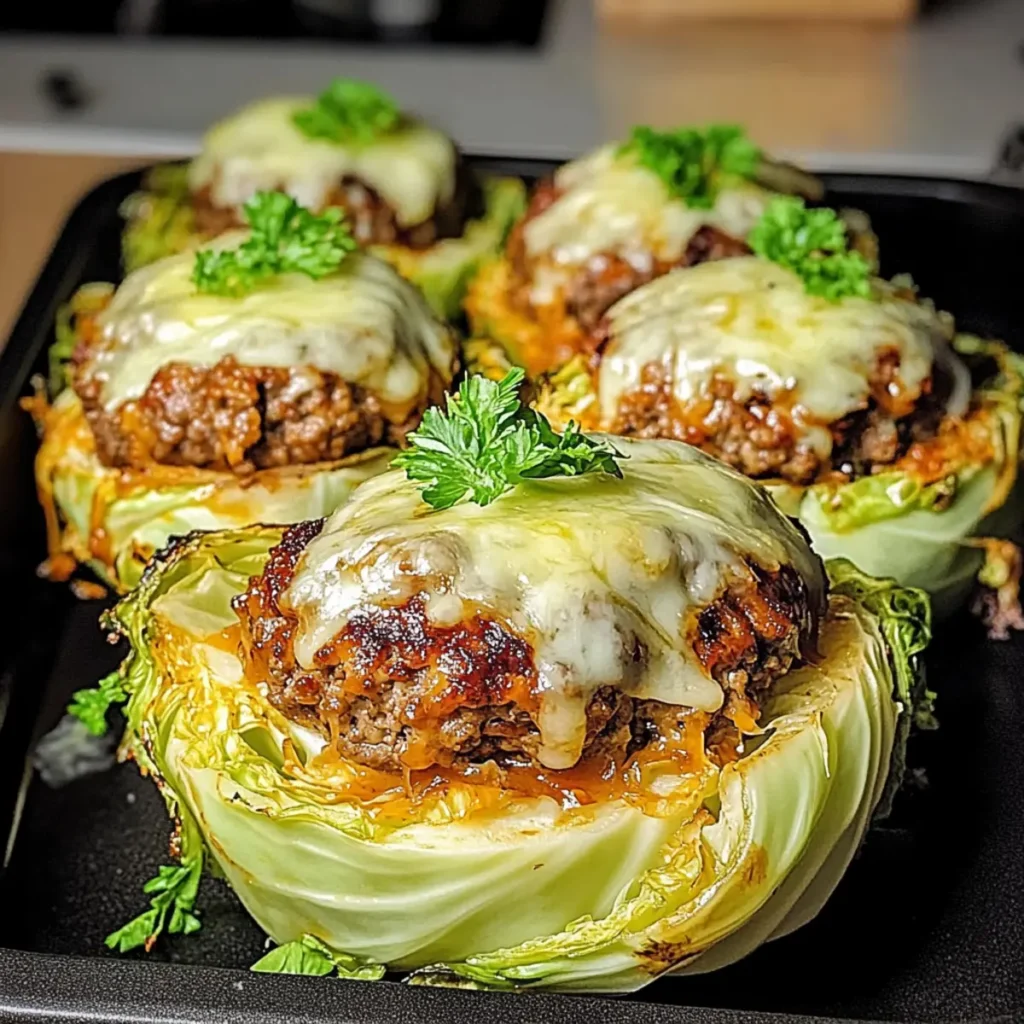
Pro Tips & Variations
Keep the core in every steak. The core running through the center of each steak is what holds the concentric leaf layers together as a single unit from slicing through serving. Without it, the leaves separate when you try to transfer the steak, and the whole assembly falls apart when you try to top it with beef. You eat around the toughest section of the core at the table.
Match the patty size to the cabbage steak. A patty that covers the full surface of the cabbage steak produces a proper burger-style result where every bite includes beef and cabbage together. A small patty in the center of a large cabbage steak means some bites are just cabbage, which changes the experience significantly.
Use the sauce layer as adhesive. The tablespoon of tomato sauce spread over the cabbage before the beef goes on isn’t just about flavor. It creates a tacky surface that keeps the patty from sliding on the slightly curved cabbage surface during the second bake and when you cut into the finished burger.
Swap the tomato sauce for sugar-free BBQ sauce. A teaspoon of smoky sugar-free BBQ sauce instead of marinara between the cabbage and beef shifts the flavor profile toward something more American-diner. It works particularly well if you’re adding bacon bits to the finished burger.
Try a 50/50 beef and pork patty. Equal parts ground beef and ground pork produce a juicier, richer patty with more fat content distributed throughout. The method is identical and the result is noticeably more moist, which is especially useful if you’re using very lean beef.
Storage & Reheating Tips
Store leftovers in an airtight container in the refrigerator for up to 3 days. The cabbage will continue to soften during storage as it releases moisture, producing a more tender, less firm texture on day two. The beef patty stays moist from the cheese inside and the tomato sauce layer.
To reheat, I find the air fryer at 350°F for 4 to 5 minutes produces the best result for both components simultaneously. It warms the beef through and revives some of the caramelized texture on the cabbage edges without making either element rubbery or wet. The oven at 350°F for 10 minutes covered with foil and then uncovered for the final 3 minutes works equally well. Microwave reheating heats everything quickly but softens the cabbage and the beef uniformly, which loses most of the textural contrast the dish is built around.
Common Questions
My cabbage steak is falling apart when I try to top it with beef. What went wrong? This is almost always a core issue. If the core was cut out during slicing or if your steak was cut too close to the outer edge of the cabbage where there’s minimal core running through the center, the leaf layers have nothing holding them together. Always leave the core fully intact and aim for slices from the central portion of the head where the most core runs through each steak.
The beef patty is cooking faster than the cabbage is becoming tender. How do I fix the timing? Extend the cabbage pre-roast by 5 minutes, bringing it to 15 to 20 minutes before the beef goes on. Alternatively, reduce the patty thickness to about 1/2 inch so it cooks through in 8 minutes rather than 10 to 12. Thinner patties finish quickly enough that the cabbage doesn’t need as long a head start. The combination of a longer pre-roast and a slightly thinner patty is the most reliable fix for timing misalignment.
Can I use red cabbage instead of green? Red cabbage works with the same technique and produces a dramatically more colorful result with a slightly more peppery, assertive flavor than green. It takes a few extra minutes to become tender, so extend the pre-roast to 15 to 18 minutes before adding the beef. Red cabbage also holds its color beautifully through the oven bake, making the finished plate more visually striking.
Oven-baked cabbage burgers deliver on the core promise of a low-carb burger alternative in a way that most substitutions don’t. The caramelized cabbage steak provides genuine flavor and texture rather than just acting as structural support, and the cheese-seasoned beef patty on top makes the whole assembly feel like a complete, satisfying dinner. Once you’ve made these, the technique is easy enough to reach for whenever you want a burger without the
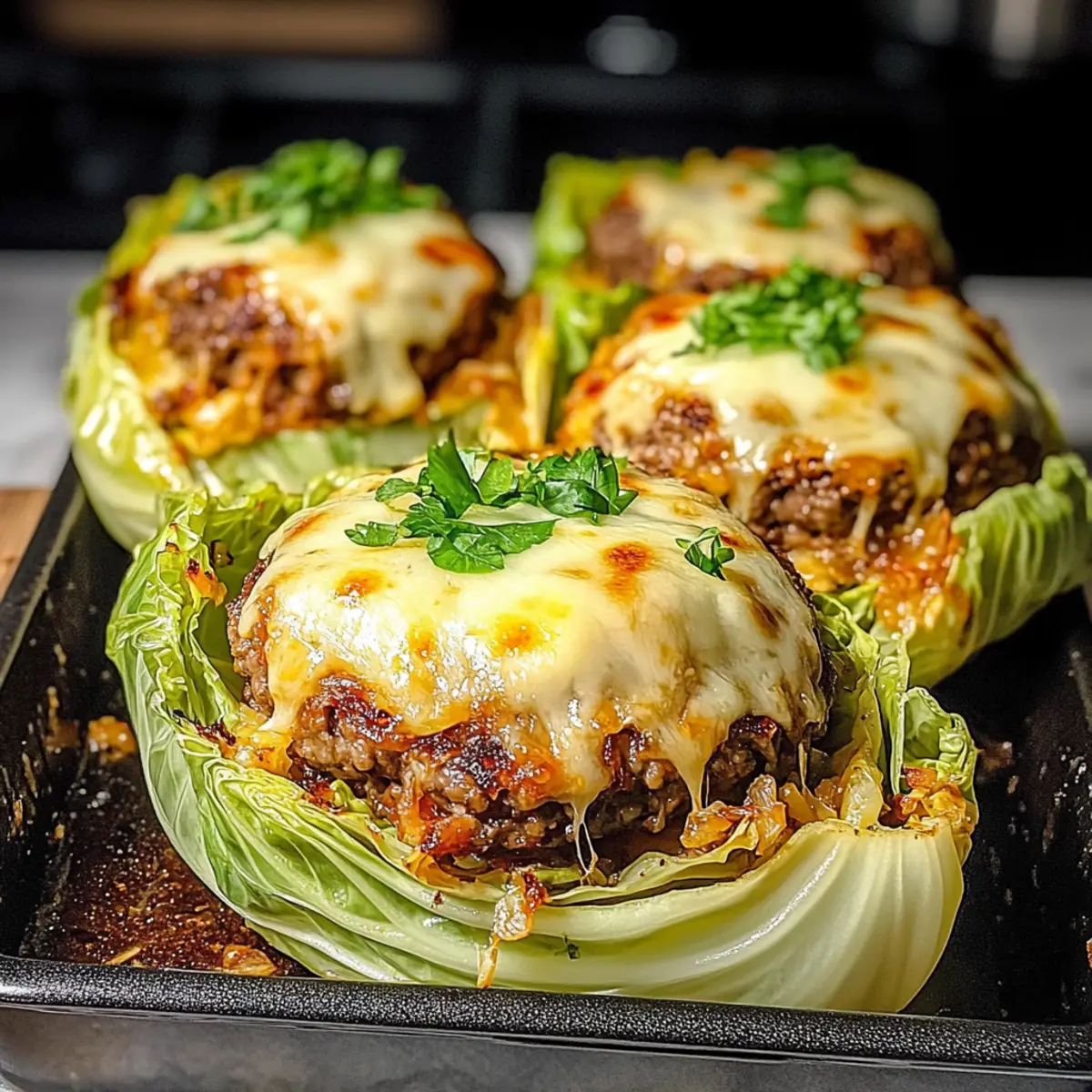
Oven-Baked Cheesy Cabbage Burgers
Ingredients
Equipment
Method
- Preheat oven to 400°F (200°C). Line a large rimmed baking sheet with parchment paper.
- Cut cabbage into 1-inch thick steaks, keeping the core intact in each slice. Brush both sides with olive oil and season with salt and pepper. Arrange in a single layer on the prepared baking sheet. Roast for 10 to 15 minutes until edges are beginning to brown and cabbage is slightly softened.
- While cabbage pre-roasts, combine ground beef, 1/4 cup shredded cheese, parsley, garlic, paprika, salt, and pepper in a medium bowl. Mix by hand until just combined. Do not overmix.
- Divide the beef mixture into 4 to 6 equal portions and shape into flat oval patties that match the surface area of your cabbage steaks.
- Remove the cabbage from the oven. Spread about 1 tablespoon of tomato sauce onto the top surface of each steak. Place a beef patty directly on top of the sauce on each steak.
- Return the pan to the oven and bake for 10 to 12 minutes until the beef reaches an internal temperature of 160°F.
- Remove from the oven. Sprinkle the remaining 1/4 cup of cheese over each patty. Return to the oven for 2 to 3 minutes until the cheese is melted and bubbly.
- Garnish with fresh herbs and serve immediately with a fork and knife.