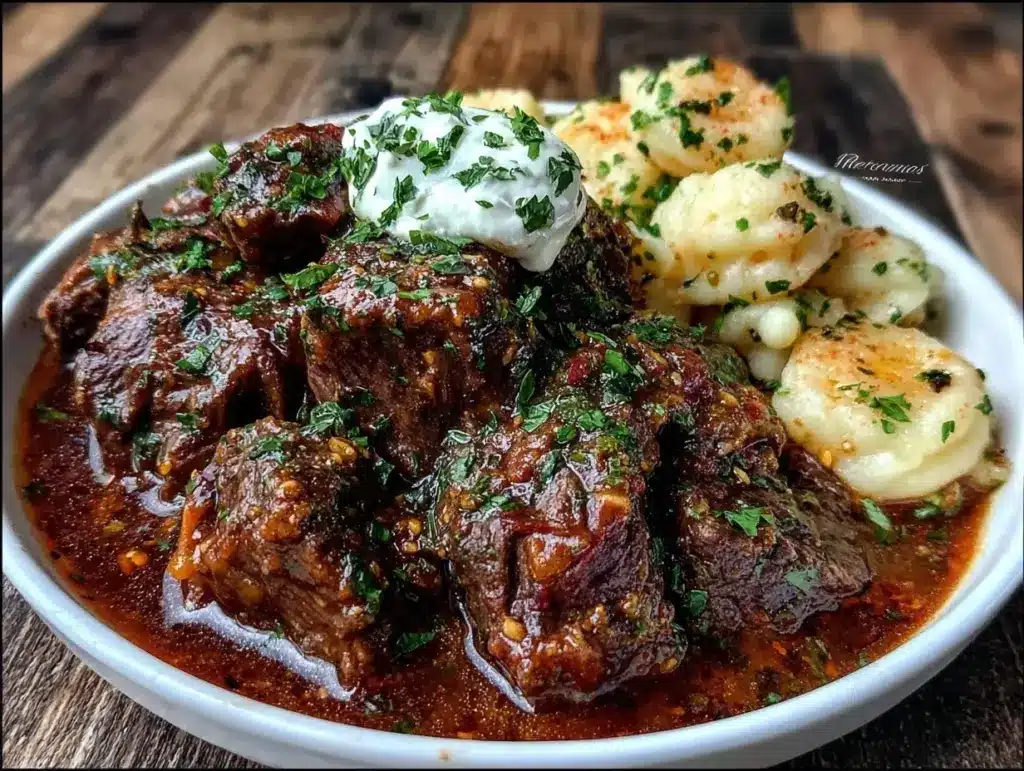
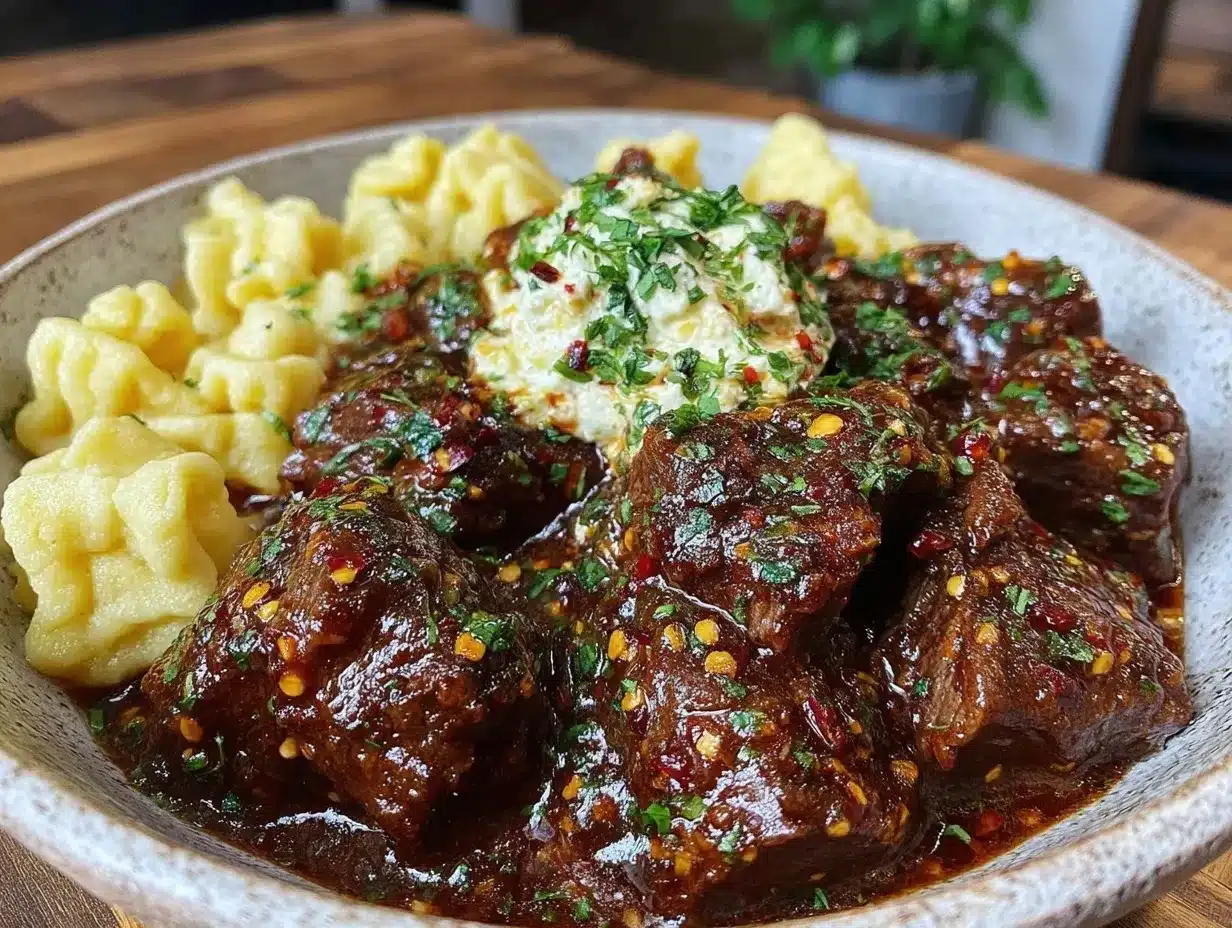
Some dishes reveal the patience behind them in every bite. This traditional savory German beef goulash is one of them. Two and a half hours of slow simmering transforms a handful of straightforward ingredients into something genuinely remarkable, a thick, mahogany-colored stew where the beef turns spoon-tender and the onions practically dissolve into a gravy that needs no thickening agent beyond the produce itself.
This is German cooking in its most honest form. No shortcuts, no cream of anything, no complicated technique. Just the kind of slow, deliberate heat that makes tough cuts of chuck give up everything they have.
If you’ve only encountered goulash as a thin, soup-like dish, this recipe will reframe it. The German version, known as Rindergulasch, is closer to a proper braise, built on an unusually high ratio of onions to beef and seasoned with smoky paprika and a splash of red wine vinegar that cuts through the richness at the very end.
Why You’ll Love This Traditional Savory German Beef Goulash
The onions are the story here. Most stew recipes use onions as a background note, but this savory German goulash recipe calls for a near equal weight of onions to beef. They cook down slowly, losing their sharpness entirely, and their natural sugars provide the subtle sweetness that balances the smokiness of the paprika without a single gram of added sugar.
The sauce thickens naturally over the long simmer without any cornstarch or flour. By the time the goulash is ready, the dissolved onions and collagen from the beef chuck have built a gravy with real body and depth.
This is also one of those recipes that improves with time. A bowl of goulash on day two, after the flavors have had a night to settle, is noticeably better than day one. It freezes beautifully, reheats without any fuss, and scales up easily for a crowd.
Ingredients for Traditional Savory German Beef Goulash
I always reach for Hungarian sweet paprika here rather than the standard grocery store variety. The difference is significant. Hungarian paprika has a deep, complex flavor that standard paprika simply doesn’t match, and since paprika is the defining spice in this dish, its quality matters more than anything else on the list.
The Beef:
- 2 lbs beef chuck or stew meat, cut into 1.5-inch cubes
- 2 tablespoons vegetable oil (for searing)
- Salt and black pepper to taste
The Aromatics:
- 3 large yellow onions, diced
- 2 cloves garlic, minced
- 2 tablespoons tomato paste
The Spices & Liquid:
- 3 tablespoons Hungarian sweet paprika
- 1 teaspoon smoked paprika
- 1 teaspoon caraway seeds (optional but very traditional)
- 1 bay leaf
- 2 cups beef broth
- 1 cup dry red wine (Merlot or Cabernet Sauvignon)
The Finish:
- 1 tablespoon red wine vinegar
- Sour cream for serving
Beef chuck is the right cut for this recipe. It has the fat content and connective tissue that break down over the long braise into tender, pull-apart meat and contribute collagen to the sauce. Lean stew meat from the round will cook drier and won’t give you the same result. On the paprika: never add it directly to a hot, dry pan without some fat or liquid. It scorches quickly and turns bitter, which is very difficult to correct once it happens.
How to Make Traditional Savory German Beef Goulash
The key to this recipe is patience at two critical stages: the sear and the simmer. A proper sear on dry, well-seasoned beef builds the flavor foundation for the entire braise. And a slow, covered simmer at low heat is what transforms the tough collagen in chuck into the silky, rich sauce that makes German goulash what it is. High heat and a short cook will not produce the same result.
- Pat the beef cubes completely dry with paper towels. Season generously with salt and pepper. Heat the vegetable oil in a large, heavy Dutch oven over medium-high heat until shimmering. Sear the beef in batches, leaving space between the pieces, until deeply browned on all sides. Resist the urge to move the meat too early. Each side needs 2 to 3 minutes of undisturbed contact with the pan. Remove the seared beef and set aside. Do not discard the drippings.
- Reduce the heat to medium. Add the diced onions to the same pot and cook for 10 to 12 minutes, stirring occasionally, until soft, golden, and significantly reduced in volume. They should look almost jammy at this stage. Add the garlic and cook for one more minute.
- Stir in the tomato paste, sweet paprika, smoked paprika, and caraway seeds. Cook for 2 minutes, stirring constantly, until the tomato paste darkens and the paprika blooms in the fat. The pot will smell intensely aromatic at this point. This step is where the color and depth of the sauce originates.
- Pour in the red wine and use a wooden spoon to scrape every browned bit from the bottom of the pot. Let the wine simmer for 3 minutes to cook off the harsh alcohol.
- Return the seared beef to the pot along with any resting juices from the plate. Pour in the beef broth and add the bay leaf. The liquid should just barely cover the meat. If it falls short, add a splash more broth.
- Bring the pot to a boil, then reduce the heat to very low. Cover with a tight-fitting lid and simmer for 2 to 2.5 hours, checking occasionally, until the beef is completely fork-tender and the sauce has thickened to a rich, dark gravy. If the sauce looks too thin in the final 30 minutes, remove the lid and let it reduce uncovered.
- Discard the bay leaf. Stir in the red wine vinegar just before serving. This final splash of acidity lifts the entire dish and keeps the rich braised flavors from tasting heavy. Taste and adjust salt as needed.
Pro tip: If you have the time, cool the goulash completely and refrigerate overnight. The fat will solidify on the surface and can be skimmed easily, and the flavor develops considerably after resting.
What to Serve with Traditional Savory German Beef Goulash
The sauce is the thing. Whatever you serve alongside should be built to absorb it.
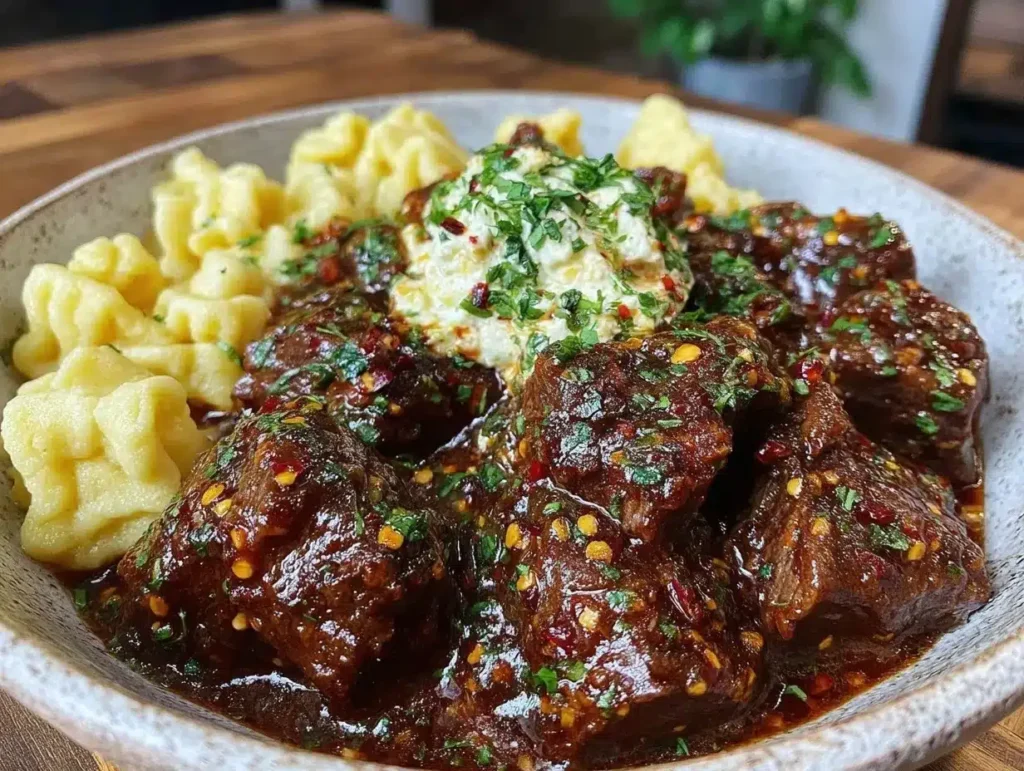
Spätzle: The classic German pairing and the most traditional choice. These soft egg noodles are ideal for soaking up the dark, paprika-rich gravy. Homemade spätzle takes about 20 minutes and is well worth it alongside a braise like this.
Boiled or mashed potatoes: Fluffy mashed potatoes are one of the most satisfying bases for goulash. Their mild flavor doesn’t compete with the paprika and they hold the sauce beautifully. Boiled whole potatoes, quartered and served alongside, are another traditional option.
Crusty rye bread: A thick slice of German-style rye bread is the simplest serving option and works particularly well for a casual, rustic dinner. It holds up to the gravy better than a soft white loaf.
Egg noodles: Wide egg noodles are a close and more accessible substitute for spätzle. They have a similar soft texture and absorb the braising liquid well.
Roasted red cabbage: Braised or roasted red cabbage with a touch of caraway and apple cider vinegar is the ideal vegetable side for goulash. The slight sweetness and acidity complement the stew without competing with it.
Simple cucumber salad: A cool, lightly pickled cucumber salad dressed with dill and a little sour cream offers a refreshing contrast to the richness of the goulash and fits the broader German dinner tradition.
Pro Tips & Variations
No wine version: Replace the red wine with an equal amount of beef broth plus an additional teaspoon of red wine vinegar. The sauce will be slightly less complex but still deeply flavorful.
Slow cooker adaptation: Complete steps one through four on the stovetop, then transfer everything to a slow cooker. Cook on low for 7 to 8 hours or high for 4 to 5 hours. The beef will be equally tender and the hands-off approach suits a busy day well.
Oven braise: After bringing the pot to a boil on the stovetop, transfer the covered Dutch oven to a 325°F oven for 2 to 2.5 hours instead of simmering on the stovetop. The surrounding heat is more even and reduces the risk of scorching the bottom.
Add bell peppers: Some regional German variations include one or two diced red bell peppers cooked down with the onions. They add a subtle sweetness and a hint of color variation in the finished stew.
Spice level: The combination of sweet and smoked paprika keeps this squarely mild and savory. If you want background heat, add a pinch of hot paprika or a small dried chili with the bay leaf during the braise.
Storage & Reheating Tips
Goulash is genuinely better on day two. I store it in an airtight container in the refrigerator for up to 4 days, and I find the flavors deepen and the sauce tightens overnight in a way that the fresh-cooked version doesn’t quite reach. Reheat gently on the stovetop over low heat, adding a small splash of broth if the sauce has thickened too much during storage. For freezing, cool completely and transfer to freezer-safe containers for up to 3 months. Thaw overnight in the refrigerator before reheating. The beef and sauce both hold up exceptionally well from frozen, making this one of the better candidates for batch cooking.
Common Questions
Why does my goulash sauce look thin after two hours of cooking? The sauce thickens primarily from the dissolved onions and rendered collagen in the beef, so a thin sauce usually means either the heat was slightly too high (causing too much liquid to cook off before the collagen breaks down) or the beef wasn’t fatty enough. Remove the lid and simmer on low for an additional 15 to 20 minutes to reduce and concentrate the sauce.
Can I use boneless short ribs instead of chuck? Yes, and it’s an excellent substitution. Boneless short ribs have a higher fat content than chuck and produce an even richer, more silky braising liquid. The cook time remains approximately the same.
Is the caraway seed essential? Not essential, but it’s distinctly traditional. Caraway has a mild anise-like quality that adds a background note you’d recognize as specifically Central European in character. If the flavor is unfamiliar to you, start with half a teaspoon before committing to the full amount.
This savory German goulash recipe rewards the time it asks for. The slow simmer is mostly hands-off, the ingredient list is shorter than the result suggests, and a pot of this on a cold evening is one of the most satisfying things you can put on a dinner table. Make it on a weekend, serve it twice, and see why it earns the reputation it has.
Traditional Savory German Beef Goulash
Ingredients
Equipment
Method
- Pat the beef cubes completely dry with paper towels and season generously with salt and pepper. Heat vegetable oil in a large Dutch oven over medium-high heat until shimmering. Sear the beef in batches without crowding, browning deeply on all sides, about 2 to 3 minutes per side. Remove and set aside.
- Reduce heat to medium. Add the diced onions to the same pot and cook for 10 to 12 minutes, stirring occasionally, until soft, golden, and jammy. Add the garlic and cook for 1 more minute.
- Stir in the tomato paste, sweet paprika, smoked paprika, and caraway seeds. Cook for 2 minutes, stirring constantly, until the tomato paste darkens and the paprika blooms in the fat.
- Pour in the red wine and scrape up all the browned bits from the bottom of the pot with a wooden spoon. Simmer for 3 minutes to cook off the alcohol.
- Return the seared beef and any resting juices to the pot. Add the beef broth and bay leaf. The liquid should just barely cover the meat.
- Bring to a boil, then reduce heat to very low. Cover with a tight-fitting lid and simmer for 2 to 2.5 hours until the beef is completely fork-tender and the sauce has thickened to a dark, rich gravy. Remove the lid for the final 20 to 30 minutes if the sauce needs further reduction.
- Discard the bay leaf. Stir in the red wine vinegar just before serving. Taste and adjust salt as needed. Serve over spätzle, mashed potatoes, or egg noodles with a dollop of sour cream.