Few Greek dishes command the same respect as a properly made moussaka. This layered masterpiece brings together roasted eggplant, seasoned meat sauce, and creamy béchamel into something that feels like a special occasion even on an ordinary Tuesday night. The cooking time is longer than most weeknight dinners, but the hands-on work is manageable, and the result is a dish that feeds a crowd and tastes even better the next day.
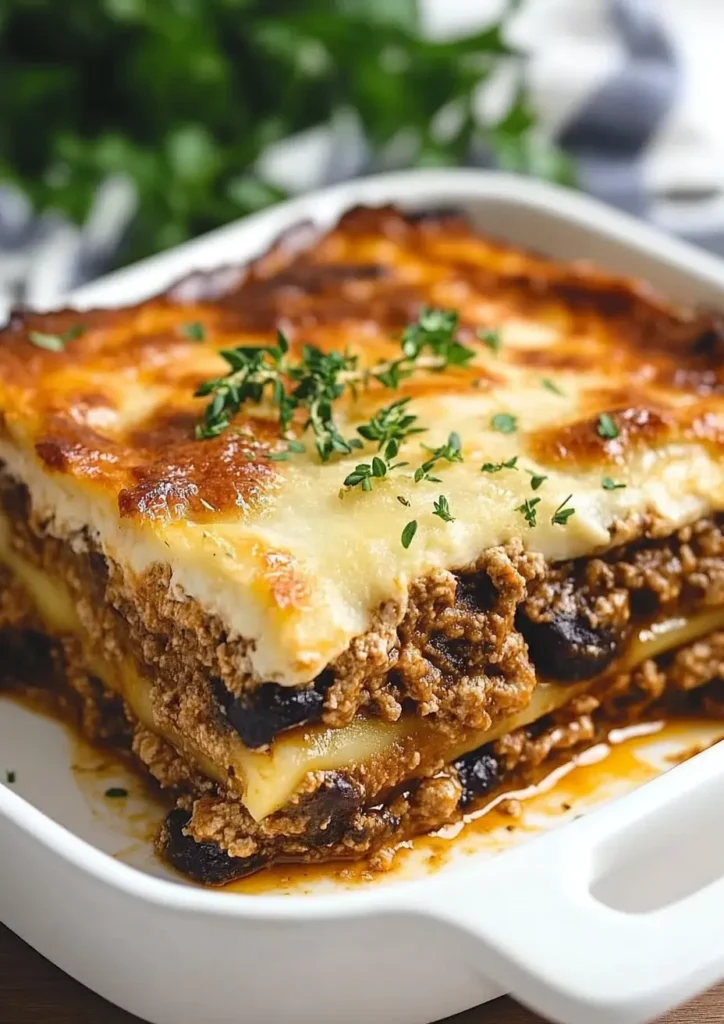
What sets traditional Greek moussaka apart is the careful layering and the warm spices in the meat sauce. Cinnamon and allspice might seem unusual in a savory dish, but they create the distinctive flavor that makes this unmistakably Greek rather than Italian. The combination of textures works beautifully too: tender vegetables, rich meat, and that silky béchamel topping that bakes into a golden crust.
Why You’ll Love This Traditional Greek Moussaka Recipe
This is the kind of dinner that makes your kitchen smell incredible and brings everyone to the table asking what’s cooking. The layers create visual appeal when you slice into it, and the flavors only improve as they meld together overnight in the fridge. You can make the entire dish ahead and bake it when you’re ready, which makes it perfect for entertaining without last-minute stress.
The recipe serves 6-8 people generously, so it’s ideal for family gatherings or meal prep for the week. Each component can be prepared separately, which means you can spread the work over a couple of days if needed. The meat sauce freezes beautifully on its own, and the roasted vegetables can be done a day ahead. Once assembled, moussaka reheats exceptionally well, maintaining its structure and developing even deeper flavor.
This version strikes a balance between authentic Greek technique and practical home cooking. You’ll roast the vegetables instead of frying them in cups of oil, which keeps things lighter while still achieving great texture. The béchamel uses a classic French technique with Greek cheese, creating that signature creamy top layer that contrasts perfectly with the hearty meat below.
Ingredients for Traditional Greek Moussaka
I always roast my vegetables for moussaka rather than frying them. It uses less oil, creates better texture, and you can do multiple trays at once instead of standing over a skillet for an hour. Choose firm, glossy eggplants without soft spots, and look for ones that feel heavy for their size.
The Vegetable Layers:
- 2 large eggplants, sliced into 1/2 inch rounds
- 2 large potatoes, peeled and sliced into 1/4 inch rounds
- 1/4 cup olive oil (for brushing/roasting)
- Salt and black pepper, to taste
The Meat Sauce:
- 1.5 lbs ground beef (or ground lamb for traditional flavor)
- 1 large yellow onion, finely diced
- 3 cloves garlic, minced
- 1 can (15 oz) crushed tomatoes or tomato passata
- 2 tablespoons tomato paste
- 1/2 cup dry red wine
- 1/2 teaspoon ground cinnamon
- 1/4 teaspoon ground allspice (optional)
- 1 bay leaf
- Salt and black pepper, to taste
The Creamy Béchamel:
- 4 tablespoons butter
- 5 tablespoons all-purpose flour
- 3 cups whole milk, warmed
- 2 egg yolks (beaten)
- 1/2 cup grated Parmesan or Kefalotyri cheese
- 1/4 teaspoon ground nutmeg
- Salt and white pepper, to taste
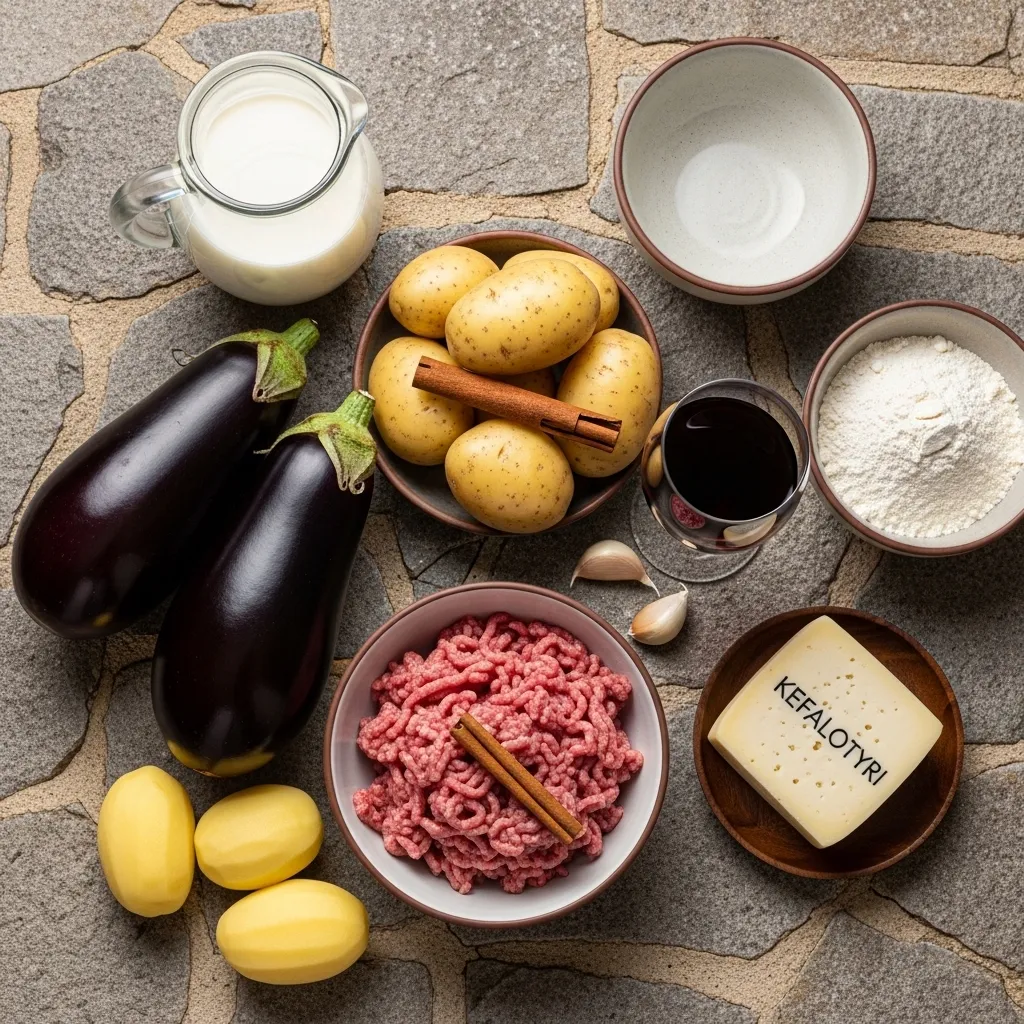
Ground lamb gives you the most authentic flavor, but many Greek home cooks use beef or a combination of both. I prefer 85/15 ground beef because it has enough fat to keep the sauce rich without being greasy. The wine is important here because it adds acidity and depth. Use something you’d actually drink, not cooking wine from a dusty bottle.
For the béchamel, warming the milk before adding it prevents lumps and speeds up the thickening process. Kefalotyri is a traditional Greek hard cheese similar to Parmesan but with a sharper, saltier flavor. If you can find it at a Greek or Mediterranean market, use it. Otherwise, good Parmesan works perfectly well. The nutmeg is subtle but essential for that classic béchamel flavor.
Salting the eggplant slices and letting them sit draws out excess moisture and any bitterness. This step makes a real difference in the final texture, so don’t skip it even though it adds time. Russet potatoes work best for the base layer because they hold their shape during baking and provide sturdy support for everything above them.
How to Make Traditional Greek Moussaka
This recipe requires some organization, but each step is straightforward. I recommend reading through the entire recipe first and setting up your workspace before you start cooking. You’ll be moving between the stovetop, oven, and assembly, so having everything prepped makes the process smooth.
- Prepare the eggplant: Slice the eggplants into 1/2 inch rounds and arrange them in a single layer on paper towels or a clean kitchen towel. Sprinkle both sides generously with salt and let them sit for 20 minutes. This draws out moisture and any bitterness. After 20 minutes, rinse the slices under cold water and pat them completely dry with paper towels.
- Roast the vegetables: Preheat your oven to 400°F (200°C). Arrange the eggplant and potato slices on baking sheets in a single layer. Brush both sides with olive oil and season with salt and pepper. You’ll likely need two or three baking sheets to fit everything. Roast for 20-25 minutes until the vegetables are tender and the edges are slightly golden. The potatoes should be cooked through but still hold their shape. Set aside to cool while you make the meat sauce.
- Make the meat sauce: Heat a large skillet over medium-high heat with a drizzle of olive oil. Add the diced onion and sauté for 5-7 minutes until soft and translucent. Add the ground meat, breaking it apart with a wooden spoon, and cook until browned all over, about 8-10 minutes. Drain excess fat if necessary, leaving just enough to keep the sauce moist.
- Build the sauce flavor: Stir in the minced garlic and cook for 1 minute until fragrant. Add the tomato paste and cook for another 2 minutes, stirring constantly. The paste will darken and develop a deeper, sweeter flavor. Pour in the wine and let it bubble for 2-3 minutes until most of the alcohol has evaporated.
- Simmer: Add the crushed tomatoes, cinnamon, allspice, and bay leaf. Season with salt and pepper. Reduce the heat to low and simmer uncovered for 20-30 minutes, stirring occasionally. The sauce should be thick enough that a spoon leaves a trail when you drag it across the bottom of the pan. Most of the liquid should have evaporated. Remove the bay leaf and set the sauce aside.
- Prepare the béchamel: In a medium saucepan, melt the butter over medium heat. Whisk in the flour and cook for 1-2 minutes, stirring constantly. This cooks out the raw flour taste. The mixture should be smooth and bubbly but not browned. Slowly pour in the warm milk while whisking continuously. Keep whisking until the sauce thickens enough to coat the back of a spoon, about 5-7 minutes. It should be smooth and creamy with no lumps.
- Temper the eggs: Remove the béchamel from heat. In a small bowl, beat the egg yolks. Take a large spoonful of the hot sauce and whisk it into the yolks to warm them gradually. This prevents the eggs from scrambling when added to the hot sauce. Pour the tempered yolk mixture back into the saucepan, whisking constantly. Stir in the grated cheese, nutmeg, salt, and white pepper. The sauce should be thick, smooth, and pourable.
- Assemble the moussaka: Reduce oven temperature to 350°F (175°C). In a 9×13 inch baking dish, create your first layer with the potato slices, overlapping them slightly to cover the bottom completely. This creates a sturdy base. Add half of the roasted eggplant slices in an even layer. Spread all of the meat sauce evenly over the eggplant. Top with the remaining eggplant slices in a neat layer.
- Add béchamel and bake: Pour the béchamel sauce over the top layer of eggplant, using a spatula to spread it evenly to the edges. The sauce should completely cover the vegetables. Place the dish on the middle rack and bake for 45-50 minutes until the top is golden brown and set. You should see some bubbling around the edges.
- Rest before serving: This is the most important step. Remove the moussaka from the oven and let it rest at room temperature for at least 20-30 minutes before slicing. During this time, the layers firm up and the béchamel sets, which allows you to cut clean squares that hold together beautifully. If you cut into it immediately, the layers will slide apart and you’ll have a messy, albeit delicious, pile on the plate.
In my experience, making moussaka in stages over two days produces the best results without feeling overwhelming. Roast the vegetables and make the meat sauce one day, then assemble and bake the next day when you’re ready to serve.
What to Serve with Traditional Greek Moussaka
Moussaka is substantial and rich, so the best accompaniments are fresh, bright, and acidic to cut through the richness.
Horiatiki (Greek Village Salad): The classic pairing includes chunky tomatoes, cucumbers, red onion, Kalamata olives, and thick slabs of feta dressed simply with olive oil and oregano. No lettuce. The crisp vegetables and briny olives provide the perfect contrast to creamy moussaka.
Crusty Bread: A rustic loaf or warm pita bread is essential for mopping up any sauce that escapes from the layers. I prefer a country-style bread with a good crust and soft interior.
Tzatziki: Cool, tangy cucumber-yogurt sauce adds refreshing contrast and additional protein. The garlic and dill complement the warm spices in the meat sauce beautifully.
Roasted Green Beans: Simple green beans roasted with olive oil, lemon, and garlic stay crisp and bright. The slight char and citrus notes balance the rich baked dish.
Greek Lemon Potatoes: If you want to make a feast, crispy lemon potatoes roasted with oregano and chicken stock are traditional at Greek gatherings. They’re rich like the moussaka, so save this pairing for special occasions.
Dry Red Wine: A Greek red wine like Agiorgitiko or Xinomavro pairs perfectly with the cinnamon-spiced meat and stands up to the richness of the béchamel. The wine’s tannins cut through the fat and cleanse your palate between bites.
Pro Tips & Variations
Salt the eggplant properly: Don’t rush this step. The 20-minute salting period draws out moisture that would otherwise make your moussaka watery and dilutes bitter compounds in the eggplant. Rinse thoroughly and pat completely dry before roasting.
Make it ahead: Assemble the entire moussaka up to 24 hours before baking. Cover tightly with plastic wrap and refrigerate. Add 10-15 minutes to the baking time if going straight from the fridge to the oven. You can also freeze unbaked moussaka for up to 3 months. Thaw overnight in the refrigerator before baking.
Perfect béchamel every time: Warm the milk before adding it to the roux. This prevents lumps and speeds up thickening. Whisk constantly while adding the milk in a steady stream. If you do get lumps, strain the sauce through a fine-mesh sieve before adding the eggs and cheese.
Use a meat thermometer: The center of the moussaka should reach 165°F (74°C) to ensure the béchamel is fully cooked and safe. This also indicates that everything is heated through properly.
Try a vegetarian version: Replace the meat sauce with a mixture of lentils, mushrooms, and walnuts cooked with the same spices and tomatoes. The texture is surprisingly similar and the warm spices still shine through.
Go lower-carb: Substitute the potato layer with sliced zucchini. Salt and drain the zucchini slices the same way you do the eggplant to remove excess moisture.
Add extra vegetables: Layer in roasted bell peppers or zucchini between the eggplant layers for additional vegetables and color. Just make sure to roast them first to remove excess moisture.
Adjust the spices: Some Greek families use more cinnamon, others prefer allspice or even a hint of clove. Taste your meat sauce and adjust the warm spices to your preference, but keep them subtle so they enhance rather than dominate.
Storage & Reheating Tips
Moussaka is famously better the second day after the flavors have had time to meld together overnight. Store leftovers in an airtight container in the refrigerator for up to 4 days. The layers will have completely set, making it easy to cut perfect portions.
To reheat individual portions, use the microwave on medium power for 2-3 minutes, checking and stirring halfway through. For larger portions or the whole dish, cover with foil and reheat in a 325°F (165°C) oven for 25-30 minutes until heated through. Remove the foil for the last 5 minutes to re-crisp the top if desired.
For freezing, I recommend portioning the baked and cooled moussaka into individual servings wrapped tightly in plastic wrap, then placing them in freezer bags. This makes it easy to thaw and reheat single portions for quick dinners. Frozen moussaka keeps for up to 3 months. Thaw overnight in the refrigerator before reheating.
The béchamel may separate slightly during freezing and thawing, but gentle reheating brings it back together. Avoid high heat, which can cause the sauce to break or become grainy. Low and slow reheating preserves the best texture.
Common Questions
Why do I need to let moussaka rest before serving? The resting period allows the béchamel to set and the layers to firm up. Without it, the moussaka will be soupy and the layers will slide apart when you try to serve it. Think of it like lasagna, it needs time to come together after baking.
Can I use ground turkey or chicken instead of beef? You can, but the flavor will be milder and less traditional. If using lean poultry, add an extra tablespoon of olive oil to the sauce to keep it from being dry. Ground lamb and beef have natural fat that keeps the sauce rich and flavorful.
My béchamel has lumps, what went wrong? This usually happens when the milk is added too quickly or isn’t warm enough. The temperature shock causes the flour to seize. To fix lumpy béchamel, strain it through a fine-mesh sieve or blend it with an immersion blender until smooth.
Can I skip the potato layer? You can use all eggplant instead of potatoes, but the potato base provides structural support and helps absorb excess moisture. Without it, your moussaka may be softer and harder to slice cleanly.
How do I know when the moussaka is done? The top should be golden brown and set when you gently shake the pan. A knife inserted into the center should come out hot. The internal temperature should reach 165°F (74°C) in the center.
Traditional Greek moussaka takes some time and effort, but the payoff is a stunning centerpiece dinner that feeds a crowd and improves with each day in the refrigerator. The combination of tender vegetables, aromatic meat sauce, and silky béchamel creates layers of flavor and texture that make this dish worth every minute of prep work. This one earns a permanent spot in your dinner rotation for special occasions and Sunday suppers.
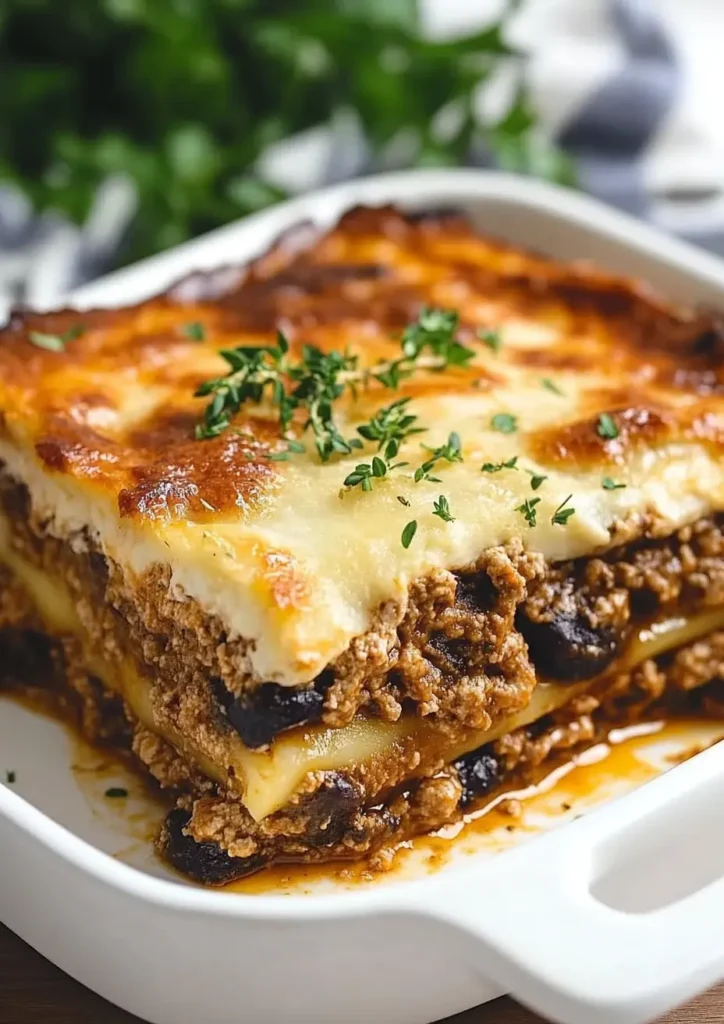
Traditional Greek Moussaka
Ingredients
Equipment
Method
- Slice eggplants into 1/2 inch rounds and arrange on paper towels. Sprinkle both sides with salt and let sit for 20 minutes. Rinse under cold water and pat completely dry.
- Preheat oven to 400°F (200°C). Arrange eggplant and potato slices on baking sheets in a single layer. Brush both sides with olive oil and season with salt and pepper. Roast for 20-25 minutes until tender and slightly golden. Set aside.
- In a large skillet over medium-high heat, sauté the diced onion in olive oil for 5-7 minutes until soft. Add ground meat and cook until browned, about 8-10 minutes, breaking it apart with a wooden spoon. Drain excess fat if needed.
- Stir in minced garlic and cook for 1 minute. Add tomato paste and cook for 2 minutes, stirring constantly. Pour in red wine and let bubble for 2-3 minutes until mostly evaporated.
- Add crushed tomatoes, cinnamon, allspice, and bay leaf. Season with salt and pepper. Reduce heat to low and simmer uncovered for 20-30 minutes until thick. Remove bay leaf and set aside.
- For the béchamel, melt butter in a medium saucepan over medium heat. Whisk in flour and cook for 1-2 minutes. Slowly pour in warm milk while whisking continuously. Cook, whisking constantly, for 5-7 minutes until thick enough to coat the back of a spoon.
- Remove béchamel from heat. Beat egg yolks in a small bowl. Whisk a large spoonful of hot sauce into the yolks to temper them. Pour tempered yolks back into the saucepan, whisking constantly. Stir in cheese, nutmeg, salt, and white pepper.
- Reduce oven to 350°F (175°C). In a 9×13 inch baking dish, layer potato slices on the bottom, overlapping slightly. Add half the eggplant slices. Spread all the meat sauce evenly over the eggplant. Top with remaining eggplant slices.
- Pour béchamel sauce over the top layer, spreading evenly to the edges. Bake on the middle rack for 45-50 minutes until the top is golden brown and set.
- Remove from oven and let rest at room temperature for 20-30 minutes before slicing. This allows the layers to set and makes clean slices possible.