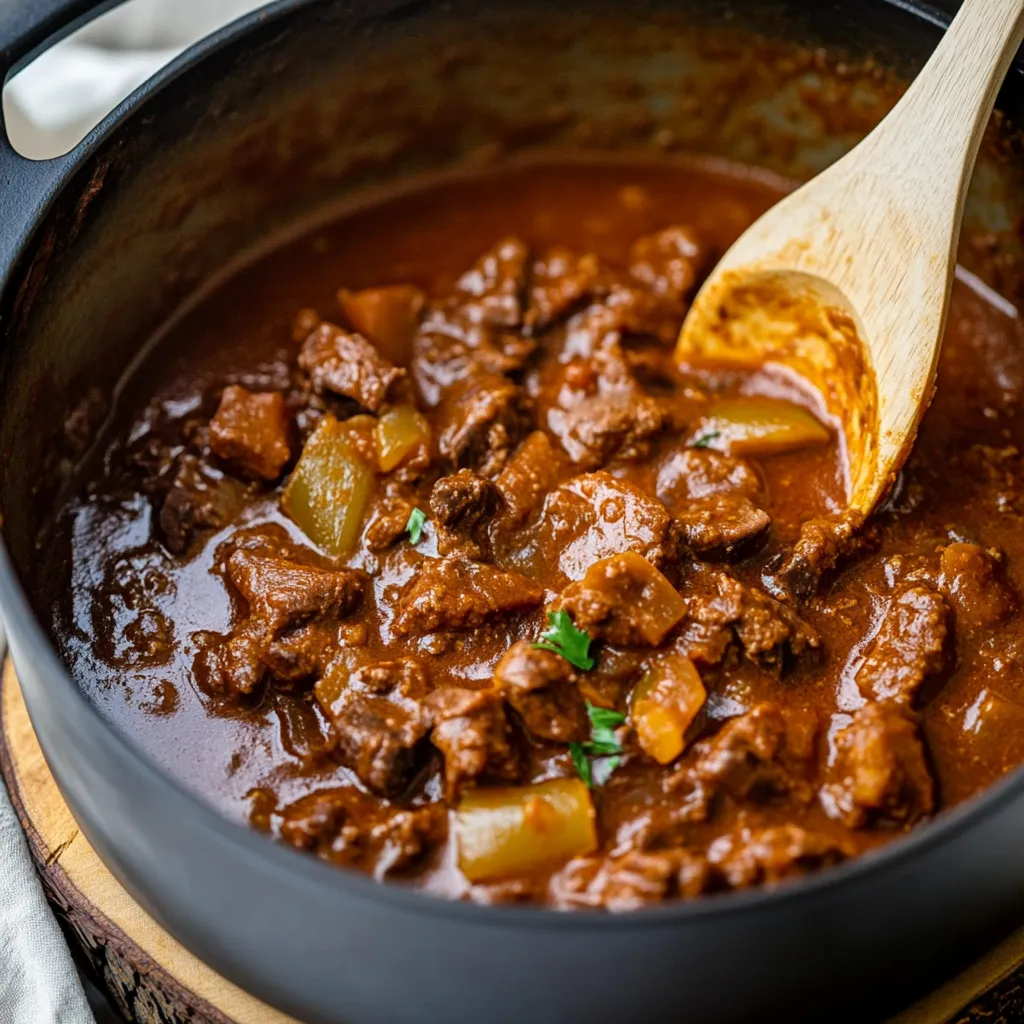
When you’re craving something deeply satisfying and rich with Old World flavor, this rustic German goulash delivers authentic comfort that warms you from the inside out. Tender chunks of beef braise slowly in a thick, paprika-scented sauce built on a foundation of caramelized onions and aromatic spices. Unlike its Hungarian cousin, German rindergulasch focuses on simplicity and depth rather than heat, creating a savory, slightly sweet stew that’s perfect for cold evenings or when you want something that feels like a warm hug in a bowl. The long, slow cooking transforms tough beef chuck into melt-in-your-mouth tenderness while the sauce reduces into a velvety gravy that clings to every piece of meat.
Why You’ll Love This Rustic German Goulash
This high protein German goulash rindergulasch is the kind of recipe that rewards patience with incredible flavor. The generous amount of onions—nearly as much onion as beef—might seem unusual, but they cook down into a sweet, silky base that naturally thickens the sauce without any flour or cornstarch. Browning the beef creates a flavorful fond on the bottom of the pot that becomes part of the rich gravy. The combination of sweet Hungarian paprika, earthy marjoram, and aromatic caraway seeds creates a distinctly German flavor profile that’s comforting without being heavy-handed. Since it’s primarily beef and vegetables simmered in broth, it’s naturally high in protein and relatively low in carbs. The dish actually improves overnight as the flavors meld and deepen, making it ideal for make-ahead meals or batch cooking. Serving it over spaetzle, egg noodles, or potatoes makes it a complete, stick-to-your-ribs dinner that satisfies even the heartiest appetites.
Ingredients for Rustic German Goulash
The success of this dish hinges on using the right cut of beef and not skimping on the onions. I always choose beef chuck roast for its perfect balance of meat and marbling that breaks down beautifully during the long simmer.
- 2 lbs beef chuck roast (or stew beef), cut into 1 to 1.5-inch cubes
- 1.5 lbs yellow onions (approx. 3-4 large), chopped
- 1/2 green bell pepper, chopped
- 3 cloves garlic, minced
- 2 tablespoons tomato paste
- 2 cups beef broth (or bouillon)
- 1/2 cup dry red wine (like Cabernet or Merlot)
- 2 tablespoons olive oil
- 1/2 tomato, seeded and diced
Spices:
- 2 tablespoons sweet Hungarian paprika
- 2 teaspoons dried marjoram
- 1 teaspoon caraway seeds
- 1 teaspoon kosher salt
- 1/2 teaspoon black pepper
- 1 bay leaf
Garnish:
- 1/4 cup fresh parsley, chopped
Beef chuck roast is the ideal cut for this recipe because it has enough fat and connective tissue to stay moist during the long cooking time without falling apart into shreds. The marbling melts into the sauce, enriching it naturally. Pre-cut stew beef works in a pinch, but I prefer cutting my own cubes from a chuck roast so I can control the size—aim for 1 to 1.5-inch pieces that are uniform for even cooking. The sheer volume of onions might surprise you, but they’re essential. As they cook down, they reduce dramatically and create both the body and sweetness that define authentic German goulash. Yellow onions work best for their balance of sweetness and sharpness. Sweet Hungarian paprika is crucial here—don’t substitute regular paprika or smoked paprika, as they’ll change the entire character of the dish. Hungarian paprika has a distinctive sweet, earthy flavor that’s irreplaceable. Look for it in the spice aisle or international section. Marjoram brings a subtle oregano-like flavor that’s traditional in German cooking, while caraway seeds add that characteristic slight licorice note. The dry red wine adds acidity and depth, but if you don’t cook with alcohol, beef broth plus a teaspoon of red wine vinegar achieves similar balance.
How to Make Rustic German Goulash
This high protein German goulash rindergulasch follows a methodical process where each step builds flavor for the next. Taking your time, especially with the onions, makes all the difference between good and extraordinary goulash.
Sauté Onions: Heat olive oil in a large Dutch oven over medium heat. Add all the chopped onions—yes, the entire 1.5 pounds—and cook for a full 15 minutes, stirring occasionally. Don’t rush this step. You want the onions to become very soft, translucent, and beginning to turn golden. They’ll reduce in volume significantly and develop a natural sweetness that forms the flavor foundation of the entire dish. If they start to brown too quickly, reduce the heat slightly.
Add Aromatics: Stir in the chopped green bell pepper, diced tomato, and minced garlic. Cook for another 5 minutes until the vegetables soften and become fragrant. The bell pepper adds a subtle sweetness and the tomato provides acidity that balances the richness.
Brown the Beef: Remove the onion mixture from the pot and transfer it to a bowl, setting it aside temporarily. This prevents the vegetables from burning while you brown the meat. Add the beef cubes to the same pot—you may need to add a small splash of oil if the pot looks dry. Working in batches if necessary to avoid crowding, cook the beef over medium-high heat for 5 to 10 minutes, turning occasionally to brown all sides. You want a deep, caramelized crust on the meat. This creates fond (those flavorful browned bits) on the bottom of the pot that will dissolve into the sauce later.
Combine: Return the onion mixture to the pot with the browned beef. Add the salt, black pepper, sweet Hungarian paprika, dried marjoram, caraway seeds, and tomato paste. Stir everything together thoroughly so the meat and vegetables are evenly coated with the spices and tomato paste. Cook for about 1 minute, stirring constantly, to toast the spices and develop their flavors.
Simmer: Pour in the beef broth and red wine, stirring and scraping the bottom of the pot with a wooden spoon to release all those stuck-on browned bits—this is where tremendous flavor lives. Add the bay leaf. Bring the mixture to a full boil over medium-high heat.
Cook: Once boiling, reduce the heat to low so the liquid maintains a gentle simmer. Cover the pot with the lid positioned slightly askew to allow a little steam to escape. This prevents too much liquid from evaporating while still allowing the sauce to reduce and thicken. Simmer for 1.5 to 2 hours, stirring occasionally, until the beef is fork-tender and the sauce has reduced into a thick, rich gravy. The beef should be so tender it nearly falls apart when you press it with a spoon.
Serve: Remove and discard the bay leaf. Taste and adjust seasoning with additional salt and pepper if needed. Garnish generously with fresh chopped parsley for a pop of color and freshness. Serve hot over traditional spaetzle, buttered egg noodles, or boiled potatoes.
The biggest mistake people make is rushing the onions. That full 15-minute sauté is what creates the deep, sweet flavor base that makes this goulash authentic. Skipping or shortening this step results in a much less flavorful dish. Another common pitfall is overcrowding the pan when browning the beef, which causes steaming instead of browning. Work in batches if your pot isn’t large enough to hold all the meat in a single layer with space between pieces.
What to Serve with Rustic German Goulash
This high protein German goulash rindergulasch is hearty and rich, so the traditional accompaniments tend toward simple starches that soak up the incredible sauce and light sides that provide balance.
Spaetzle: The most traditional German accompaniment—these soft egg noodle dumplings are perfect for catching every bit of sauce. Their tender texture complements the rich beef beautifully.
Buttered Egg Noodles: Wide egg noodles tossed with butter and parsley make an easy, classic pairing. They’re simple to prepare and everyone loves them.
Boiled Potatoes: Simple boiled or steamed potatoes, especially small new potatoes or fingerlings, provide a neutral base that lets the goulash shine. A sprinkle of fresh dill or parsley brightens them up.
Mashed Potatoes: Creamy mashed potatoes turn this into ultimate comfort food. The smooth potatoes and thick gravy create an irresistible combination.
German Potato Salad: A warm German potato salad with vinegar dressing adds tangy contrast to the rich goulash. The acidity cuts through the heaviness perfectly.
Red Cabbage: Braised red cabbage with apples and vinegar is a classic German side that provides color, crunch, and acidity to balance the meal.
Simple Green Salad: A straightforward salad with crisp greens and a light vinaigrette offers freshness and helps cut the richness of the stew.
Crusty Bread: Dark rye bread or a crusty baguette for mopping up sauce is simple but essential. The bread’s texture and slight sourness complement the goulash perfectly.
Pro Tips and Variations
Don’t rush the onions—I can’t emphasize this enough. Sweating them for the full 15 minutes over medium heat allows them to release their moisture, soften completely, and develop natural sweetness. This creates the characteristic flavor and texture of authentic German goulash. If you try to speed up this step by raising the heat, the onions will brown too quickly on the outside while staying raw inside.
For even deeper flavor, deglaze the pot with the wine after browning the beef and before returning the vegetables. Let it reduce by half while scraping up all the browned bits, then proceed with adding the vegetables and other ingredients.
If you want to use a slow cooker, brown the beef and sauté the onions and aromatics as directed, then transfer everything to the slow cooker with the remaining ingredients. Cook on Low for 6 to 8 hours or on High for 3 to 4 hours until the beef is tender.
A dollop of sour cream stirred in just before serving adds extra richness and a pleasant tang that’s common in some German regions. It’s not traditional everywhere, but it’s delicious.
If you don’t want to use wine, replace it with an equal amount of additional beef broth plus 1 teaspoon of red wine vinegar added at the end. The vinegar provides the acidity that wine would contribute.
For a thicker sauce, mash some of the softened onions against the side of the pot during the last 30 minutes of cooking. They’ll dissolve into the sauce and create even more body.
Sweet Hungarian paprika is essential for authentic flavor, but if you can only find regular paprika, use it and add a pinch of sugar to mimic the sweetness. Smoked paprika changes the character completely and isn’t recommended for this recipe.
Storage and Reheating Tips
Store leftover German goulash in an airtight container in the refrigerator for up to 4 days. Like many braises and stews, the flavor actually improves significantly after a day in the fridge as the spices continue to meld and develop. I often make this a day ahead when serving it for company.
Reheat gently on the stovetop over medium-low heat, stirring occasionally. The sauce will have thickened considerably during storage, so add a splash of beef broth or water to return it to your desired consistency. You can also reheat portions in the microwave in 60-second intervals, stirring between each round.
This goulash freezes exceptionally well for up to 3 months. Let it cool completely, then transfer to freezer-safe containers or heavy-duty freezer bags. I like to freeze it in meal-sized portions for convenience. Thaw overnight in the refrigerator before reheating. The texture and flavor remain excellent after freezing, making this ideal for batch cooking.
When reheating from frozen, thaw completely first for best results, then reheat gently on the stovetop. If you’re in a hurry, you can reheat from frozen over very low heat, stirring frequently and adding extra liquid as needed, though this takes longer.
Common Questions
Can I use a different cut of beef? Beef chuck is ideal because of its marbling and connective tissue that breaks down into tenderness. Beef stew meat works well if it’s from the chuck. Avoid lean cuts like sirloin or round, which will dry out and become tough during the long cooking time. Short ribs would work beautifully but are more expensive.
What if I can’t find Hungarian paprika? Sweet Hungarian paprika has a distinctive flavor that’s hard to replicate, but if you can’t find it, use regular paprika plus a small pinch of sugar. Spanish paprika works in a pinch. Avoid smoked paprika, which will give the dish an entirely different character that’s not authentic to German goulash.
Can I make this in a pressure cooker or Instant Pot? Yes. Sauté the onions and brown the beef using the sauté function, then add everything else and pressure cook on high for 35 to 40 minutes. Allow natural pressure release for 10 minutes, then quick release any remaining pressure. The texture will be slightly different but still delicious.
Why so many onions? The large quantity of onions is traditional and essential. They cook down significantly and create both the body and the characteristic sweet-savory flavor of German goulash. The ratio of onions to meat is what distinguishes this from other beef stews.
Can I make this without wine? Absolutely. Replace the wine with an equal amount of beef broth and add 1 teaspoon of red wine vinegar at the end of cooking to provide the acidity that wine contributes. You won’t lose much in terms of flavor.
How do I know when it’s done? The beef should be fork-tender—meaning you can easily pull it apart with a fork. The sauce should be thick enough to coat the back of a spoon. If the beef is tender but the sauce is too thin, remove the lid and simmer for another 15 to 20 minutes to reduce it further.
Can I add vegetables like carrots or potatoes? While you can, it’s not traditional for German rindergulasch. This version focuses on beef and onions. If you want to add vegetables, stir in cubed potatoes or carrots during the last 45 minutes of cooking so they don’t overcook.
This rustic German goulash brings authentic, Old World comfort to your table with surprisingly simple ingredients and straightforward techniques. The long, slow simmer transforms humble beef chuck and onions into something deeply satisfying and rich with flavor. Whether you’re connecting with your German heritage or just craving something hearty and warming, this rindergulasch delivers the kind of meal that makes you want to slow down and savor every bite.
Rustic German Goulash (Rindergulasch)
Equipment
Method
- Heat olive oil in a large Dutch oven over medium heat. Add all the chopped onions and cook for a full 15 minutes, stirring occasionally, until they are very soft, translucent, and beginning to turn golden. Don’t rush this step—the onions will reduce significantly and develop natural sweetness that forms the flavor foundation.
- Stir in the chopped green bell pepper, diced tomato, and minced garlic. Cook for another 5 minutes until the vegetables soften and become fragrant.
- Remove the onion mixture from the pot and transfer to a bowl, setting aside. Add the beef cubes to the same pot (add a splash of oil if needed). Working in batches if necessary to avoid crowding, cook over medium-high heat for 5 to 10 minutes, turning occasionally to brown all sides. You want a deep, caramelized crust on the meat.
- Return the onion mixture to the pot with the browned beef. Add the salt, black pepper, sweet Hungarian paprika, dried marjoram, caraway seeds, and tomato paste. Stir thoroughly to coat the meat and vegetables evenly. Cook for 1 minute, stirring constantly, to toast the spices.
- Pour in the beef broth and red wine, stirring and scraping the bottom of the pot with a wooden spoon to release all the browned bits. Add the bay leaf. Bring to a full boil over medium-high heat.
- Once boiling, reduce heat to low so the liquid maintains a gentle simmer. Cover the pot with the lid positioned slightly askew to allow a little steam to escape. Simmer for 1.5 to 2 hours, stirring occasionally, until the beef is fork-tender and the sauce has reduced into a thick, rich gravy.
- Remove and discard the bay leaf. Taste and adjust seasoning with additional salt and pepper if needed. Garnish generously with fresh chopped parsley. Serve hot over spaetzle, buttered egg noodles, or boiled potatoes.