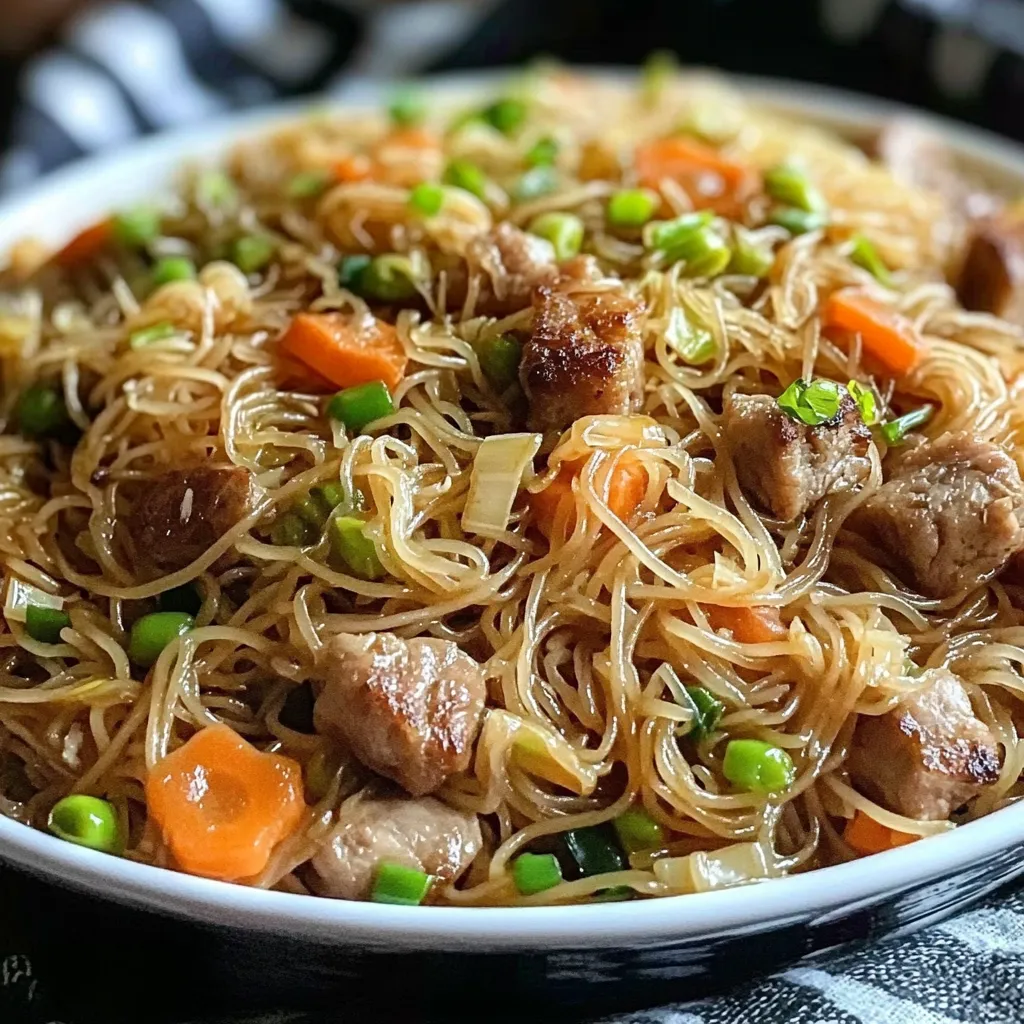
When you’re craving a comforting noodle dish that brings warmth and flavor to your dinner table, high protein Filipino pancit delivers exactly what you need. This traditional Filipino stir-fried noodle dish combines tender shredded chicken with two types of noodles and crisp vegetables, creating a balanced dinner that’s satisfying without being heavy. Whether you’re feeding a crowd or meal prepping for the week, this authentic recipe serves eight and comes together in about 70 minutes from start to finish.
What makes this dinner special is the combination of delicate rice noodles and heartier wheat noodles, both absorbing the savory soy sauce and chicken stock while maintaining their distinct textures. The protein boost from organic chicken breast makes this more than just a noodle dish—it’s a complete meal that keeps everyone satisfied.
Why You’ll Love This High Protein Filipino Pancit
This recipe transforms simple ingredients into a restaurant-quality dinner that works beautifully for weeknight meals or weekend gatherings. The shredded chicken breast adds substantial protein while staying lean, making this an excellent choice for health-conscious families.
The two-noodle approach creates interesting texture throughout every bite. Thin bihon noodles provide a delicate foundation, while flour stick noodles add satisfying chewiness. Both soak up the savory sauce differently, giving you variety in a single dish.
Fresh vegetables stay crisp through strategic cooking. By stir-frying the cabbage and carrots separately first, they maintain their crunch instead of turning soggy. This technique ensures every serving has both tender noodles and vibrant vegetables.
Leftovers reheat surprisingly well, making this ideal for meal prep. The flavors actually deepen overnight, and a quick reheat with a splash of water brings the noodles back to life. One batch easily covers several lunches or dinners throughout the week.
Ingredients for High Protein Filipino Pancit
I always start with organic chicken breast for this recipe because the quality really shows in the final dish. The meat stays tender through boiling and shredding, and using Perdue Harvestland ensures you’re getting clean protein without added hormones.
- 1-2 Perdue Harvestland Organic Boneless Skinless Chicken Breasts
- 1 bag Bihon noodles (thin rice noodles)
- 1 bag Flour Stick noodles (pancit canton)
- 1 medium onion, chopped
- 10 g minced garlic (approximately 1 tablespoon)
- 1/2 bag julienned carrots (or 2 large carrots)
- 3 sticks celery, sliced
- 1/2 head cabbage, chopped
- 1-2 cups chicken stock
- 1/2 cup soy sauce
- Cooking oil as needed
- Ground black pepper to taste
- Salt to taste
- Lemon wedges for serving (optional)
Finding both noodle types matters for authentic texture. Look for them in the Asian foods aisle or at Filipino markets. The bihon noodles are thin and translucent when dry, while pancit canton noodles resemble thin spaghetti. If you can only find one type, use about 12 ounces of whichever noodles you have available.
For the chicken stock, homemade works beautifully, but quality boxed stock keeps this weeknight-friendly. I recommend low-sodium versions since the soy sauce adds plenty of salt. The key is having extra stock on hand—noodles vary in how much liquid they absorb, and you’ll want the flexibility to add more if needed.
Fresh vegetables make a noticeable difference here. Pre-shredded carrots save time, but if you’re julienning your own, aim for matchstick-thin cuts that cook quickly. Choose a firm cabbage head with tightly packed leaves, and slice it into bite-sized pieces rather than shredding it too finely.
How to Make High Protein Filipino Pancit
The key to perfect pancit is cooking components separately before bringing everything together. This approach prevents overcrowding the wok and ensures each element reaches the right texture.
- Place the chicken breast in a medium pot and cover with water. Bring to a boil, then reduce heat and simmer for 20-25 minutes until the chicken is cooked through and tender. Remove from water and let cool slightly. Use two forks to shred the meat into thin strips, working with the grain first, then across it for the finest shreds.
- While the chicken cooks, place the bihon noodles in a large bowl and cover with room temperature water. Let them soak for exactly 15 minutes—any longer and they’ll turn mushy. Drain thoroughly in a colander and set aside. The noodles should be pliable but not completely soft, as they’ll finish cooking in the wok.
- Prep your vegetables so everything’s ready for quick cooking. Chop the cabbage into roughly 1-inch pieces. Slice the celery on a diagonal for visual appeal. If using whole carrots, julienne them into thin matchsticks. Chop the onion into small dice and mince the garlic finely.
- Heat your largest wok or wide skillet over medium-high heat until a drop of water sizzles immediately. Add 2 tablespoons of cooking oil and swirl to coat. The high heat is crucial for proper stir-frying.
- Add the cabbage and carrots to the hot oil. Stir-fry for 3-4 minutes, moving constantly, until the vegetables are just tender but still have a slight bite. You’ll see the colors brighten as they cook. Remove to a plate and set aside—don’t skip this step, as it prevents soggy vegetables later.
- Return the wok to the heat and add another tablespoon of oil if the pan looks dry. Add the onion, celery, and garlic. Stir-fry for 2-3 minutes until the onion turns translucent and you can smell the garlic becoming fragrant. Keep everything moving to prevent burning.
- Add the shredded chicken to the wok along with a generous grinding of black pepper. Stir-fry for 3-5 minutes, letting the chicken pick up some color from the hot pan. This step adds depth to the overall flavor.
- Pour in the soy sauce and 1 cup of chicken stock. Let the mixture come to a full boil and cook for 2 minutes. This creates the base that will season your noodles, so taste it now and adjust with salt if needed.
- Add both types of drained noodles to the wok. Using tongs or two wooden spoons, toss and lift the noodles continuously for 3-4 minutes. The liquid should absorb gradually. If the noodles look dry or aren’t softening, add chicken stock in 1/4 cup increments. I find that starting with less liquid and adding more as needed prevents mushy noodles.
- Return the reserved cabbage and carrots to the wok. Toss everything together for 2-3 minutes until the vegetables are heated through and evenly distributed. The noodles should be tender with a slight chew, glossy from the sauce, and well-coated.
- Transfer to a large serving platter immediately. Arrange lemon wedges around the edges for guests to squeeze over their portions.
What to Serve with High Protein Filipino Pancit
Pancit is substantial enough to serve as a main course, but a few complementary sides round out the meal beautifully.
Lumpia (Filipino Spring Rolls): These crispy fried rolls provide textural contrast to the soft noodles. The crunchy wrapper and savory filling make them a classic pairing at Filipino gatherings. Serve with sweet chili sauce for dipping.
Simple Green Salad with Vinaigrette: A light salad with crisp lettuce, cucumber, and tomatoes cuts through the richness of the noodles. Use a tangy vinaigrette with rice vinegar to complement the Asian flavors without competing with them.
Garlic Fried Rice: If you want to make this an extra-filling feast, garlic rice adds another comforting element. The simple preparation lets the pancit remain the star while providing additional substance for big appetites.
Pickled Vegetables (Atchara): This traditional Filipino papaya pickle adds bright, tangy notes that refresh the palate between bites of savory noodles. The slight sweetness and acidity balance the dish perfectly.
Steamed Bok Choy: Lightly steamed bok choy with a drizzle of sesame oil keeps things light while adding more vegetables to the table. The mild flavor won’t overpower the pancit’s seasoning.
Fresh Tropical Fruit: Pineapple, mango, or watermelon served as a side or dessert provides a cooling, sweet finish. The natural sweetness cleanses the palate after the savory meal.
Pro Tips & Variations
Get your mise en place ready before you start cooking. Once you begin stir-frying, everything moves quickly, and you won’t have time to chop vegetables or hunt for ingredients. I arrange everything on a large cutting board or tray within arm’s reach of the stove.
For deeper flavor, brown the shredded chicken in the wok before adding the aromatics. This extra step creates caramelized bits that add complexity to the finished dish. Don’t skip the pepper either—it’s traditionally generous in pancit and adds welcome warmth.
Make this ahead by cooking everything except the final toss. Store the cooked chicken, vegetables, and softened noodles separately. When ready to serve, heat everything together in the wok with fresh stock. This approach actually works better than fully preparing and reheating.
If you prefer more protein, add sliced Chinese sausage (lap cheong) along with the chicken. The sweet-savory sausage is traditional in many pancit recipes and adds rich flavor. Shrimp also works beautifully—add them raw in step 7 and cook until pink before proceeding.
For a vegetarian version, skip the chicken and use vegetable stock. Add firm tofu cut into strips and extra mushrooms for substance. Shiitake mushrooms particularly add a meaty texture and umami depth that compensates for the missing chicken.
Adjust the spice level by adding fresh Thai chilies sliced thin, or sprinkle red pepper flakes over individual servings. Filipino food isn’t typically very spicy, but personal preference varies, and the dish handles heat well.
Storage & Reheating Tips
Store leftover pancit in an airtight container in the refrigerator for up to 3 days. The noodles will absorb more liquid as they sit, which is completely normal. I find glass containers work best since they don’t retain odors.
To reheat, add the pancit to a skillet or wok over medium heat with 2-3 tablespoons of water or chicken stock. Toss frequently until heated through, about 5-7 minutes. The added liquid refreshes the noodles and prevents them from drying out or becoming tough. Avoid the microwave if possible—it makes the noodles rubbery.
For meal prep, portion individual servings into containers with a squeeze of lemon juice. This prevents the noodles from clumping and adds brightness when you reheat. The dish actually tastes even better the next day as the flavors meld together overnight.
Freezing isn’t recommended for this dish. The noodles become mushy and lose their texture when thawed. If you need to make this far in advance, prepare and freeze the shredded chicken separately, then cook the pancit fresh.
Common Questions
Can I use just one type of noodles instead of two? Yes, you can use only bihon or only pancit canton noodles. If using just one type, use about 12 ounces total. The two-noodle combination is traditional and creates better texture, but single-noodle versions still taste great.
What if I can’t find bihon noodles? Substitute thin rice vermicelli or rice stick noodles found in most grocery stores. They’re essentially the same product under different names. Soak them the same way and proceed with the recipe as written.
How do I prevent the noodles from sticking together? Make sure to drain the soaked noodles thoroughly before adding them to the wok. Adding them to the hot liquid (not dry pan) helps separate them. Toss continuously and add stock gradually if they start clumping. A little extra oil can also help.
Can I add other vegetables? Absolutely. Snow peas, bell peppers, green beans, and mushrooms all work well. Add harder vegetables like green beans with the carrots and cabbage. Softer vegetables like snow peas should go in at the very end.
Is there a gluten-free option? Use only bihon noodles (which are naturally gluten-free rice noodles) and substitute tamari or coconut aminos for the soy sauce. Check that your chicken stock is also gluten-free. The pancit canton noodles contain wheat, so skip those entirely.
This authentic Filipino pancit brings the comfort of traditional cooking to your dinner table without requiring hours in the kitchen. The combination of tender chicken, two types of noodles, and crisp vegetables creates a balanced meal that satisfies both appetite and taste. Whether you’re introducing your family to Filipino food or recreating a childhood favorite, this recipe delivers the real flavors you’re looking for. The generous portion size makes it perfect for gatherings, and the leftovers give you easy lunches throughout the week.
Authentic High Protein Filipino Pancit
Ingredients
Equipment
Method
- Boil the chicken breast in water until tender, about 20-25 minutes. Remove from water, let cool slightly, and shred the meat using two forks. Set aside.
- Soak the bihon noodles in a bowl of room temperature water for 15 minutes until soft. Drain thoroughly and set aside.
- Prepare all vegetables: chop the cabbage and onion, slice the celery, julienne the carrots if using whole carrots, and mince the garlic.
- Heat a large wok over medium-high heat and add 2 tablespoons of cooking oil. Swirl to coat.
- Stir-fry the cabbage and carrots for 3-4 minutes until just tender but still crisp. Remove from the wok and set aside.
- Add more oil to the wok if needed. Sauté the onion, celery, and garlic for 2-3 minutes until fragrant and the onion is translucent.
- Add the shredded chicken and ground black pepper. Cook for 3-5 minutes, stirring frequently.
- Pour in the soy sauce and 1 cup of chicken stock. Bring to a boil and cook for 2 minutes.
- Add the drained noodles to the wok. Toss continuously for 3-4 minutes until the liquid is absorbed. Add more chicken stock in 1/4 cup increments if noodles seem dry.
- Return the stir-fried cabbage and carrots to the wok. Toss everything together for 2-3 minutes until well combined and heated through.
- Transfer to a serving platter and serve immediately with fresh lemon wedges.