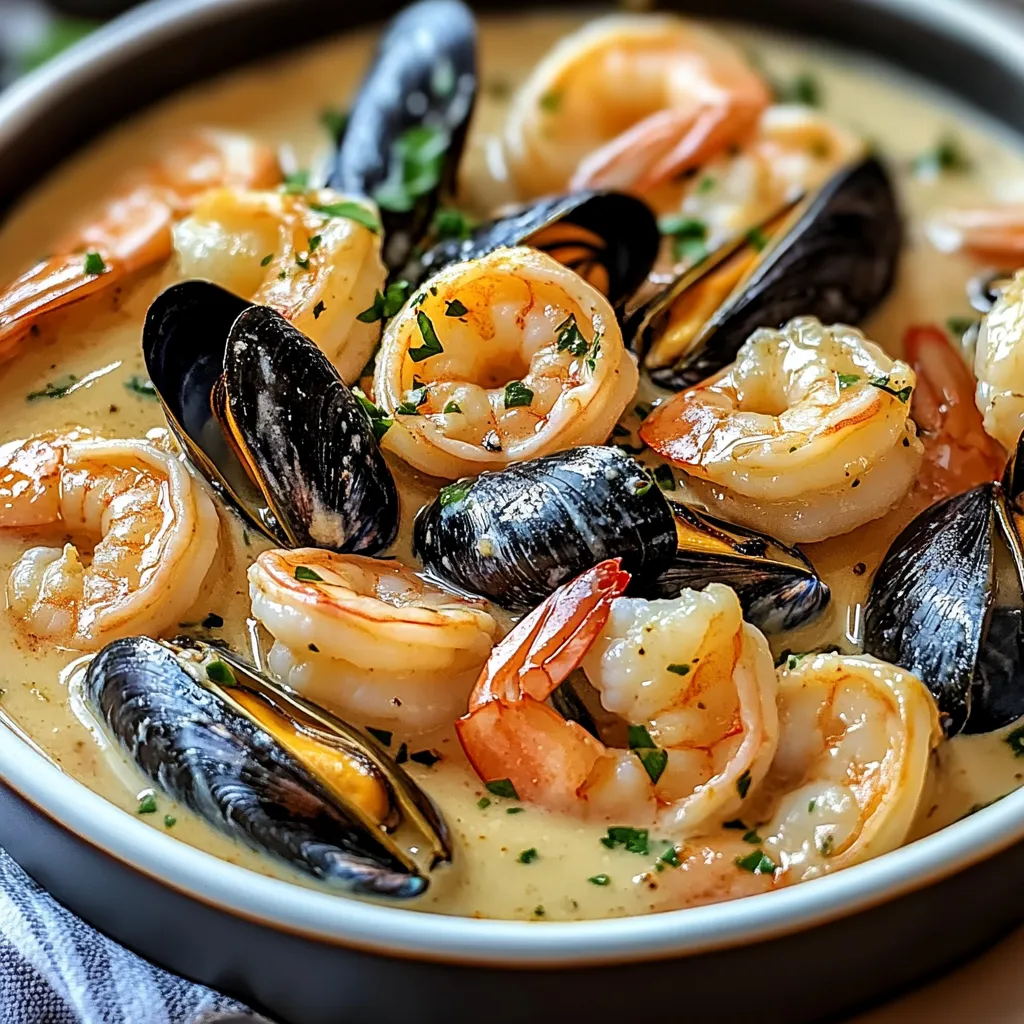
When you’re craving restaurant-quality seafood but don’t want to leave the house, this shrimp and mussels dish delivers exactly that experience in 40 minutes. The creamy garlic sauce coats tender shrimp and briny mussels, creating a combination that feels indulgent without requiring advanced cooking skills. This recipe works beautifully for date nights, dinner parties, or any evening when you want something special on the table.
The sauce builds flavor through simple steps: garlic sautéed in butter, white wine reduced to concentrate its flavor, and cream stirred in at the end for richness. Fresh lemon juice brightens everything, while parsley adds color and freshness. The seafood cooks quickly in the flavorful liquid, absorbing those garlicky, creamy notes while maintaining its natural sweetness.
Why You’ll Love This Shrimp Mussels Garlic Sauce Dinner
The 40-minute timeline makes this accessible even on weeknights when you want to elevate your dinner routine. Most of that time involves watching seafood cook rather than intensive prep work, leaving you free to set the table or prepare simple sides.
Fresh seafood creates impressive results with minimal seasoning. Shrimp and mussels have naturally sweet, briny flavors that shine when treated simply. The garlic sauce enhances rather than masks these qualities, allowing the seafood to remain the star.
This dish scales easily for entertaining. Double the recipe for larger gatherings without increasing difficulty or cooking time significantly. The presentation looks elegant served family-style in a large skillet or plated individually with crusty bread alongside.
The sauce is so good you’ll want bread to soak up every drop. That garlicky, creamy liquid combines with the natural juices released by the mussels as they steam, creating something richer and more complex than the sum of its parts.
Flexibility in ingredients means you can adapt based on what’s available. Substitute chicken broth for wine if cooking without alcohol, use half-and-half instead of heavy cream for lighter results, or swap olive oil for butter. The foundation remains solid regardless of modifications.
Ingredients for Shrimp and Mussels in Garlic Sauce
I always choose wild-caught shrimp when available because they have better flavor and firmer texture than farmed varieties. Look for shrimp that smell fresh and ocean-like, never fishy or ammonia-scented.
Seafood:
- 500 grams shrimp, choose wild-caught, large shrimp for best flavor
- 500 grams mussels, must be cleaned and debearded
Sauce:
- 4 cloves garlic, minced (fresh garlic is recommended)
- 1 cup heavy cream (can replace with half-and-half for a lighter version)
- 1/2 cup white wine (use broth for non-alcoholic versions)
- 2 tablespoons butter (can use olive oil for a healthier option)
Garnishing:
- Fresh parsley, for garnish (can use dill or chives if parsley is not available)
- Lemon juice, to taste (can use zest for extra citrus flavor)
Seasoning:
- Salt and pepper, to taste
For shrimp, large size works best here as they’re less likely to overcook and become rubbery. Count on about 16-20 shrimp per pound, which means 500 grams gives you roughly 8-10 large shrimp per person. Buy them already peeled and deveined to save prep time, or do it yourself if you prefer. Fresh shrimp should have translucent flesh with no black spots or discoloration.
Mussels require more attention during selection and cleaning. Choose mussels with tightly closed shells or shells that close when tapped. Discard any with cracked shells or that remain open when handled, as these are dead and unsafe to eat. Farm-raised mussels tend to be cleaner and require less scrubbing than wild ones.
Fresh garlic makes a noticeable difference in this recipe. The four cloves provide enough flavor to perfume the sauce without overwhelming the delicate seafood. Mince the garlic finely so it distributes evenly and doesn’t create harsh pockets of raw garlic flavor.
Heavy cream creates the richest, most luxurious sauce, but half-and-half works well for a lighter version that still feels indulgent. The cream not only adds richness but also helps create a smooth emulsion with the butter and wine. Avoid milk, as it’s too thin and can curdle when combined with acidic wine.
White wine should be dry and something you’d actually drink. Sauvignon Blanc, Pinot Grigio, or unoaked Chardonnay all work beautifully. The wine’s acidity balances the cream’s richness while adding depth. If cooking without alcohol, substitute with low-sodium chicken or vegetable broth mixed with a tablespoon of lemon juice to mimic the wine’s acidity.
How to Make Shrimp and Mussels in Garlic Sauce
Success with seafood comes from proper preparation and avoiding overcooking. These steps ensure tender shrimp and perfectly steamed mussels every time.
Prepare the Seafood:
Start by cleaning the mussels thoroughly. Hold each mussel under cold running water and scrub the shell with a stiff brush to remove any dirt or barnacles. Look for the beard, which is the fibrous thread sticking out between the shells. Grasp it firmly and pull toward the hinge of the shell to remove it. Some mussels may not have beards, which is fine. Discard any mussels with cracked shells or any that don’t close when tapped.
For the shrimp, if they’re not already peeled and deveined, remove the shells by pulling them off starting from the legs. Make a shallow cut along the back of each shrimp and remove the dark vein. Rinse under cold water and pat completely dry with paper towels. Wet shrimp won’t sear properly and will release excess moisture into the sauce.
Build the Sauce:
Heat a large, deep skillet over medium heat and add 2 tablespoons of butter. Let it melt and foam slightly but not brown. Add the minced garlic and stir constantly for 1-2 minutes until it becomes fragrant and just barely golden. Watch carefully, as garlic can burn quickly and turn bitter.
Pour in the white wine and increase the heat slightly to bring it to a simmer. Let it bubble for 2-3 minutes, reducing by about a third. This concentrates the wine’s flavor and cooks off the sharp alcohol taste while keeping the complexity. The liquid should smell fruity and aromatic rather than harsh.
Cook the Mussels:
Add the cleaned mussels to the skillet in a single layer if possible, though some overlap is fine. Season with a pinch of salt and pepper. Cover the skillet with a tight-fitting lid and let the mussels steam for about 5 minutes. Shake the pan occasionally to redistribute them.
After 5 minutes, check the mussels. They should have opened, releasing their briny juices into the sauce. This liquid combines with the wine and butter to create incredible depth of flavor. Discard any mussels that haven’t opened after cooking, as these were likely dead before cooking and shouldn’t be eaten.
Add the Shrimp:
Nestle the shrimp among the mussels in the skillet. The sauce should be simmering gently. Cook the shrimp for 3-4 minutes, flipping them halfway through, until they turn pink and opaque. Shrimp cook quickly, and timing matters. They should curl into a loose C-shape. If they curl tightly into an O-shape, they’re overcooked and will be tough.
Finish with Cream:
Reduce the heat to low and stir in the heavy cream. Add a squeeze of fresh lemon juice and most of the chopped parsley, reserving some for garnish. Gently stir everything together, being careful not to break the mussels out of their shells. Let the sauce warm through for about 1 minute, but don’t let it boil vigorously once the cream is added, as this can cause it to separate.
Taste the sauce and adjust seasoning with salt, pepper, and more lemon juice if needed. The sauce should taste balanced, with the garlic, wine, and cream in harmony and the lemon providing brightness without dominating.
Serve:
Transfer everything to a large serving bowl or serve directly from the skillet. Garnish with the reserved parsley and serve immediately with crusty bread, over pasta, or alongside rice to soak up the sauce. Provide empty bowls for discarded mussel shells.
What to Serve with Shrimp and Mussels in Garlic Sauce
This saucy seafood dish pairs best with sides that soak up the creamy garlic sauce and provide textural contrast.
Crusty Bread: A warm baguette or ciabatta is essential for mopping up every bit of that garlicky cream sauce. Toast the bread lightly and brush with olive oil for extra richness that stands up to the sauce.
Linguine or Spaghetti: Toss the seafood and sauce with al dente pasta for a complete meal. The long strands catch the sauce beautifully, and the pasta absorbs the flavors while adding substance to the dish.
Garlic Rice: Simple white rice cooked with butter and garlic creates a neutral base that lets the seafood shine while soaking up the sauce. The rice adds heartiness without competing with the main dish.
Roasted Asparagus: Tender asparagus roasted with olive oil and lemon zest provides color, nutrients, and a slight bitterness that balances the cream sauce. The spring vegetable pairs naturally with seafood.
Simple Green Salad: Crisp lettuce dressed with lemon vinaigrette and shaved Parmesan cuts through the richness. The acidity and crunch refresh your palate between bites of creamy seafood.
Sautéed Spinach: Quickly wilted spinach with garlic complements the sauce while adding iron and vitamins. The mild greens don’t compete with the seafood’s delicate flavors.
White Wine: Serve the same wine you cooked with, or choose another crisp white like Sauvignon Blanc or Albariño. The wine’s acidity balances the cream and enhances the seafood’s natural sweetness.
Pro Tips & Variations
Fresh Seafood Quality: Buy seafood the day you plan to cook it for optimal freshness and flavor. Ask your fishmonger when their next delivery arrives and shop that day. Fresh seafood smells clean and oceanic, never fishy or ammonia-like.
Don’t Overcook Shrimp: Shrimp continue cooking from residual heat even after you remove them from the burner. Pull them when they’re just pink and opaque to prevent rubbery texture. They should curl into a loose C-shape, not a tight O.
Mussel Safety: Always discard mussels that don’t open after cooking. This indicates they were dead before cooking and may not be safe to eat. Also discard any with cracked shells before cooking begins.
Wine Substitution: If avoiding alcohol, use low-sodium chicken or vegetable broth mixed with 1 tablespoon lemon juice or white wine vinegar. This mimics the wine’s acidity and depth without the alcohol.
Add Heat: Red pepper flakes stirred in with the garlic add pleasant warmth that complements the sweet seafood. Start with 1/4 teaspoon and adjust to your heat preference.
Mediterranean Version: Add halved cherry tomatoes and sliced Kalamata olives with the cream. Fresh basil replaces parsley for a different aromatic profile that works beautifully with seafood.
Extra Vegetables: Sauté sliced fennel or leeks with the garlic for added sweetness and texture. Both vegetables pair exceptionally well with seafood and cream sauces.
Storage & Reheating Tips
Store leftover seafood and sauce in an airtight container in the refrigerator for up to 2 days. The quality decreases significantly after that, as seafood deteriorates quickly even when properly stored.
For reheating, use gentle heat to prevent the shrimp from becoming tough. Place the seafood and sauce in a skillet over low heat, stirring occasionally, until just warmed through. This takes about 5-7 minutes. Avoid boiling, which will overcook the shrimp.
The microwave works for quick reheating but requires care. Heat at 50% power in 30-second intervals, stirring between each, until warm. This prevents hot spots that can turn shrimp rubbery.
Freezing is not recommended for this dish. Cream sauces can separate when frozen and thawed, and previously frozen seafood becomes mushy and loses its pleasant texture. The delicate nature of both the sauce and seafood means this recipe is best enjoyed fresh.
If you know you’ll have leftovers, consider storing the sauce separately from the seafood. Reheat the sauce gently, then add the seafood just to warm through rather than cooking it again.
Common Questions
What if I can’t find fresh mussels? Fresh is always best, but frozen mussels work in a pinch. Thaw them completely in the refrigerator overnight and pat dry before using. Cooking time may need slight adjustment as they’re typically pre-cooked and just need warming through.
Can I use frozen shrimp? Yes, frozen shrimp work well. Thaw them overnight in the refrigerator or quickly under cold running water. Pat them completely dry before cooking to prevent excess moisture from diluting the sauce.
How do I know when shrimp are done? Properly cooked shrimp are pink and opaque throughout with a firm texture. They curl into a loose C-shape. If they curl into a tight O-shape, they’re overcooked. The internal temperature should reach 120°F.
Can I make this without cream? You can create a lighter sauce by omitting the cream and instead using additional white wine or broth thickened with a tablespoon of butter. The sauce will be thinner and less rich but still flavorful.
What size skillet do I need? Use a large, deep skillet, at least 12 inches in diameter with 2-3 inch sides. You need enough room for the mussels to steam properly and the shrimp to cook in a single layer for even results.
This shrimp and mussels in creamy garlic sauce proves that restaurant-quality seafood dinners are completely achievable at home. The combination of tender seafood, rich sauce, and bright lemon creates something memorable that works for both casual weeknights and special occasions.
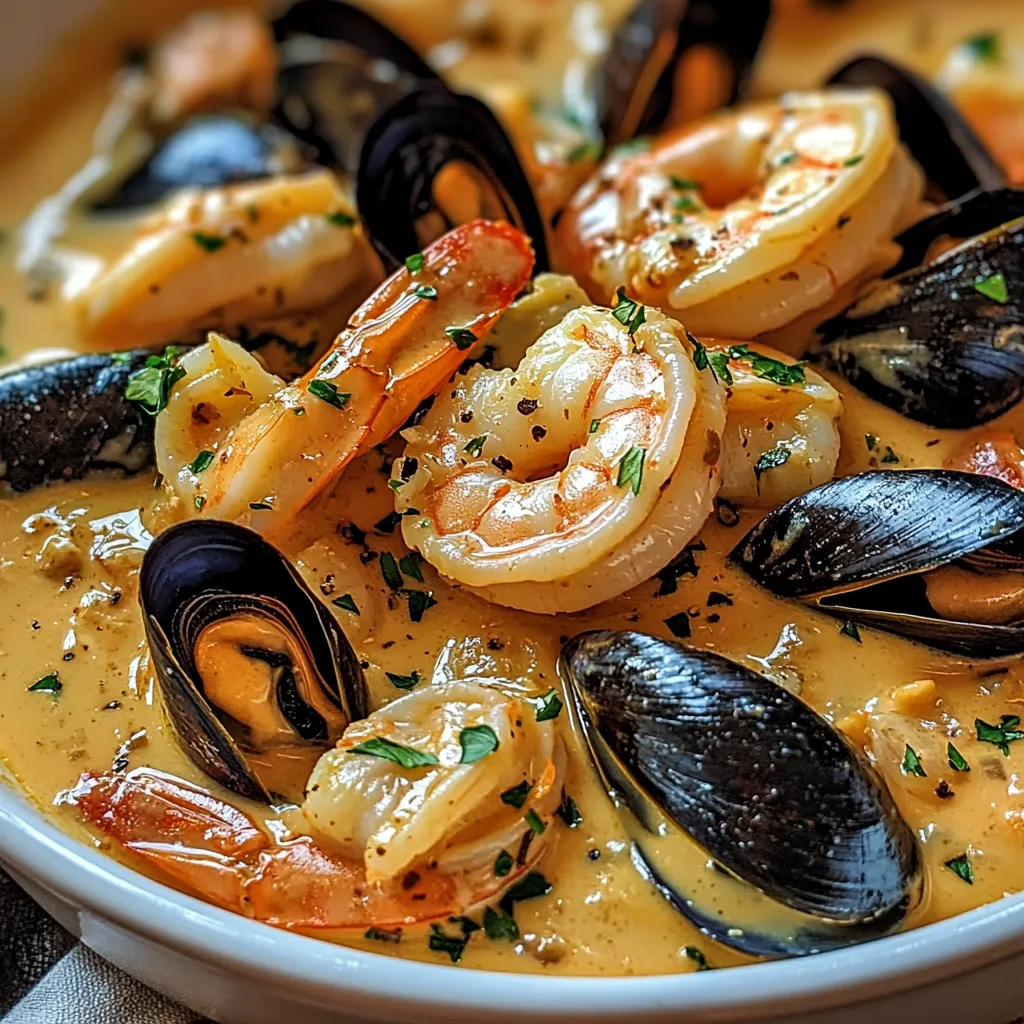
Shrimp and Mussels in Creamy Garlic Sauce: Your Dinner Masterpiece
Ingredients
Equipment
Method
- Clean mussels by scrubbing shells under cold water with a stiff brush. Pull off beards by grasping firmly and pulling toward the hinge. Discard any with cracked shells or that don’t close when tapped.
- If shrimp are not already peeled and deveined, remove shells and make a shallow cut along the back to remove the dark vein. Rinse and pat completely dry with paper towels.
- Heat a large, deep skillet over medium heat. Add 2 tablespoons butter and let it melt without browning. Add minced garlic and stir constantly for 1-2 minutes until fragrant and just barely golden.
- Pour in white wine and increase heat slightly. Bring to a simmer and let bubble for 2-3 minutes, reducing by about a third. The liquid should smell fruity and aromatic.
- Add cleaned mussels to the skillet in a single layer. Season with salt and pepper. Cover with a tight-fitting lid and steam for about 5 minutes, shaking the pan occasionally. Mussels should open and release their juices. Discard any that remain closed.
- Nestle shrimp among the mussels. Cook for 3-4 minutes, flipping halfway through, until shrimp turn pink and opaque and curl into a loose C-shape.
- Reduce heat to low. Stir in heavy cream, a squeeze of fresh lemon juice, and most of the chopped parsley. Gently stir together and warm through for 1 minute without boiling vigorously.
- Taste and adjust seasoning with salt, pepper, and more lemon juice if needed. Garnish with reserved parsley and serve immediately with crusty bread, over pasta, or alongside rice.