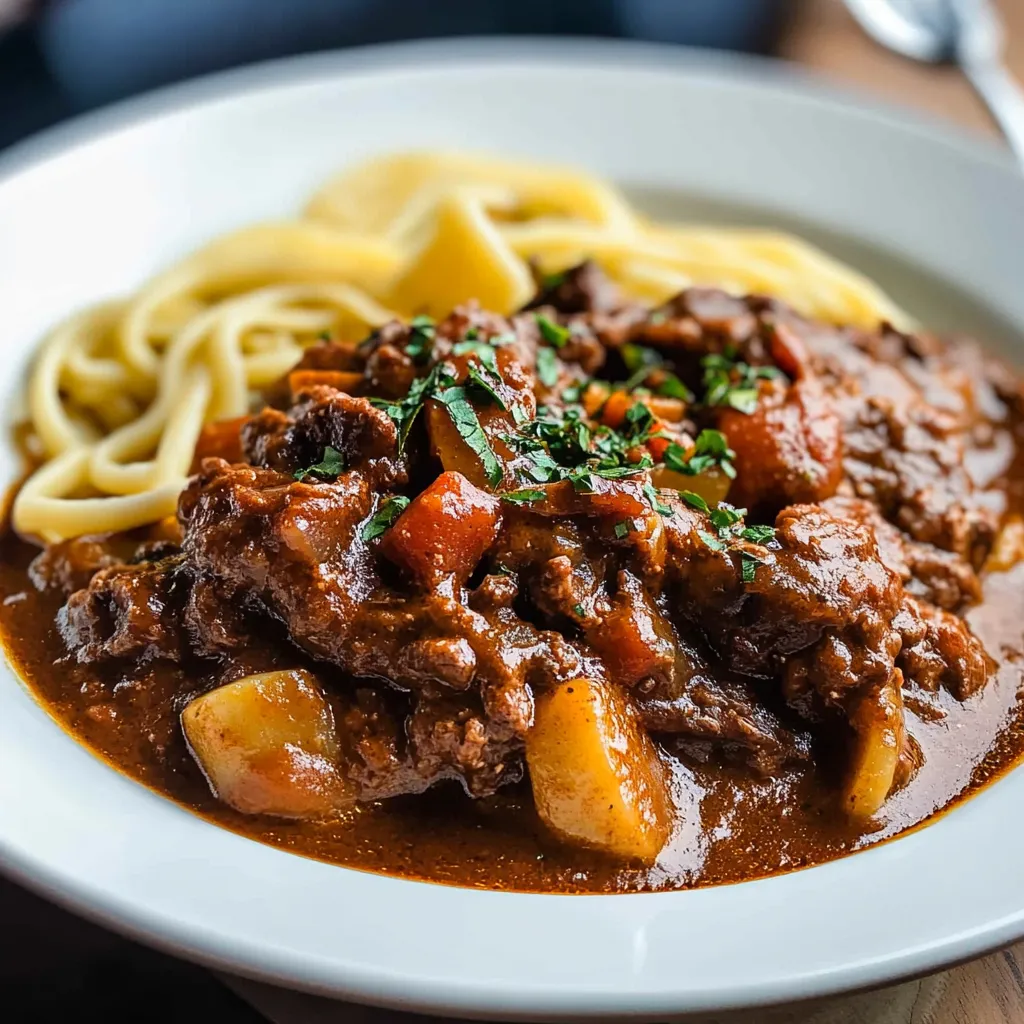
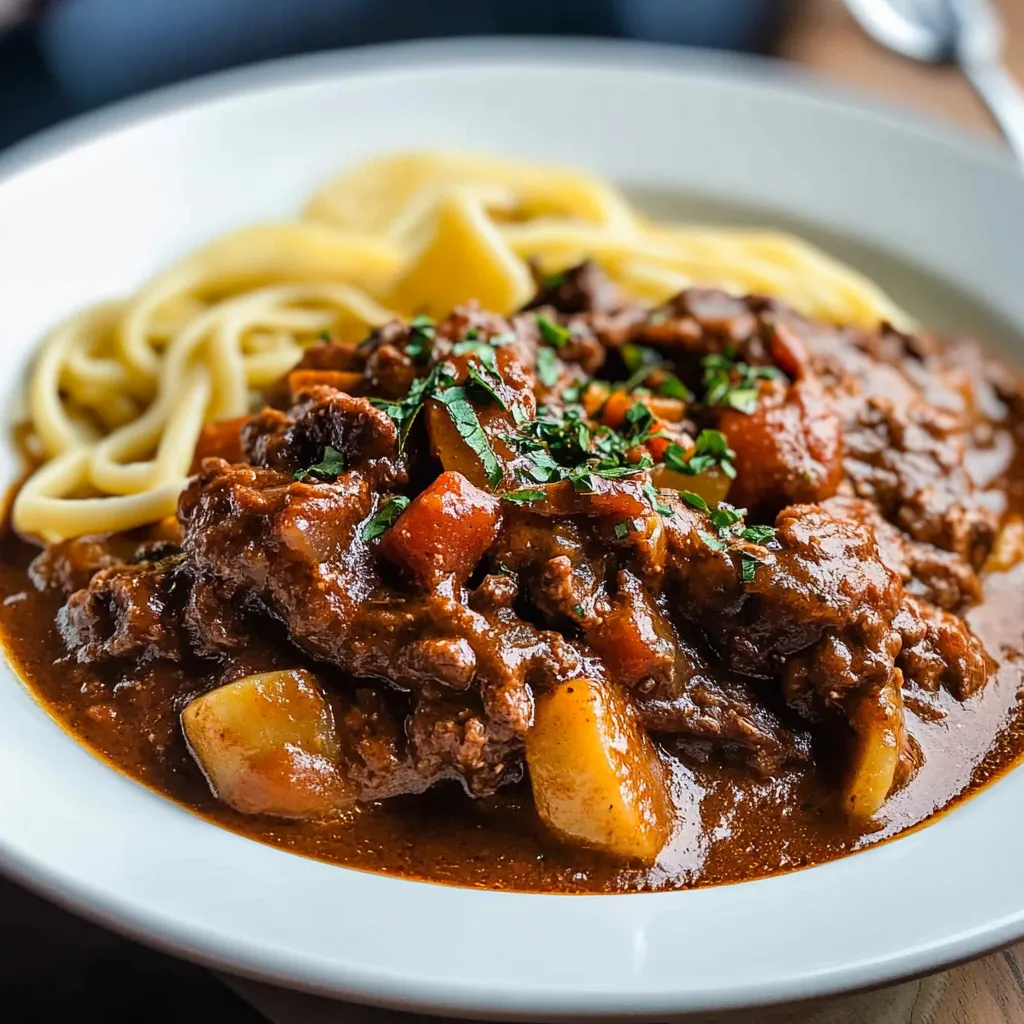
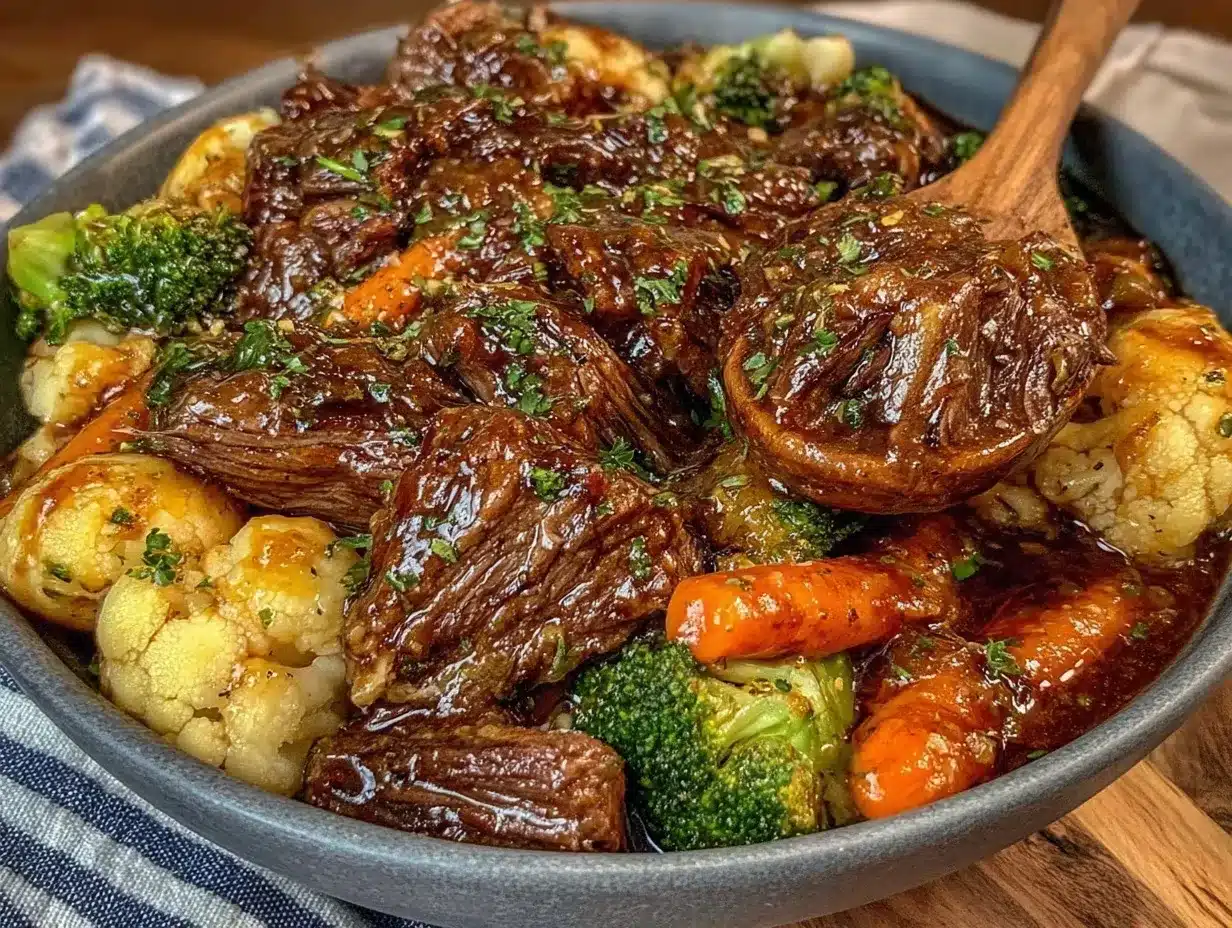
Classic German Goulash (Gulasch) is a robust, hearty stew that captures the essence of deep, comforting flavor. Unlike its Hungarian counterpart, the German version is often braised in the oven, relying heavily on sweet paprika, caraway, and a generous amount of slow-cooked onions to create a rich, naturally thick sauce without the need for flour. This dish is pure cold-weather satisfaction.
The long braising time is essential, turning economical beef chuck into fork-tender perfection and allowing the flavors of the red wine, tomato, and aromatic spices to fully meld. Served with traditional Spätzle or simple noodles, this goulash is a truly authentic and deeply warming meal.
Table of Contents
Ingredients for Classic German Goulash
Step-by-Step Instructions
Chef’s Notes & Tips
Perfect Pairings for German Goulash
Storage & Freezing Tips
FAQs
Ingredients for Classic German Goulash
The generous quantity of onions provides natural sweetness and thickening power. This recipe serves 4 people:
$1\ 1/2$ lbs onions, chopped
2 tbsp olive oil
2 lbs beef chuck roast or stew beef, cubed into 1 to $1\ 1/2$ inch pieces
$1/2$ green pepper, chopped
3 cloves garlic, minced
$1/2$ tomato, seeded and diced (about $1/3$ cup)
1 tsp kosher salt, divided
$1/2$ tsp black pepper
2 tbsp sweet Hungarian paprika
2 tsp dried marjoram
1 tsp caraway seed
2 tbsp tomato paste
2 cups beef broth (low-sodium recommended)
$1/2$ cup dry red wine
1 bay leaf
$1/4$ cup chopped fresh parsley (for garnish)
Step-by-Step Instructions
The long, slow cooking of the onions is critical for the authentic flavor and texture of this goulash.
Step 1: Prepare Oven and Sauté Onions (Dutch Oven Method) Place the oven rack in the center of the oven and preheat to 325°F (160°C). Add the olive oil to a heavy pot or Dutch oven and heat over medium heat. Add the chopped onions and 1/2 tsp of the kosher salt. Cook for 15-20 minutes, stirring occasionally, until the onions are very tender and golden.
Step 2: Sauté Aromatics Transfer the cooked onions to a separate dish and set aside. Season the beef cubes with the remaining 1/2 tsp salt and 1/2 tsp black pepper and transfer them to the Dutch Oven. Cook over medium-high heat for 5-10 minutes, or until the beef has browned on the outside.
Step 3: Combine Ingredients Stir in the reserved onions, green pepper, tomato, garlic, paprika, marjoram, caraway seed, tomato paste, beef broth, red wine, and bay leaf to the pot. Heat the mixture to boiling.
Step 4: Braise Place the lid on the pot so that it is slightly askew (allowing steam to escape). Transfer the pot to the preheated oven and cook (braise) for $1\ 1/2$ hours, or until the beef is tender.
Step 5: Serve Remove the pot from the oven, remove the bay leaf, and garnish with the chopped fresh parsley. Serve warm with späetzle, buttered noodles, or potatoes.
Chef’s Notes & Tips
Low-Sodium Broth: Use low-sodium beef broth because the long simmering process will concentrate the sauce, which can easily become too salty if using regular broth.
Thickening (Optional): For an even thicker sauce, combine $1\ 1/2$ tsp of cornstarch with 2 tsp of cold water to make a slurry. Stir this into the finished stew and heat to a boil, stirring until it thickens.
Make-Ahead & Storage: This goulash tastes better the next day! Store in an airtight container in the refrigerator for 3–4 days. It freezes well for up to 3 months (defrost entirely before reheating).
Variations: To make the sauce creamier, stir in $1/2$ cup of sour cream or crème fraiche just before serving.
Alternative Cooking Methods:
Slow Cooker/Crock Pot: After browning the meat, transfer all ingredients to the slow cooker. Cook on low for 6–8 hours or high for 3–4 hours.
Instant Pot: Combine browned meat and all other ingredients. Cook on high pressure for 35 minutes, then allow a natural pressure release.
Perfect Pairings for German Goulash
Goulash is traditionally served with starchy sides to soak up the rich gravy.
Spätzle: Small, tender egg noodles traditional in Germany.
Buttered Egg Noodles: A quick and easy substitute for Spätzle.
Mashed Potatoes: Creamy mashed potatoes are an excellent base.
Sauerkraut: The tangy acidity cuts through the richness of the stew beautifully.
Storage & Freezing Tips
Refrigeration: Store leftovers in an airtight container for 3–4 days.
Reheating: Reheat gently on the stovetop over low heat or in the oven to maintain tenderness.
Freezing: Freeze in portions for up to 3 months. Thaw overnight in the refrigerator before reheating.
FAQs
What is the difference between German and Hungarian Goulash? Hungarian Goulash is more like a soup and uses potatoes and more liquid. German Goulash is a thicker, richer stew (Bratengulasch) often braised with wine and served over noodles.
Can I skip the red wine? Yes. Substitute the red wine with an equal amount of beef broth and 1 tablespoon of red wine vinegar for the necessary acidity.
Is sweet paprika essential? Yes, sweet Hungarian paprika provides the signature color and mild flavor base. Do not substitute it with smoked or hot paprika unless you want a spicier dish.
Emily Garcia
Classic German Goulash
Classic German Goulash is a rich, flavorful beef stew featuring tender braised beef cubes in a deep savory sauce seasoned with paprika, marjoram, and caraway seed. The goulash is typically cooked in a Dutch oven, resulting in a comforting and hearty dish.
2lbsbeef chuck roast or stew beef, cubed into 1 to 1.5 inch pieces
0.5green pepper, chopped
3clovesgarlic, minced
0.33cuptomato, seeded and diced (about 1/2 tomato)
1tspkosher salt, divided
0.5tspblack pepper
2tbspsweet Hungarian paprika
2tspdried marjoram
1tspcaraway seed
2tbsptomato paste
2cupsbeef broth (low-sodium recommended)
0.5cupdry red wine
1bay leaf
0.25cupchopped fresh parsley (for garnish)
Equipment
Dutch oven or heavy pot
large dish for reserved onions
Method
Place the oven rack in the center of the oven and preheat to $325^{circ}text{F}$ ($160^{circ}text{C}$). Add the olive oil to a heavy pot or Dutch oven and heat over medium heat. Add the chopped onions and $1/2text{ tsp}$ of the kosher salt. Cook for 15–20 minutes, stirring occasionally, until the onions are very tender and golden.
Transfer the cooked onions to a separate dish and set aside. Season the beef cubes with the remaining $1/2text{ tsp}$ salt and $1/2text{ tsp}$ black pepper and transfer them to the Dutch Oven. Cook over medium-high heat for 5–10 minutes, or until the beef has browned on the outside.
Stir in the reserved onions, green pepper, tomato, garlic, paprika, marjoram, caraway seed, tomato paste, beef broth, red wine, and bay leaf to the pot. Heat the mixture to boiling.
Place the lid on the pot so that it is slightly askew (allowing steam to escape). Transfer the pot to the preheated oven and cook (braise) for $1 1/2$ hours, or until the beef is tender.
Remove the pot from the oven, remove the bay leaf, and garnish with the chopped fresh parsley. Serve warm with späetzle, buttered noodles, or potatoes.
Notes
Use low-sodium beef broth to prevent the sauce from becoming too salty during the long simmering process. For best flavor, make this goulash a day ahead. To thicken the sauce, stir in a slurry of $1.5text{ tsp}$ cornstarch and $2text{ tsp}$ cold water, then bring to a boil. To make it creamier, stir in $1/2$ cup of sour cream or crème fraiche just before serving.
Conclusion
This Classic German Goulash recipe delivers on authenticity and depth of flavor. The slow oven braise yields incredibly tender beef and a naturally thick, savory sauce that makes for an unforgettable, comforting meal.