Decoding the Creaminess: A Scientific Approach
The key to a truly exceptional creamy chicken ramen lies in understanding the interplay between fat, starch, and umami. Fat, whether from the chicken itself, added oils, or dairy, provides richness and carries flavor. Starch, primarily from the noodles but also potentially from added thickeners, contributes to the viscosity and body of the broth. Umami, the savory “fifth taste,” is crucial for that deeply satisfying flavor profile. Ingredients like soy sauce, miso paste, and even the chicken itself contribute to umami. Emulsification, the process of suspending fat within a water-based broth, is vital for creating a smooth, homogenous texture. Without proper emulsification, the fat will separate, resulting in a greasy, unappetizing bowl. Finally, consider the Maillard reaction, the browning process that occurs when amino acids and reducing sugars are heated. This reaction creates hundreds of flavor compounds that contribute to the complexity and depth of the broth, setting it apart from bland imitations. A great example of the Maillard reaction in action can be found in the Sticky Garlic Chicken Noodles recipe, where the browned garlic and chicken deliver a similar depth of flavour.The Ultimate Creamy Chicken Ramen Recipe
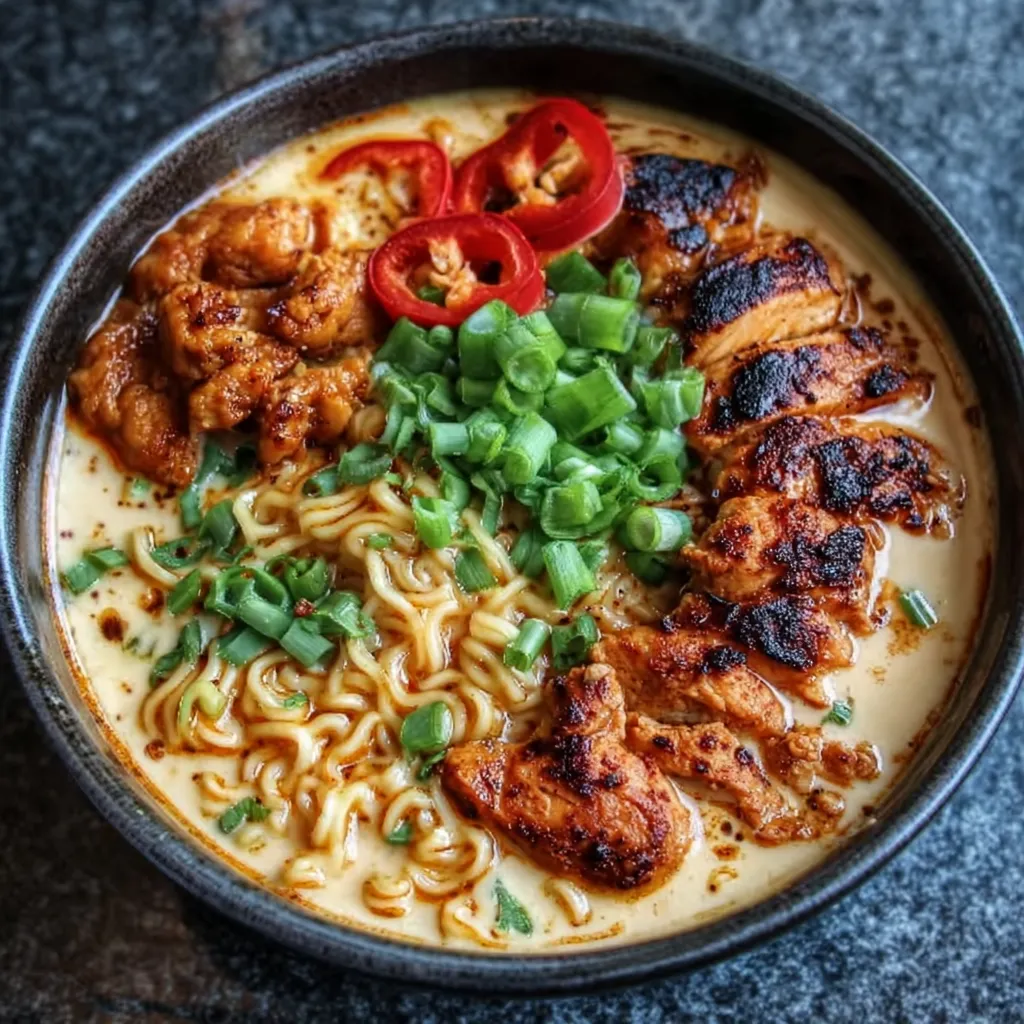 This recipe builds on classic ramen techniques, incorporating elements to maximize creaminess and flavor.
Yields
4 servingsPrep time
25 minutesCook time
45 minutesIngredients
- For the Broth:
- 8 cups chicken broth (low sodium preferred)
- 1 lb boneless, skinless chicken thighs
- 1 onion, quartered
- 2 carrots, roughly chopped
- 2 stalks celery, roughly chopped
- 4 cloves garlic, smashed
- 1 inch ginger, peeled and sliced
- 4 scallions, white parts only, roughly chopped
- 2 tbsp soy sauce
- 1 tbsp mirin
- 1 tbsp sake (optional)
- 1 tsp sesame oil
- 1 sheet nori (seaweed), cut into strips
- 1/4 cup heavy cream (or coconut milk for a dairy-free option)
- 2 tbsp white miso paste
- Salt and pepper to taste
- For the Noodles:
- 16 oz fresh ramen noodles (or dried, cooked according to package directions)
- For the Toppings:
- 2 scallions, green parts thinly sliced
- 2 soft-boiled eggs, halved
- Cooked chicken, shredded
- Sesame seeds
- Chili oil or flakes (optional)
- Nori strips
- Bamboo shoots (menma), optional
Instructions
1. Prepare the Broth: In a large pot or Dutch oven, combine the chicken broth, chicken thighs, onion, carrots, celery, garlic, ginger, white parts of scallions, soy sauce, mirin, sake (if using), and sesame oil. Bring to a boil, then reduce heat and simmer for at least 30 minutes, or up to 1 hour, allowing the flavors to meld. 2. Strain the Broth: Remove the chicken thighs from the broth and set aside to cool slightly. Strain the broth through a fine-mesh sieve, discarding the solids. Return the strained broth to the pot. 3. Shred the Chicken: Once the chicken thighs are cool enough to handle, shred them with two forks. Set aside. 4. Emulsify the Broth: Bring the broth back to a gentle simmer. Stir in the heavy cream (or coconut milk) and miso paste. Whisk vigorously until the miso paste is fully dissolved and the broth is smooth and creamy. Taste and adjust seasoning with salt and pepper as needed. 5. Cook the Noodles: While the broth is simmering, cook the ramen noodles according to package directions. Drain well. 6. Assemble the Ramen: Divide the cooked noodles among four bowls. Ladle the creamy chicken broth over the noodles. Top with shredded chicken, sliced scallions, soft-boiled egg halves, sesame seeds, chili oil (if using), and nori strips. 7. Serve Immediately: Enjoy your homemade creamy chicken ramen!My Creamy Ramen Revelation: A Culinary Investigation
The Early Days: Broth Blandness and Oily Disasters
My first few attempts at creamy chicken ramen were a disaster. Like many of you, I initially thought that simply adding cream to chicken broth would magically transform it into a restaurant-worthy ramen. Boy, was I wrong! The broth lacked depth, the cream separated, and the overall experience was… underwhelming. It was greasy and lacked the comforting warmth of a well-made ramen. The broth was thin and watery, nothing like the luscious bowls I’d devoured in ramen shops.The Umami Breakthrough: Discovering Miso’s Magic
Then, I had an “Aha!” moment. I realized that the key ingredient I was missing was umami. I started experimenting with different umami-rich ingredients, like dried shiitake mushrooms and kombu. They helped, but they weren’t quite right. Then I stumbled upon miso paste. The fermented soybean paste added a complex, savory depth that completely transformed the broth. Adding miso was a game changer! I found that white miso was a great starting point, but red miso could be used in smaller amounts for a more intense, fermented flavour.The Fat Factor: Finding the Right Balance
Another crucial lesson I learned was the importance of fat. Initially, I was too timid with the fat content, fearing a greasy broth. However, I discovered that the right amount of fat, properly emulsified, is essential for creaminess and flavor. Using chicken thighs instead of breasts added more richness, and a touch of sesame oil provided a subtle nutty note. This reminded me of the richness in the Chicken Ramen Recipe, which also relies on a rich broth.The Dairy Dilemma: Cream vs. Coconut Milk
Finally, I explored the dairy aspect. While heavy cream provides a classic richness, I wanted to offer a dairy-free alternative. Coconut milk proved to be an excellent substitute, adding a subtle sweetness and a similar creamy texture. However, it’s important to use full-fat coconut milk and to whisk it in thoroughly to prevent separation. The key here is to emulsify the fats properly.The Noodle Narrative: Fresh vs. Dried
The difference between fresh and dried ramen noodles cannot be overstated! Although dried noodles will get the job done, fresh ramen noodles will elevate your dish to new heights. They are chewier and have a better texture overall. They can be found at your local Asian market!The Ramen Revelation: A Foolproof Technique
Here’s the foolproof method I’ve developed, incorporating everything I’ve learned:- Start with a flavorful broth base: Use chicken thighs and aromatics like ginger, garlic, and scallions to create a rich and complex broth.
- Strain, Strain, Strain: A clean broth is a happy broth. Strain all solids to achieve a silky smooth texture.
- Umami is your friend: Don’t be shy with the miso paste. Experiment with different types to find your preferred flavor profile.
- Emulsify with intention: Whisk in the cream (or coconut milk) vigorously to ensure a smooth, homogenous texture.
- Don’t overcook the noodles: Aim for al dente noodles that have a slight chew.
- Layer the toppings: Arrange the toppings artfully to create a visually appealing and flavorful bowl.
- Serve immediately: Ramen is best enjoyed fresh and hot.
What are the key elements that contribute to the creaminess and flavor of this ramen?
The key to creamy chicken ramen is the interplay between fat, starch, and umami. Fat provides richness, starch contributes to viscosity, and umami creates a deeply satisfying flavor. Emulsification is also vital for a smooth texture, and the Maillard reaction contributes complexity.
Can I make this creamy chicken ramen dairy-free?
Yes, you can substitute heavy cream with full-fat coconut milk for a dairy-free option. Be sure to whisk it in thoroughly to prevent separation.
Why is it important to strain the broth after simmering?
Straining the broth through a fine-mesh sieve removes the solids, resulting in a silky smooth texture. A clean broth is a happy broth!
Are fresh or dried ramen noodles better for this recipe?
While dried noodles will work, fresh ramen noodles are recommended for a chewier texture and overall better quality in the dish.
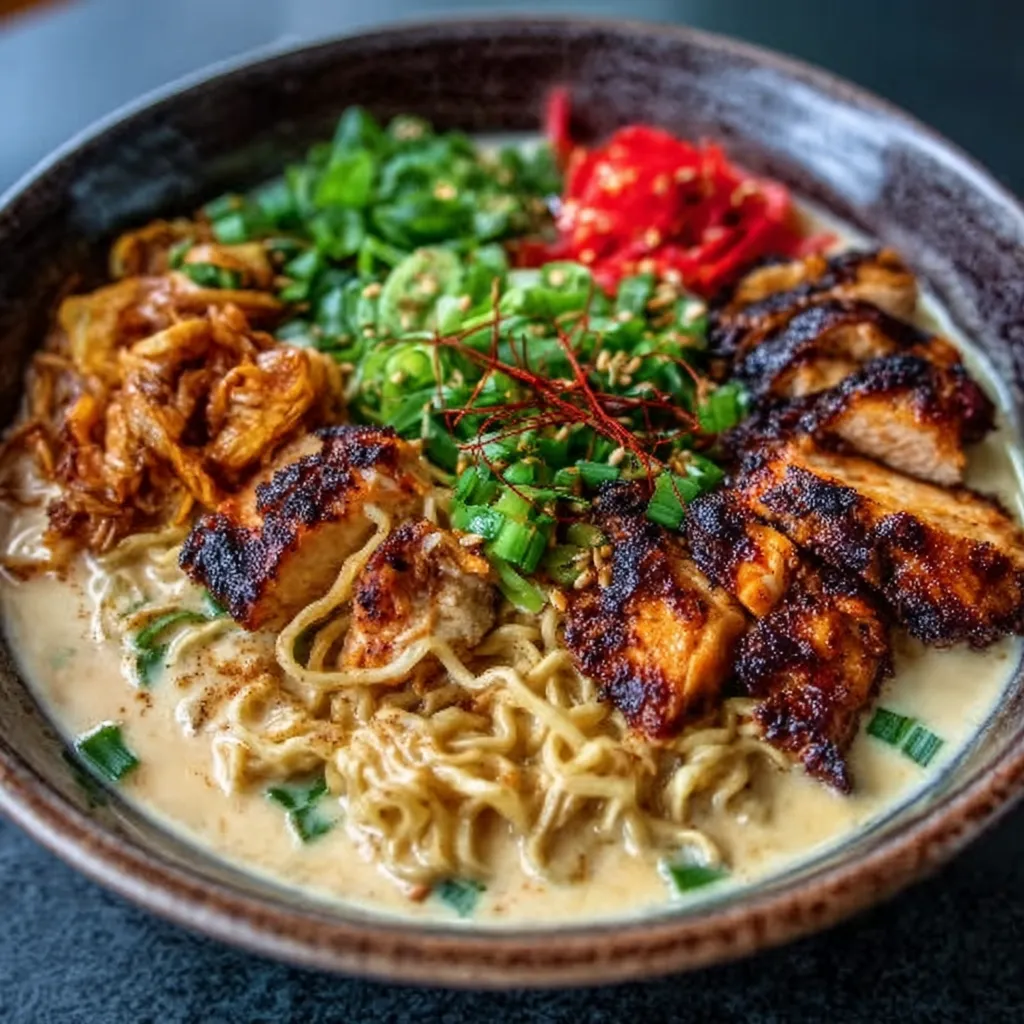
Creamy Chicken Ramen Ultimate Recipe
This recipe creates a rich and deeply flavorful creamy chicken ramen. It emphasizes the importance of umami, fat emulsification, and high-quality ingredients to achieve restaurant-quality results, offering a deeply comforting and satisfying bowl.
Ingredients
Equipment
Method
- Prepare the Broth: In a large pot or Dutch oven, combine the chicken broth, chicken thighs, onion, carrots, celery, garlic, ginger, white parts of scallions, soy sauce, mirin, sake (if using), and sesame oil. Bring to a boil, then reduce heat and simmer for at least 30 minutes, or up to 1 hour, allowing the flavors to meld.
- Strain the Broth: Remove the chicken thighs from the broth and set aside to cool slightly. Strain the broth through a fine-mesh sieve, discarding the solids. Return the strained broth to the pot.
- Shred the Chicken: Once the chicken thighs are cool enough to handle, shred them with two forks. Set aside.
- Emulsify the Broth: Bring the broth back to a gentle simmer. Stir in the heavy cream (or coconut milk) and miso paste. Whisk vigorously until the miso paste is fully dissolved and the broth is smooth and creamy. Taste and adjust seasoning with salt and pepper as needed.
- Cook the Noodles: While the broth is simmering, cook the ramen noodles according to package directions. Drain well.
- Assemble the Ramen: Divide the cooked noodles among four bowls. Ladle the creamy chicken broth over the noodles. Top with shredded chicken, sliced scallions, soft-boiled egg halves, sesame seeds, chili oil (if using), and nori strips.
- Serve Immediately: Enjoy your homemade creamy chicken ramen!
Notes
For a dairy-free option, substitute heavy cream with full-fat coconut milk. Experiment with different types of miso paste for varying flavor profiles. Fresh ramen noodles are preferred for the best texture. Adjust the amount of chili oil or flakes to your spice preference. Store leftover broth separately from noodles and toppings for best quality. Broth can be stored in the refrigerator for up to 3 days or frozen for up to 2 months.