Unlocking the Alchemy: The Science of Ragu
The beauty of ragu, at its heart, is a slow transformation. Tough cuts of meat, like short ribs, are rendered succulent through a process of collagen breakdown. Collagen, a protein abundant in connective tissue, begins to denature and gelatinize when heated slowly over a long period, typically around 160-180°F (71-82°C). This gelatin not only adds richness and body to the sauce but also contributes to the meat’s incredible tenderness. The Maillard reaction also plays a critical role. This browning reaction, occurring between amino acids and reducing sugars at high temperatures, is responsible for the deep, savory flavors that form the foundation of a great ragu. Browning the short ribs and vegetables before braising is essential for developing these complex flavors. Finally, acidity, often provided by wine and tomatoes, helps to tenderize the meat further and balance the richness of the sauce. The slow cooking process allows these flavors to meld and deepen, creating a symphony of taste that elevates the dish beyond its individual components.The Ultimate Dutch Oven Short Rib Ragu Recipe
Ingredients
- 3 lbs bone-in beef short ribs
- 2 tbsp olive oil
- 1 large onion, chopped
- 2 carrots, chopped
- 2 celery stalks, chopped
- 4 cloves garlic, minced
- 1 tbsp tomato paste
- 1 cup dry red wine (such as Chianti or Cabernet Sauvignon)
- 28 oz crushed tomatoes
- 14 oz diced tomatoes, undrained
- 4 cups beef broth
- 2 bay leaves
- 1 tsp dried oregano
- 1/2 tsp red pepper flakes (optional)
- Salt and freshly ground black pepper to taste
- 1 lb pasta (such as pappardelle or tagliatelle)
- Fresh parsley, chopped (for garnish)
- Grated Parmesan cheese (for serving)
Instructions
- Sear the Short Ribs: Pat the short ribs dry with paper towels and season generously with salt and pepper. Heat olive oil in a large Dutch oven over medium-high heat. Sear the short ribs on all sides until deeply browned, about 3-4 minutes per side. Work in batches to avoid overcrowding the pot. Remove the short ribs from the Dutch oven and set aside.
- Sauté the Vegetables: Add the chopped onion, carrots, and celery to the Dutch oven and cook over medium heat until softened, about 8-10 minutes. Add the minced garlic and cook for another minute until fragrant.
- Build the Flavor: Stir in the tomato paste and cook for 2 minutes, allowing it to caramelize slightly. Deglaze the pot with red wine, scraping up any browned bits from the bottom. Let the wine reduce by half, about 3-5 minutes.
- Combine and Braise: Add the crushed tomatoes, diced tomatoes, beef broth, bay leaves, oregano, and red pepper flakes (if using) to the Dutch oven. Season with salt and pepper. Return the short ribs to the pot, ensuring they are mostly submerged in the liquid.
- Slow Cook: Bring the mixture to a simmer, then cover the Dutch oven and transfer it to a preheated oven at 325°F (160°C). Braise for 3-3.5 hours, or until the short ribs are fall-apart tender.
- Shred the Meat: Remove the Dutch oven from the oven and let it cool slightly. Remove the short ribs from the pot and shred the meat using two forks. Discard the bones and any large pieces of fat.
- Finish the Ragu: Return the shredded meat to the Dutch oven and stir it into the sauce. Simmer the ragu over low heat for another 15-20 minutes, allowing the flavors to meld. Taste and adjust seasoning as needed.
- Cook the Pasta: While the ragu is simmering, cook the pasta according to package directions. Drain the pasta, reserving about 1 cup of pasta water.
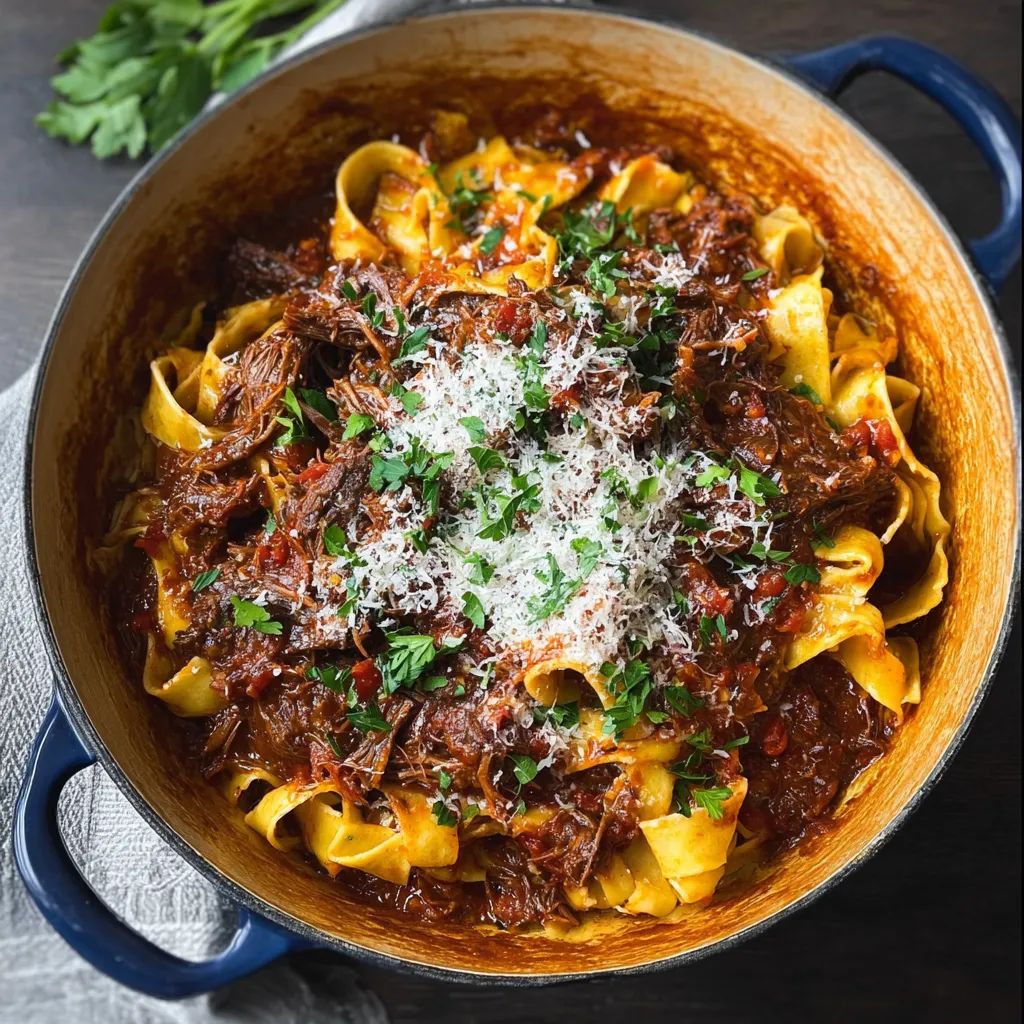
- Combine and Serve: Add the cooked pasta to the Dutch oven with the ragu. Toss to coat, adding a little pasta water if needed to create a creamy sauce. Serve immediately, garnished with fresh parsley and grated Parmesan cheese.
The Great Ragu Revelation: My Investigation
The Initial Stumbles: A Soggy Start
My first few attempts at making short rib ragu were, to put it mildly, underwhelming. The meat was often tough, the sauce was watery, and the flavors were…muted. Like many of you, I initially thought that simply throwing everything into a pot and letting it simmer for hours would magically result in a restaurant-quality dish. I was wrong. The Vegetable Beef Soup my grandmother made was far better, and that’s saying something!The Browning Breakthrough: Unleashing Umami
Then, I had an “Aha!” moment. I realized the importance of the Maillard reaction and how crucial it was to properly brown the short ribs and vegetables. I started patting the ribs completely dry before searing them in a ripping hot pan. The difference was astounding! The deep, rich color translated directly into a more profound, savory flavor in the finished ragu. I also began to caramelize the tomato paste, which added another layer of complexity.Wine Wisdom: Beyond the Bottle
Another game-changer was experimenting with different types of red wine. Initially, I used whatever cheap wine I had on hand. However, switching to a more robust and flavorful wine, like a Chianti or Cabernet Sauvignon, significantly improved the depth of the ragu. The wine’s acidity and tannins helped to tenderize the meat and balance the richness of the sauce. It was a similar revelation when I was perfecting my Beef Short Ribs in the slow cooker.The Broth Factor: Homemade vs. Store-Bought
I also experimented with using homemade beef broth versus store-bought. While a good quality store-bought broth can work in a pinch, homemade broth undeniably adds another dimension of flavor. The richness and depth of flavor are simply unmatched. The difference was almost as big as when I finally mastered my Beef Manhattan using homemade gravy instead of store-bought.The Final Flourish: Patience is a Virtue
Finally, I learned the importance of patience. Rushing the braising process resulted in tough, chewy meat. Allowing the short ribs to slowly braise in the Dutch oven for the full 3-3.5 hours, until they were fall-apart tender, was absolutely essential. And letting the ragu simmer for an additional 15-20 minutes after shredding the meat allowed the flavors to meld and deepen, creating a truly harmonious dish. This reminded me of how the flavors deepen in my Cabbage Beef Bake the longer it sits.The Foolproof Method: Ragu Perfection in 5 Steps
Through trial and error, I’ve distilled the process into a simple, foolproof method for achieving Dutch oven short rib ragu perfection:- Sear with Fury: Pat the short ribs completely dry and sear them aggressively on all sides until deeply browned. Don’t overcrowd the pot!
- Caramelize Cleverly: Sauté the vegetables until softened and caramelize the tomato paste to build a foundation of rich, savory flavors.
- Wine Wisely: Deglaze the pot with a good quality red wine and let it reduce by half to concentrate the flavor.
- Braise Beautifully: Braise the short ribs in a Dutch oven at 325°F (160°C) for 3-3.5 hours, or until they are fall-apart tender.
- Simmer Slowly: Shred the meat and return it to the sauce. Simmer for an additional 15-20 minutes to allow the flavors to meld and deepen. You could even try this with Ground Beef Gnocchi!
Why is it important to brown the short ribs and vegetables when making short rib ragu?
Browning the short ribs and vegetables is crucial because it triggers the Maillard reaction. This reaction creates deep, savory flavors that form the foundation of a great ragu.
What role does red wine play in a short rib ragu?
Red wine contributes acidity, which helps tenderize the meat and balance the richness of the sauce. Using a good quality wine, like Chianti or Cabernet Sauvignon, significantly improves the depth of flavor.
How long should I braise the short ribs in the Dutch oven for optimal tenderness?
The short ribs should be braised in a Dutch oven at 325°F (160°C) for 3-3.5 hours, or until they are fall-apart tender. Patience is key to achieving the desired tenderness.
Why is it important to let the ragu simmer after shredding the short ribs?
Simmering the ragu for an additional 15-20 minutes after shredding the meat allows the flavors to meld and deepen, creating a more harmonious and flavorful dish.
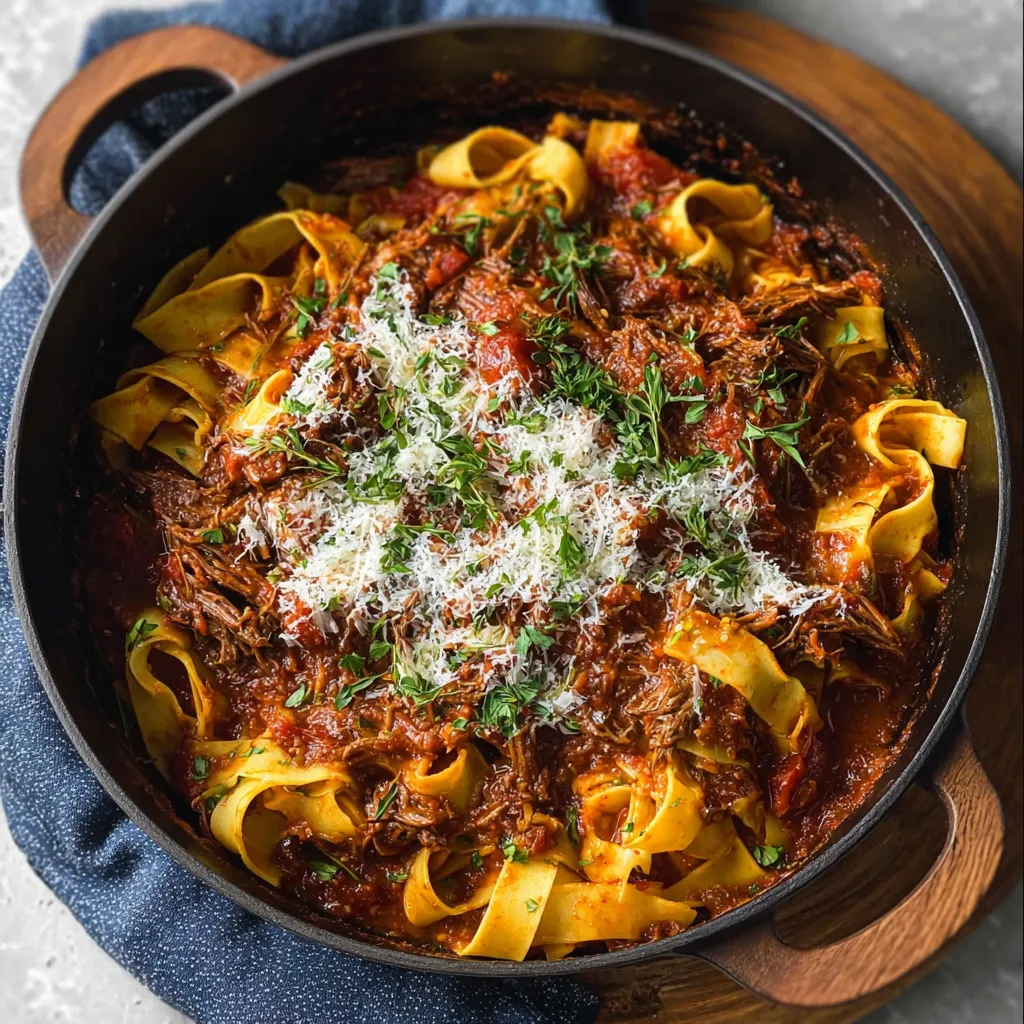
Easy Dutch Oven Short Rib Ragu
This Dutch oven short rib ragu is a deeply flavorful and comforting dish, perfect for a cozy night in. Slow-braised short ribs become fall-apart tender and meld with a rich tomato and red wine sauce, creating a symphony of flavors that elevates this classic Italian dish.
Ingredients
Equipment
Method
- Sear the Short Ribs: Pat the short ribs dry with paper towels and season generously with salt and pepper. Heat olive oil in a large Dutch oven over medium-high heat. Sear the short ribs on all sides until deeply browned, about 3-4 minutes per side. Work in batches to avoid overcrowding the pot. Remove the short ribs from the Dutch oven and set aside.
- Sauté the Vegetables: Add the chopped onion, carrots, and celery to the Dutch oven and cook over medium heat until softened, about 8-10 minutes. Add the minced garlic and cook for another minute until fragrant.
- Build the Flavor: Stir in the tomato paste and cook for 2 minutes, allowing it to caramelize slightly. Deglaze the pot with red wine, scraping up any browned bits from the bottom. Let the wine reduce by half, about 3-5 minutes.
- Combine and Braise: Add the crushed tomatoes, diced tomatoes, beef broth, bay leaves, oregano, and red pepper flakes (if using) to the Dutch oven. Season with salt and pepper. Return the short ribs to the pot, ensuring they are mostly submerged in the liquid.
- Slow Cook: Bring the mixture to a simmer, then cover the Dutch oven and transfer it to a preheated oven at 325°F (160°C). Braise for 3-3.5 hours, or until the short ribs are fall-apart tender.
- Shred the Meat: Remove the Dutch oven from the oven and let it cool slightly. Remove the short ribs from the pot and shred the meat using two forks. Discard the bones and any large pieces of fat.
- Finish the Ragu: Return the shredded meat to the Dutch oven and stir it into the sauce. Simmer the ragu over low heat for another 15-20 minutes, allowing the flavors to meld. Taste and adjust seasoning as needed.
- Cook the Pasta: While the ragu is simmering, cook the pasta according to package directions. Drain the pasta, reserving about 1 cup of pasta water.
- Combine and Serve: Add the cooked pasta to the Dutch oven with the ragu. Toss to coat, adding a little pasta water if needed to create a creamy sauce. Serve immediately, garnished with fresh parsley and grated Parmesan cheese.
Notes
For a richer flavor, use homemade beef broth. The ragu can be made ahead of time and stored in the refrigerator for up to 3 days. Reheat gently before serving. You can also freeze the ragu for up to 2 months. Thaw overnight in the refrigerator before reheating. Feel free to add other vegetables to the ragu, such as mushrooms or bell peppers. For a spicier ragu, add more red pepper flakes or a pinch of cayenne pepper.