Unlocking the Maillard Magic: The Science Behind the Braise
Braising is more than just slow cooking; it’s a carefully orchestrated dance between heat, moisture, and time. The initial sear, often overlooked, is absolutely crucial. This is where the Maillard reaction occurs, a complex chemical process between amino acids and reducing sugars that creates hundreds of flavorful compounds. Think of it as the foundation upon which the entire dish is built. Without a proper sear, the braise will lack depth and complexity. Furthermore, understanding collagen breakdown is paramount. Connective tissue, primarily collagen, in tougher cuts of beef like chuck roast, breaks down into gelatin during the long, slow cooking process. This gelatin not only tenderizes the meat but also adds richness and body to the braising liquid, transforming it into a luscious sauce. Finally, consider the orzo. This rice-shaped pasta requires careful attention to cooking time. Overcooked orzo becomes mushy and ruins the texture of the dish. The goal is al dente, where the orzo retains a slight bite, absorbing the braising liquid without becoming bloated.The Ultimate Braised Beef and Orzo Recipe
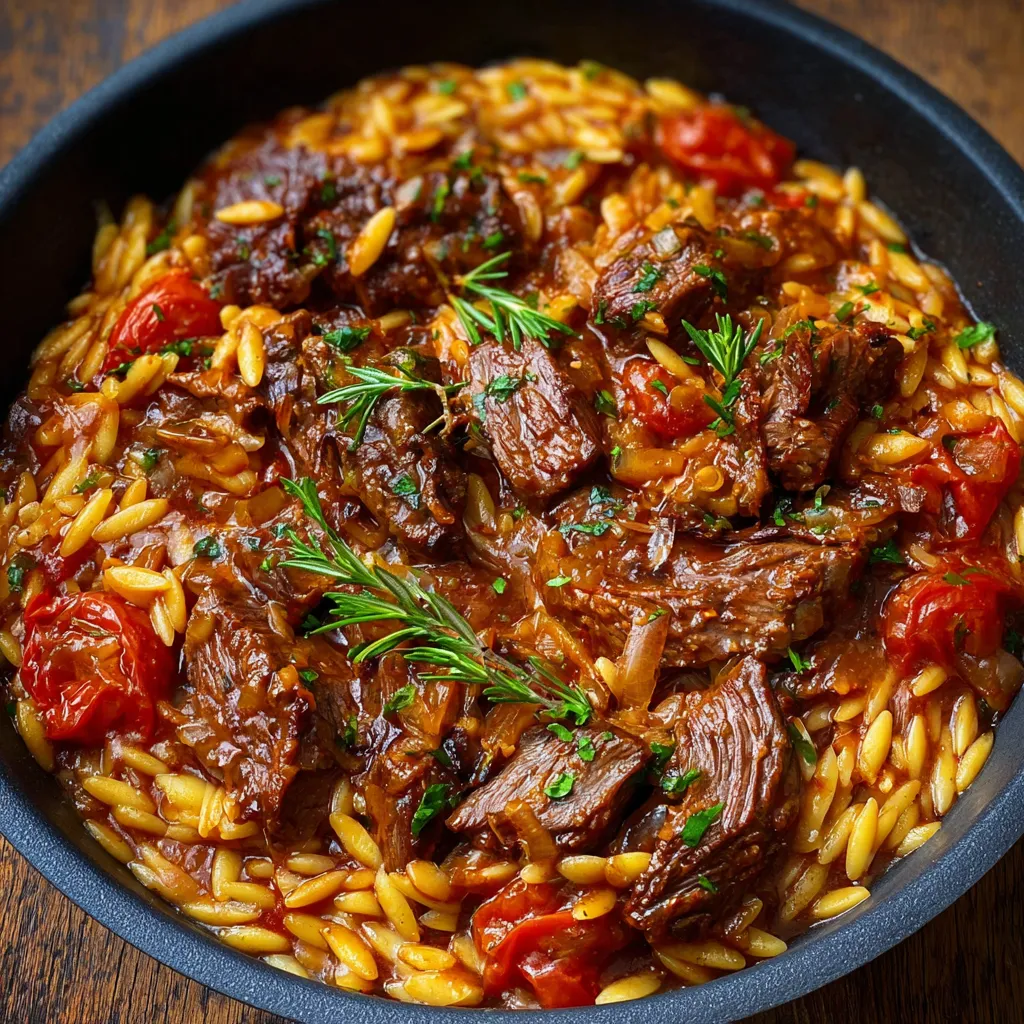 This recipe reflects my years of experimentation and represents, in my opinion, the pinnacle of braised beef and orzo perfection.
Ingredients:
- 3 lbs chuck roast, cut into 2-inch cubes
- 2 tbsp olive oil
- 1 large onion, chopped
- 2 carrots, chopped
- 2 celery stalks, chopped
- 4 cloves garlic, minced
- 1 tbsp tomato paste
- 1 cup dry red wine (such as Cabernet Sauvignon)
- 4 cups beef broth
- 1 (14.5 oz) can diced tomatoes, undrained
- 1 tsp dried oregano
- 1 tsp dried thyme
- 1 bay leaf
- Salt and black pepper to taste
- 1 lb orzo pasta
- 1/4 cup chopped fresh parsley, for garnish
- Grated Parmesan cheese, for serving (optional)
Instructions:
- Sear the Beef: Season the beef cubes generously with salt and pepper. Heat the olive oil in a large Dutch oven or heavy-bottomed pot over medium-high heat. Working in batches, sear the beef on all sides until deeply browned. Remove the beef from the pot and set aside.
- Sauté the Vegetables: Add the onion, carrots, and celery to the pot and cook until softened, about 5-7 minutes. Add the garlic and tomato paste and cook for another minute, stirring constantly.
- Deglaze the Pot: Pour in the red wine and scrape the bottom of the pot to loosen any browned bits (fond). Cook until the wine is reduced by half, about 3-5 minutes.
- Braise the Beef: Return the beef to the pot. Add the beef broth, diced tomatoes, oregano, thyme, and bay leaf. Bring to a simmer, then reduce the heat to low, cover, and cook for 3-4 hours, or until the beef is fork-tender.
- Cook the Orzo: Remove the bay leaf. Bring the braising liquid back to a simmer. Stir in the orzo and cook according to package directions, usually about 10-12 minutes, or until the orzo is al dente and has absorbed most of the liquid. If the orzo absorbs too much liquid before it’s cooked through, add a little more beef broth.
- Serve: Remove from heat and let stand for a few minutes to allow the orzo to fully absorb the sauce. Garnish with fresh parsley and serve hot, with grated Parmesan cheese, if desired.
My Braised Beef and Orzo Journey: A Culinary Investigation
My quest for the perfect braised beef and orzo was far from straightforward. My first few attempts were a disaster. The beef was tough, the orzo was mushy, and the overall flavor was…underwhelming. Like many of you, I initially thought it was just a matter of throwing everything into a pot and letting it simmer. I was wrong.The Great Beef Debacle: Taming the Toughness
Initially, I used cheaper cuts of beef, hoping to save money. This proved to be a false economy. The meat remained stubbornly tough, even after hours of cooking. Then, I had an “Aha!” moment: collagen breakdown! I switched to chuck roast, which has a higher collagen content, and increased the braising time. The difference was night and day. The beef transformed into succulent, melt-in-your-mouth morsels. I also found searing the beef in batches was crucial. Overcrowding the pot lowered the temperature and resulted in steamed, rather than seared, beef.The Orzo Odyssey: Mastering the Pasta Perfect
The orzo presented its own set of challenges. My first attempts resulted in a gloppy, overcooked mess. I realized that adding the orzo too early was a recipe for disaster. The key was to add it only when the beef was fully tender and the braising liquid was flavorful. I also experimented with different cooking times, closely monitoring the orzo’s texture. I found that cooking it directly in the braising liquid imparted maximum flavor, but required careful attention to prevent overcooking. Another key learning was to not be afraid to add more beef broth if the orzo absorbed too much liquid before it was cooked. The Beef Giouvetsi recipe uses a similar orzo cooking technique, but it’s baked in the oven which provides more even heat.The Flavor Frontier: Building Layers of Deliciousness
The initial flavors were bland, lacking depth. I started experimenting with different aromatics and herbs. Adding tomato paste and red wine to the braising liquid made a huge difference, adding richness and complexity. I also found that using high-quality beef broth was essential. Low-sodium broth allowed me to control the salt level and build the flavor profile to my liking. The addition of oregano and thyme provided a warm, comforting aroma. I also thought back to the Vegetable Beef Soup recipe, which relies on a hearty broth base. I tested adding some of the same base ingredients to my braise.The Foolproof Method: A Step-by-Step Guide to Braised Beef and Orzo Perfection
Through rigorous testing, I’ve distilled the process into a foolproof method:- Choose the Right Cut: Opt for chuck roast for its high collagen content and rich flavor.
- Master the Sear: Sear the beef in batches over high heat until deeply browned on all sides.
- Build the Flavor Base: Sauté aromatics like onion, carrots, celery, and garlic, and deglaze the pot with red wine.
- Braise Low and Slow: Braise the beef in beef broth, diced tomatoes, and herbs for 3-4 hours, or until fork-tender.
- Perfect the Orzo: Add the orzo to the braising liquid during the last 10-12 minutes of cooking, monitoring closely to prevent overcooking.
- Adjust and Serve: Add more beef broth if needed, and garnish with fresh parsley and Parmesan cheese before serving.
Why is searing the beef so important in this braised beef and orzo recipe?
Searing the beef initiates the Maillard reaction, a chemical process that creates hundreds of flavorful compounds. This step is crucial for developing depth and complexity in the dish. Without a proper sear, the braise will lack flavor.
What is the best cut of beef to use for braised beef and orzo, and why?
The recipe recommends using chuck roast because it has a high collagen content. During the long, slow braising process, the collagen breaks down into gelatin, tenderizing the meat and adding richness to the sauce.
How do you prevent the orzo from becoming mushy when cooking it in the braising liquid?
To prevent mushy orzo, add it only when the beef is fully tender and the braising liquid is flavorful. Cook the orzo according to package directions (about 10-12 minutes) and monitor it closely. If the orzo absorbs too much liquid before it’s cooked through, add more beef broth.
What are some key ingredients that enhance the flavor of the braising liquid?
Tomato paste and red wine add richness and complexity to the braising liquid. Using high-quality beef broth and incorporating aromatics like onion, carrots, celery, garlic, oregano, and thyme also contribute to a flavorful braise.
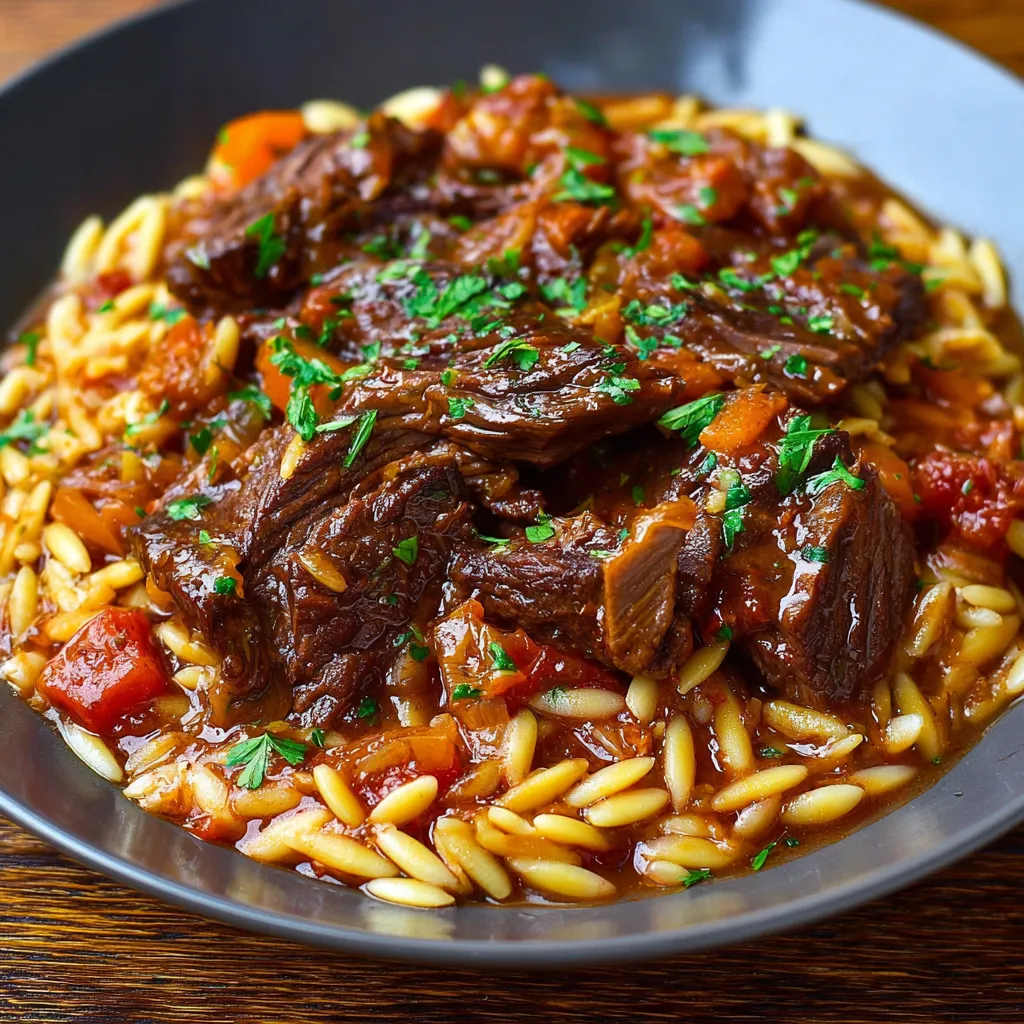
Braised Beef and Orzo Perfection
Ingredients
Equipment
Method
- Season the beef cubes generously with salt and pepper.
- Heat the olive oil in a large Dutch oven or heavy-bottomed pot over medium-high heat.
- Working in batches, sear the beef on all sides until deeply browned. Remove the beef from the pot and set aside.
- Add the onion, carrots, and celery to the pot and cook until softened, about 5-7 minutes.
- Add the garlic and tomato paste and cook for another minute, stirring constantly.
- Pour in the red wine and scrape the bottom of the pot to loosen any browned bits (fond). Cook until the wine is reduced by half, about 3-5 minutes.
- Return the beef to the pot. Add the beef broth, diced tomatoes, oregano, thyme, and bay leaf.
- Bring to a simmer, then reduce the heat to low, cover, and cook for 3-4 hours, or until the beef is fork-tender.
- Remove the bay leaf. Bring the braising liquid back to a simmer.
- Stir in the orzo and cook according to package directions, usually about 10-12 minutes, or until the orzo is al dente and has absorbed most of the liquid. If the orzo absorbs too much liquid before it’s cooked through, add a little more beef broth.
- Remove from heat and let stand for a few minutes to allow the orzo to fully absorb the sauce.
- Garnish with fresh parsley and serve hot, with grated Parmesan cheese, if desired.